

사진작가 신디 셔만(Cindy Sherman)+샤넬(Chanel)@하우저앤워스, 런던 (10/13-12/23)
자신의 변장 사진을 통해 여성의 정체성을 탐구해온 신디 셔만(Cindy Sherman)이 이번엔 패션브랜드 샤넬(CHANEL)과 협업했다. 10월 13일부터 12월 23일까지 런던의 하우저&워스(Hauser & Wirth) 갤러리에서 열리는 'Cindy Sherman: Fabric Matrons(천과 중년 여인들)'은 샤넬의 직물과 보석으로 스타일링한 연작을 선보인다. 신디 셔만은 롱아일랜드 이스트햄턴의 보석상 런던 주얼러스(London Jewelers)에서 모델 크리스티 블링클리의 패션 화보에서 영감을 얻었고, 샤넬의 지원으로 캐릭터를 구축했다. 이 시리즈는 아름다움, 노화, 여성성에 대한 다양한 시각과 정체성과 가시성 사이의 관계를 탐구한다.
Cindy Sherman: Fabric Matrons
13 October – 23 December 2026
Hauser & Wirth London
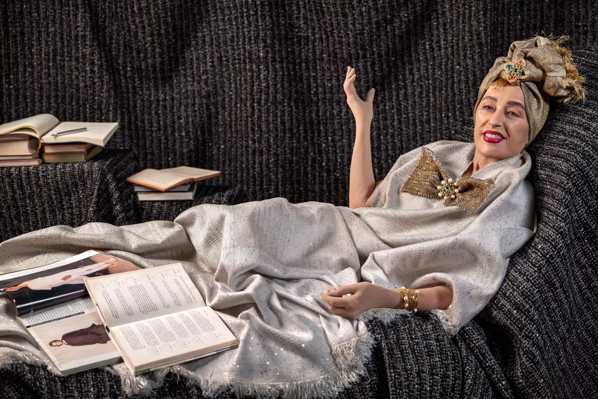
© Cindy Sherman; Courtesy of the artist and Hauser & Wirth
This fall, Cindy Sherman debuts photographic works from her new Fabric Matrons series, which explores identity as a continual process of construction over a lifetime. Shaped by a visual vocabulary of elaborately draped fabrics, the protagonists in Sherman’s images appear to dissolve into their surroundings, heightening the tension between concealment and display to examine how women negotiate visibility across different phases of life. Sherman’s staged scenes, several of which incorporate elements drawn from Chanel’s archives, foreground the performance—and perception—of femininity and beauty, probing the societal expectations and enduring pressure to fashion and maintain a public image over time.
About the exhibition
Cindy Sherman found a starting point for this new series within the pages of a giveaway magazine from a highend store in the Hamptons, filled with smooth, airbrushed images of a well-known model of Sherman’s own generation, dripping in jewelry. Marking a sophisticated evolution in her engagement with fashion imagery, the artist began working with lengths of fabric as both styling and backdrop at once, establishing the series’ unmistakable visual language. At Chanel’s invitation, Sherman incorporated fabric and jewelry by the fashion house into some of the works, including remarkable tweeds woven with materials like strips of leather, gold thread and sequins. Sherman’s dialogue with Chanel dates back to her Ominous Landscapes series (2010 – 2012), in which her characters wore archival garments and accessories. The Fabric Matrons series, on view in London, brings an intensified sense of theatrical styling, drawing on the visual codes of editorial photography to disrupt the glamour of fashion with deliberate artifice and fabrication.
Working without a script, Sherman builds each protagonist intuitively, experimenting first w ith f abric a nd wigs until a personality emerges, then applying makeup to complete their character. Among the group
of fabricated individuals is a muse wrapped in fabric that forms a floor-length red dress and a matron in tweed and pantyhose set against yellow drapery. One figure clutches a pearl-embellished bag, displaying an incongruous mix of peasant-style dress and a high-end accessory that reflects the layered, and sometimes contradictory, nature of identity.
A master of transformation, Sherman has served as her own model for over five decades, producing and performing an array of invented roles that explore and subvert familiar tropes of female identity. Though the personas are fictional, the confrontation at the center of Fabric Matrons is, in part, with Sherman herself, stating: ‘It’s gone beyond beauty. I think it’s showing these characters’ neuroses—probably my own, and similar to many women my age.’ Working close to the camera, she found the process of aging startling to witness and links this to a double standard in which women are disproportionately measured against ideals of beauty and youth compared to men.
The tension between resisting and embracing the passage of time surfaces throughout the series in details of styling and mise-en-scène, offering differing takes on beauty, aging and femininity. Props, rarely used in the series, make a notable appearance in a photograph of a reclining figure, illustrating these competing attitudes. Beside her, a glossy magazine represents longstanding ideals of youth and beauty, while a book on physiognomy, or face reading, treats facial lines and wrinkles as natural, inherent features worthy of attention and study. Sherman further articulates this duality through make-up to create near-airbrushed appearances in some works while emulating signs of aging in others.

Sherman’s choices before the camera also point to the complex relationship between identity and visibility. In several photographs, the protagonists wear gloves that render their skin artificially flawless to hint at a tendency to hide one’s true self. Other characters are clothed in fabrics that blend into the backdrop, raising questions about who is afforded social recognition. Conceived as a group of distinct individuals rather than a narrative sequence, Sherman’s works invite viewers to recognize elements of themselves in her characters and, in doing so, to confront their own anxieties, choices and desires surrounding identity.
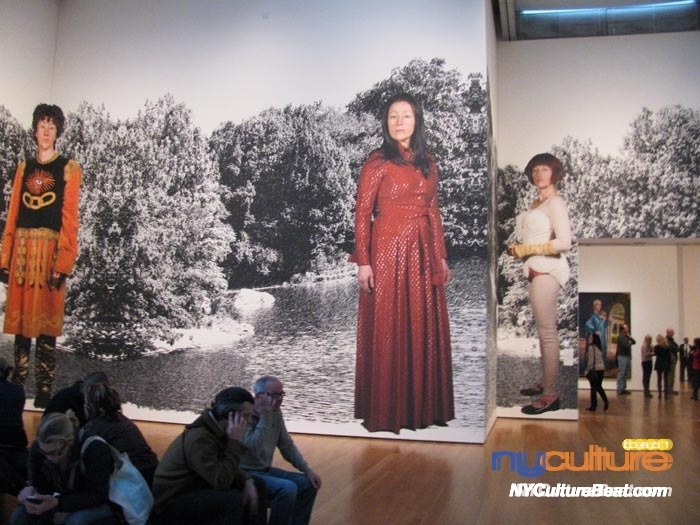
*사진작가 신디 셔만(Cindy Sherman) MoMA 회고전, 2012
https://www.nyculturebeat.com/?mid=Art2&document_srl=3493814
 프린스턴대 한인 스트링쿼텟과 페르 텡스트란드, 그리그 피아노 ...
 목공예가 김민욱 개인전 'Kim Minwook: On Carving, Bending, and...