

NYFF64: Nowhere to Lay My Eyes/ 눈 둘 데가 없네 ★★★★
[NYFF64] 9/25-10/12
Nowhere to Lay My Eyes (눈 둘 데가 없네, 2026) ★★★★
Hong Sangsoo’s Most Transparent "Artist Statement"
A "Small Flower" Blooming by the Roadside in a World of "Flames"
*'눈 둘 데가 없네' (Nowhere to Lay My Eyes, 2026) ★★★☆ <Korean version>
https://www.nyculturebeat.com/?mid=Film2&document_srl=4193229
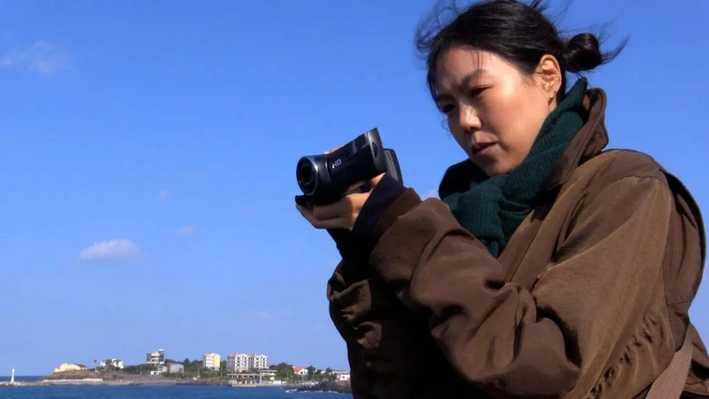
Nowhere to Lay My Eyes, NYFF64
#Film as a Tool for Self-Reflection
In 1996, Director Hong Sangsoo opened a new horizon for realistic cinema with The Day a Pig Fell into the Well. Until then, realism in Korean cinema was dominated by "Social Realism," which dealt with labor movements, class conflicts, national division, and dictatorship. However, Hong Sangsoo emerged in Chungmuro with a microscopic, everyday realism—dryly and meticulously capturing human selfishness, hypocrisy, and disillusionment hidden behind the grand discourse of ideology.
Over the past 30 years and across 35 feature films, he has consistently picked up the camera as a tool for self-reflection based on stories he knows well. The stories he writes with his camera (Caméra-stylo) and the medium of film itself appear to be a "Looking Glass Itself" for him. The characters in his films—novelists, film directors, professors—are by no means elegant or perfect. They reveal human vulgarity, worldly desires, lies, and excuses without filter.
He places characters who act as his alter egos in front of the camera, dissecting and reflecting on their pretentiousness and pettiness—a directorial approach that must be painful. This stems from his honesty as an artist. Ultimately, for Hong Sangsoo, film is not a "device for showcasing fabricated fiction," but rather "an honest mirror to peer into the world he knows and his own unvarnished face."
Nowhere to Lay My Eyes, NYFF64
#Micro-Minimalist Director
He deconstructs artificial narrative structures, crafting stories composed of chance encounters, repetitions, and trivial conversations accompanied by soju in fragmented daily life. Directing impulsively based on screenplays written on the morning of the shoot, he captures the reality of the moment. Particularly since Introduction (2021), he has taken on production, direction, screenwriting, cinematography, editing, and music himself, pioneering ultra-minimalist cinema with a cast and crew of around ten people. While Christopher Nolan's The Odyssey ends with a 10-minute credit sequence listing hundreds of crew members, Hong Sangsoo's films feature end credits that take up barely two pages even in a large font.
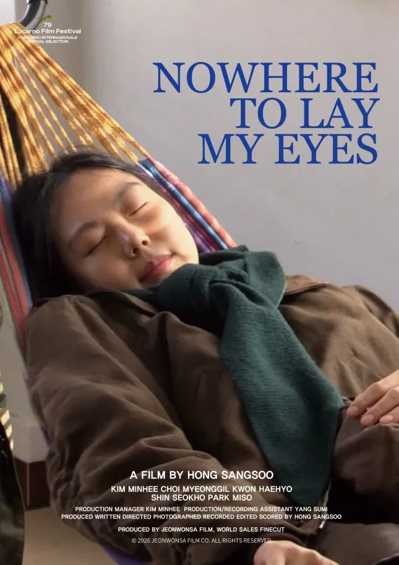
His new film, Nowhere to Lay My Eyes, which won Best Director and Best Performance (Kim Min-hee) at the 79th Locarno Film Festival, is no exception. Sang-hee (played by Kim Min-hee), who works at a snack import company and shoots experimental films, visits her mother (played by Choi Myung-gil)—who built a successful restaurant business in Jeju Island—and her stepfather (played by Kwon Hae-hyo), a documentary director, alongside her younger brother (played by Shin Seok-ho) after nearly ten years. Her mother, who also runs a pension, encourages Sang-hee to settle down in Jeju, while her stepfather's painter daughter (played by Park Mi-so) becomes fascinated by Sang-hee. On the morning Sang-hee leaves Jeju, the family watches her short experimental film, Small Flower.
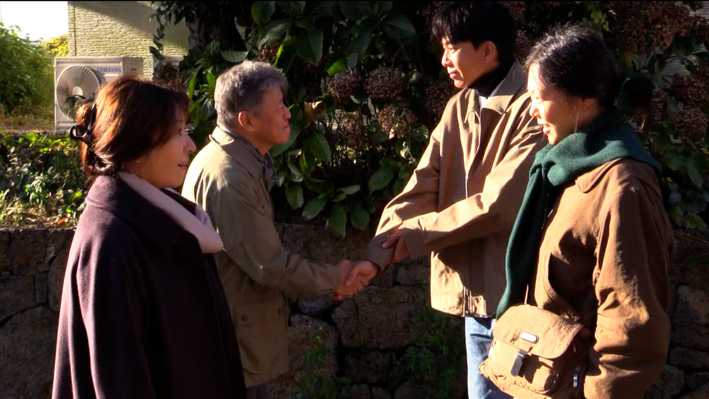
Nowhere to Lay My Eyes, NYFF64
#Documentary vs. Experimental Film
In Nowhere to Lay My Eyes, the stepfather revealed in Sang-hee's inner voiceover is simply referred to as "the man." The man previously shot a documentary in Japan about the upbringing of Zainichi Koreans, and recently has been making a documentary about chobun (straw-grave), a traditional burial custom of covering bodies with grass or straw rather than burying them directly in the ground. Sang-hee declares, "Documentaries are more fraudulent than dramas, and I hate the brainwashing of documentaries." To her, documentaries that disguise themselves as "truth" and feign objectivity are a greater deception than dramas that acknowledge their fiction from the start.
Here, Sang-hee serves as Hong Sangsoo's alter ego. The aesthetic determination of ultra-realism—aiming to capture minute moments of characters as they are, without attempting to manipulate the audience with a specific message—is projected onto Sang-hee. In her eyes, her stepfather's chobun documentary merely appears as a device that commercially processes another's death and tradition through the director's privileged position.
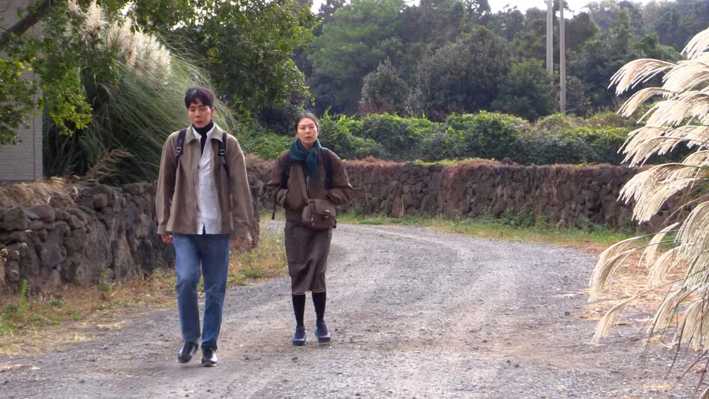
Nowhere to Lay My Eyes, NYFF64
#"Small Flower" Philosophy
On the other hand, Sang-hee's experimental film Small Flower reveals her commitment to "honestly observing things" by capturing small, humble everyday creatures as they are. Just like the title of Hong Sangsoo's ninth film, Like You Know It All (2009), he has always put only the world he knows well onto the screen. It is an artist's note expressing his intention to capture microscopic moments of daily life—like a small flower blooming by the roadside—instead of grand themes or artificial fiction.
This film poses an existential question to today's artists: "Where should one place one's eyes?" In a digital age overflowing with stimulating information, images, and noise due to the surge of social media, it is an analog declaration to honestly capture small, flower-like existences on camera. In this context, the image of Sang-hee lying in a hammock with her eyes closed symbolizes the free state of an artist, disconnected from visual stimuli and floating in the air without belonging anywhere.
Sang-hee's "Small Flower" naturally evokes the solo song Wild Flower by BTS member RM (Kim Nam-joon). RM sang his sincere wish to live unwaveringly like a humble "wild flower" blooming on the earth, rather than a flashy but fleeting "flame" that burns out quickly. If the stepfather's grand documentary or her mother's successful restaurant represent a flashy "flame" temporarily decorating the night sky, the short film Sang-hee crafts by herself is a quiet "wild flower (Small Flower)" standing silently by the road.
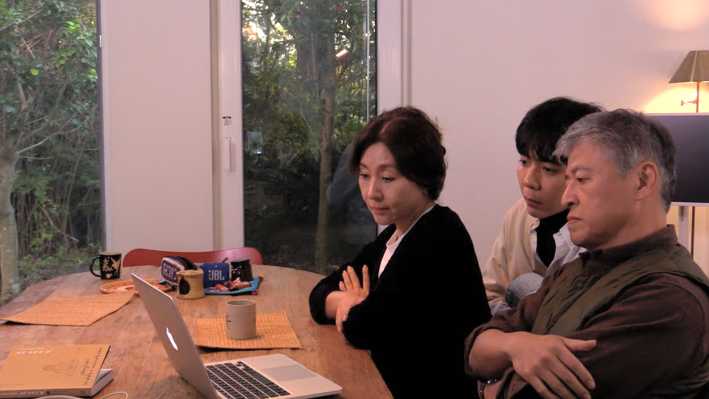
Nowhere to Lay My Eyes, NYFF64
#Erik Satie’s Minimalist Music
Another noteworthy element in Nowhere to Lay My Eyes is the music. Having previously used his own modest guitar pieces as soundtracks, Hong Sangsoo intriguingly finds music within the "cafe noise" recorded live on location. French composer Erik Satie's Gymnopédie No. 1 (1888), playing from the speakers of a cafe visited by Sang-hee's family, was born in opposition to the grand and heavy German Romantic music of the time.
In the late 19th century, European music was dominated by German Romanticism—represented by Richard Wagner—which was grand, complex, and emotionally excessive. Erik Satie felt a strong aversion to mainstream music focused on cumbersome ornamentation and advocated for "naked music" stripped of unnecessary emotion—extremely simple yet refined.
This experimental piece, Gymnopédie, later became the precursor to "Furniture Music," designed to blend naturally into a space without requiring conscious listening. Derived from the slow group dance performed naked (gymnos) without weapons by young men praising the gods in ancient Sparta, this piece aligns perfectly with the extreme minimalism pursued by Hong's camera.
Nowhere to Lay My Eyes, NYFF64
#Jeju Island: Wind, Wind, and Wind
The film opens with a subtitle announcing Jeju Island's weather: "Cloudy and windy, sunshine in the afternoon." Facing her daughter Sang-hee after ten years, her mother asks, "What wind blew you here?" This refers both to the rough natural phenomenon of "wind" (바람) in Jeju and the internal "change of heart" (바람) that prompted Sang-hee to visit out of the blue. At the same time, her mother wishes for Sang-hee to stay in Jeju and help run her pension. The mother's "wish" (바람) for worldly stability subtly collides with Sang-hee's "desire/hope" (바람) to maintain her pure experimental filmmaking while working at a snack import company.
Ultimately, toward the end of the film, Sang-hee quietly leaves Jeju, carrying her small, humble intention (Small Flower) without giving in to the fierce winds (worldly storms) of money, fame, and grand desires. She represents an artist who gazes accurately at where her eyes should lay, unswayed by grandiose artistic disguises or the expectations of others.
Amid the cool sounds of Jeju's wind over 72 minutes, Hong Sangsoo's camera becomes a transparent, honest mirror reflecting everyday life, softly moving the hearts of the audience.
https://www.filmlinc.org/nyff2026/films/nowhere-to-lay-my-eyes
*홍상수 영화는 왜 나를 슬프게 하나: 지금은맞고그때는틀리다
*'소설가의 영화(The Novelist's Film) ★★★★☆
*The Novelist's Film review <English version>
*NYFF61: 홍상수 감독의 변(Artist Statement) '물 안에서(In Water)' ★★★★☆
*NYFF61: Hong Sangsoo's Artist Statement 'In Water' ★★★★☆