

모건라이브러리: 스웨덴 조각가 요한 토비아스 세르겔전 'Fantasy and Reality: The Art of Johan Tobias Sergel'(10/30-1/31, 2027)
18세기 스웨덴의 신고전주의 조각가이자 드로잉 작가 요한 토비아스 세르겔Johan Tobias Sergel (1740–1814) 을 조명하는 특별전이 10월 30일부터 내년 1월 31일까지 맨해튼 모건라이브러리앤뮤지엄에서 열린다.
'환상과 현실: 요한 토비아스 세르겔의 예술(Fantasy and Reality: The Art of Johan Tobias Sergel)'을 타이틀로 한 이 전시는 테라코타, 대리석, 청동, 석고로 재작된 조각과 드로잉 작품이 소개된다.
세르겔은 구스타프 3세 국왕 시대의 음유시인 벨만(Bellman)의 절친한 친구였으며, 사교의 천재인 동시에 고뇌에 찬 조각가로 풍자를 통해 도발을 즐겼다. 유럽 밖 최초의 대규모 전시로 올 2월 19일부터 8월 9일까지 스웨덴 국립미술관에서 400여점을 소개하는 전시가 같은 제목으로 먼저 열렸다.
First Major Exhibition Outside of Europe Dedicated to Johan Tobias Sergel, the Celebrated Eighteenth-Century Swedish Sculptor and Draftsman, Opens at the Morgan Library & Museum in October
Fantasy and Reality: The Art of Johan Tobias Sergel October 30, 2026, through January 31, 2027
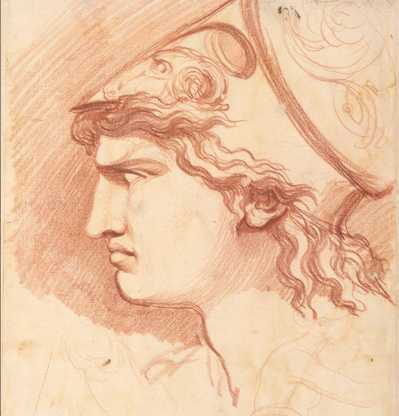
Johan Tobias Sergel. Study for the Head of of Johan Tobias Sergel, the first major exhibition devoted Diomedes (detail), ca. 1770. Red chalk. Nationalmuseum, Sweden, NMH 1026/1875
New York, NY (August 10, 2026) – Johan Tobias Sergel (1740–1814) is one of Sweden’s most important artists and a leading figure of European Neoclassicism, yet he remains relatively unknown outside Sweden. Internationally celebrated during his lifetime, and heralded by some as the greatest sculptor since antiquity, he later faded from the broader narrative of European art history. This fall, the Morgan Library & Museum will introduce him to a new generation of audiences with Fantasy and Reality: The Art of Johan Tobias Sergel, the first major exhibition devoted to the artist outside Europe. On view October 30, 2026, through January 31, 2027, the exhibition brings together a significant selection of Sergel’s works, including sculpture in terracotta, marble, bronze, and plaster, and a major group of the
artist’s drawings, which reveal his great humanity and keen eye for the complexities of human nature.
The exhibition has been organized by the Nationalmuseum, Sweden, in partnership with the Morgan Library & Museum. The Nationalmuseum, which holds most of Sergel's surviving work, having acquired the contents of the artist's studio from his descendants in the centuries following his death, is presenting a larger version of the exhibition from February 19 through August 9, 2026.
“Following our successful partnership with the Nationalmuseum on the 2017 exhibition Treasures from the Nationalmuseum of Sweden: The Collections of Count Tessin, we were eager to collaborate with our colleagues in Stockholm on another exhibition,” said Colin B. Bailey, Katharine J. Rayner Director. “We are grateful to our colleagues at the Nationalmuseum for making it possible to introduce Sergel and his remarkable work to a new audience. Their generosity and expertise have been fundamental in bringing this project to fruition.”
“Although his career spanned artistic movements from Rococo to Neoclassicism to Romanticism, Sergel also seems at times a modern figure, one whose life can offer a rich story to contemporary audiences,” said John Marciari, Charles W. Engelhard Curator, Department Head of Drawings and Prints, and Director of Curatorial Affairs. “Through his deeply personal drawings, visitors will encounter an artist who an astute observer of human relationships and a brilliant caricaturist. His drawings also reflect the creative communities that shaped eighteenthcentury Europe.”
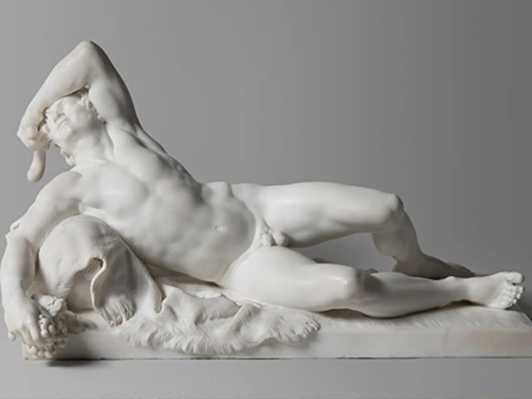
Johan Tobias Sergel. The Faun. 1774. Marble. 46 x 84.5 x 46.3 cm. Nationalmuseum, Sweden, NMSk 357. Photography by Viktor Fordell / Nationalmuseum
Trained in Stockholm and Rome, Sergel united the ideals of classical antiquity with remarkable emotional expression and technical mastery. During his decade in Rome, he was regarded as one of Europe's leading sculptors and attracted patrons from across Europe. At the height of his success, however, Sergel was summoned back to Sweden to serve King Gustav III. There, a steady stream of portrait commissions for the royal court curtailed his artistic ambition, and by the age of forty, his most significant sculptural achievements were behind him. Although his sculpture helped shape the development of Neoclassicism, Sergel’s most enduring artistic legacy may lie in his drawings, which offer an intimate visual record of his life, travels, and creative world.
Fantasy and Reality: The Art of Johan Tobias Sergel showcases Sergel's extraordinary drawings, bringing together an extensive group of self-portraits with works that illuminate his artistic friendships, his relationship with King Gustav III and the Stockholm court, and his life with his common-law wife, Anna Rella Hellström.
Sergel’s candid, humorous, and deeply personal drawings demonstrate an irresistible talent for caricature, particularly when depicting himself (Self-Portrait with a Flask of Wine, ca. 1775) and his boisterous circle of friends, including the painters Henry Fuseli (Portrait of Fuseli in Rome, ca. 1770-77) and Nicolai Abraham Abildgaard (Nicolai Abraham Abildgaard in Rome, ca. 177277). In his later years, as poor health and depression took their toll, Sergel continued to draw, producing haunting works whose psychological intensity has been compared to that of Francisco Goya, as seen in A Torturous Dream from his Melancholy Suite (1795). Together, these drawings offer both a touching personal testament and a reflection of the anxieties of his age, embodying the dualities that define his art: lofty and low, public and private, solemnity and satire, fantasy and reality.
Joining these drawings are several terracotta models, including two versions of Cupid and Psyche (ca. 1770–72). These terracotta models have a drawing-like immediacy, revealing the artist’s hand in every mark. The exhibition will also feature Sergel’s first major marble sculpture The Faun (1774), presented together with its preparatory drawings, clay model, and a related bronze, allowing visitors to follow the work’s development from initial conception to finished sculpture.
Throughout the exhibition, drawings by Sergel’s friends and contemporaries, including Henry Fuseli, Jacob Philipp Hackert, Esprit Antoine Gibelin, François-André Vincent, George Romney, and Julien de Parme, provide broader context for the artistic circles in which he lived and worked.
 2026 뉴욕영화제(NYFF64) 스포트라이트 섹션 라인업: 베르너 헤르...
 2026 찰리 파커 재즈 페스티벌 Charlie Parker Jazz Festival (8...