

뉴욕식물원(NYBG) 1960년대 문화 '플라워 파워(Flower Power)'전(5/23-10/18)
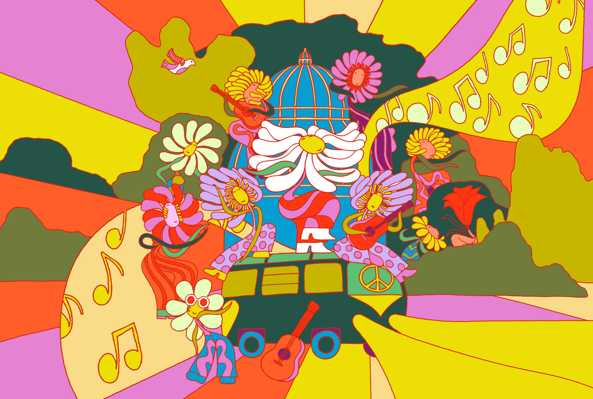
1960년대 미국은 청년문화가 활발했다. 샌프란시스코를 중심으로 베트남전에 반대하고, 평화, 사랑, 자연주의를 외치며 반문화(counterculture), 히피(Hippie) 문화를 이끌던 젊은이들을 '플라워 피플(Flower People)'이라 불렀다. 머리에 꽃을 꽂고, 경찰의 총구에 꽃을 꽂으며 "전쟁이 아니라, 사랑을 하라(Make Love, Not War)"는 구호를 외치던 이들은 긴 머리에 화려한 옷차림으로 공동체 생활을 하며, 자연 친화적인 삶을 지향했다. 록 음악과 포크 음악의 시대, 플라워 피플의 정신은 1968년 우드스탁 페스티벌로 절정에 올랐다.
브롱스의 뉴욕식물원(New York Botanical Garden)이 5월 23일부터 10월 18일까지 1960-70년대 청년문화를 기념하는 전시 '플라워 파워(Flower Power)'를 연다. 이 전시엔 앤디 워홀, 밀턴 글레이저, 조 브레이너드, 카를로스 이리자리 등의 꽃을 모티프로한 회화, 사진, 포스터들을 선보인다. 저녁엔 꽃을 소재로 한 리퀴드 라이트쇼와 라이브 음악이 펼쳐진다.
https://www.nybg.org
Flower Power, a Multidisciplinary Exhibition Celebrating Flowers as a Cultural Symbol, Opens at the New York Botanical Garden on May 23, 2026
The Garden-Wide Takeover Includes a Gallery Presentation Featuring Works by Andy Warhol and Other Artists, as Well as a Flower Show and Monumental
Installations Across NYBG’s Historic Grounds and Within Its Enid A. Haupt Conservatory
Bronx, NY— Flower Power, a multidisciplinary exhibition celebrating flowers as a cultural symbol of peace and love that advances closer relationships with the natural world, opens May 23, 2026, at the New York Botanical Garden (NYBG), and runs through October 18, 2026. The gallery show and gardens combine a vibrant flower show and monumental installations with paintings, photography, and posters from the 1960s and ‘70s, including three works by pop art icon Andy Warhol. Other pieces by Milton Glaser, Joe Brainard, and Carlos Irizarry highlight how flowers take on resonance as creative and enduring symbols spanning generations.
Site-specific installations are on view in the Enid A. Haupt Conservatory and its lawn, while additional sculptures and artist-designed buses evoking the era can be found throughout the Garden. The exhibition invites visitors to “come together” and embrace flowers as meaningful symbols in our own lives. On select evenings, Liquid Light Shows celebrate the era with live music and colorful visuals by Liquid Light Lab. For tickets and more information about the exhibition and related programming, visit https://www.nybg.org/event/flower-power/.
“Flower Power unites world-class art with our living plant collections and our historic landmark buildings and landscape,” said Jennifer Bernstein, CEO and The William C. Steere Sr. President of the New York Botanical Garden. “It’s an opportunity for us to present a cultural experience that can only happen at a botanical garden of this scale and scope, where art, history, and the natural world coexist.”
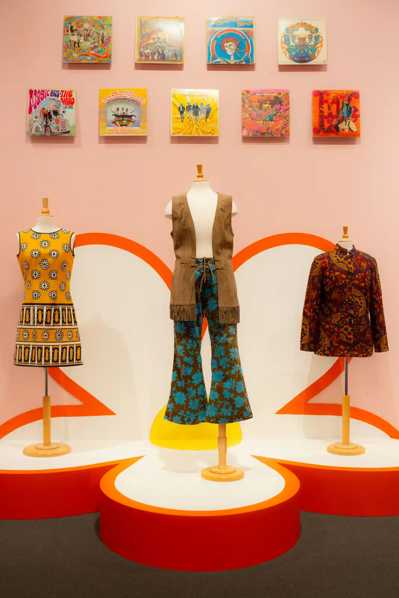
Flower Power, fashion display Photo courtesy of New York Botanical Garden (NYBG)
Visitors can step back in time in the Art Gallery of NYBG’s Mertz Library Building with an extraordinary display of paintings, photographs, screenprints, and collages by artists from the 1960s and ‘70s that depict flowers as symbols of peace and love. Andy Warhol’s Flowers (1964) is on view alongside the image used as source material for the work, a photograph taken by nature photographer and environmental activist Patricia Caulfield.
Organized around themes of peace and protest, the utopia envisioned by the hippies, early environmentalism, and how these threads eventually came together in more commercial forms of expression, the exhibition includes works by Joe Brainard, Milton Glaser, Carlos Irizarry, Corita Kent, and many others, as well as archival news footage and photographs, original fashion from the period, posters, and first editions of critical feminist and environmental texts including Betty Friedan’s The Feminine Mystique and Rachel Carson’s Silent Spring. Together with reproductions of photographs by Bernie Boston, Bob Edelman, and other photojournalists, these displays exemplify the era’s social movements and culture.
By placing these works in conversation with each other, Flower Power explores how flowers took on resonance as creative and enduring symbols in the social movements of the 1960s, including the early environmental movement, as well as art, music, and fashion to champion a closer relationship with the natural world.
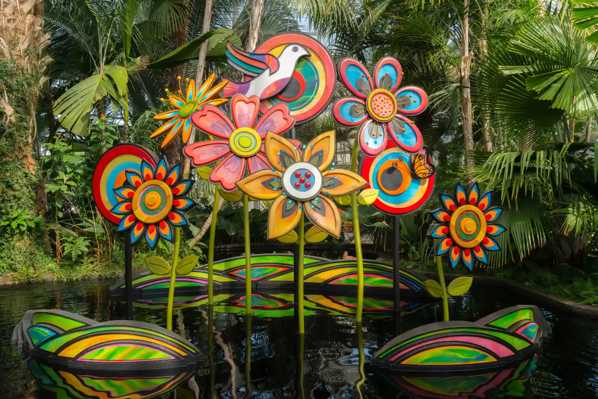
Flower Power, installation in the Enid A. Haupt Conservatory by artist Amie Jacobsen
A fifteen-foot diameter peace sign filled with live plants welcomes everyone at the Leon Levy Visitor Center. In various locations, colorful buses and vans inspired by the festivelyadorned hippie buses that conveyed the crowds to Woodstock in 1969 and other major historic events are on display, designed by New York-based artists Snoeman, Blanka Amezkua, and Carlos Wilfredo Encarnación-Vazquez.
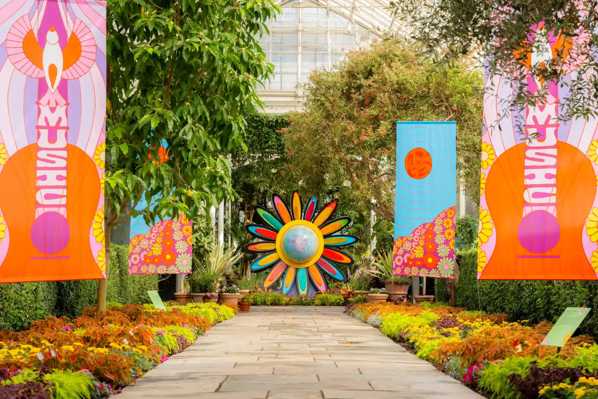
The Conservatory Lawn features large, hand-painted fabric canopies created by Mushuman, known for vibrant, light-reactive, and dreamlike designs. Nearby, an interactive art fence, inspired by one at the original Woodstock Festival, allows visitors to participate in an evergrowing textile artwork, accompanied by reproductions of archival photos and graphics. Inside the Enid A. Haupt Conservatory, monumental sculptures by artist Amie Jacobsen dazzle in a rainbow of colors and daisy shapes amid horticultural delights. Outside in the Conservatory’s Hardy Pool Courtyard, water lilies and lotuses create a meditative, peaceful space for visitors to connect to the 1960s-era interest in spirituality and enlightenment.
Created in partnership with the Rubin Museum of Himalayan Art Mandala Lab, an installation in the Hardy Courtyard invites visitors to dive into their own consciousness and explore the teachings of the mandala. Eastern religions became a vital source of knowledge and spiritual nourishment to the counterculture movement of the ’60s. In search of wisdom outside Western traditions, the counterculture’s interest in peace, nature, and consciousness exploration seemed to resonate with (and was critically shaped by) Buddhism, especially Zen Buddhism. Important counterculture figures, from Allen Ginsberg and Timothy Leary to the Beatles, helped introduce and popularize Buddhist philosophy through music and gatherings like the Human Be-In (1967).
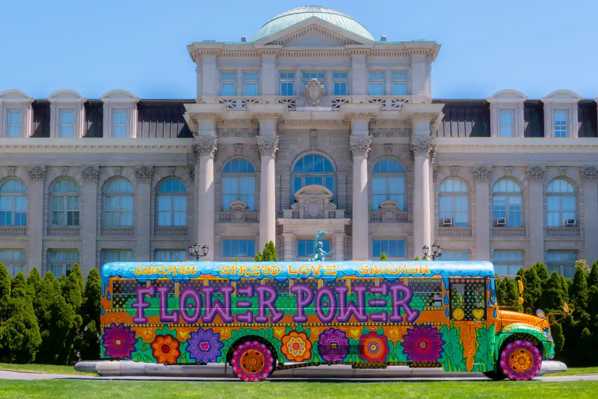
Flower Power bus by Snoeman
Daytime programming during Flower Power will include live folk music, film screenings, and rotating activities, including drum circles, friendship bracelet making workshops, sound bath sessions, and guided breathwork workshops.
“We are proud to present an exhibition that celebrates how flowers have been used as enduring symbols of peace and creative possibility, from the transformative movements of the 1960s to today,” said Joanna L. Groarke, Vice President of Exhibitions and Programming at the New York Botanical Garden. “Flower Power reminds us that plants have always been a shared language, one that artists return to again and again to express hope, harmony, and connection.”
Liquid Light Shows
Special Ticketed Experience; All Ages
Public: $45 / Member: $35
On select evenings starting May 30, 2026, join us after hours as Flower Power comes alive with a mesmerizing liquid light show and unforgettable live music. Each night features a headlining band on stage whose work brings a fresh, modern edge to the iconic and freespirited sound of the late ’60s—including Ghost Funk Orchestra (May 30), Habibi (June 13), Evolfo (June 20), and Woods (June 27)—as colorful visuals by Liquid Light Lab transform the Mertz Library façade into a swirling, psychedelic canvas.
Explore the Flower Power exhibition across Garden grounds and inside the Haupt Conservatory, browse goods and learn from local craftspeople at a Maker’s Market, challenge friends to classic lawn games, and tap into your creativity while making a friendship bracelet. Grab a bite from a lineup of delicious picnic-ready food options, and celebrate peace and love during a night filled with music, art, and flowers!
Important Note for Ticket Holders: Liquid Light Shows have a rain date reserved for the next day. If a program is rescheduled due to inclement weather, ticket holders will be notified by 2 p.m. on the Friday prior.
Liquid Light Shows are a multimedia performance art that uses colored oils, dyes, glass, and light to create dynamic real-time visuals projected on the center of the Mertz Library Building to accompany live music. The art form began in early 1960s San Francisco and evolved through the psychedelic ballroom scene, providing an immersive backdrop for musicians such as the Grateful Dead, Jimi Hendrix, Janis Joplin, and Pink Floyd. Artists originally used overhead projectors, slide projectors, film projectors, and modified devices such as color wheels to achieve their effects. Today’s Liquid Light Shows may incorporate the same tools, along with modern upgrades such as high-definition camera feeds, LED light tables, RGB color wheels, digital projectors, and powerful VJ software.
Liquid Light Shows are presented by Liquid Light Lab, the work of Steve Pavlovsky, a multidimensional light artist from New York City. A majority of his work utilizes liquid projection, experimental media, and hand-made organic elements first seen in Psychedelic Light Shows of the 1960s. Following on the visual music traditions of Kandinsky, Thomas Wilfred, and The Joshua Light Show, Mr. Pavlovsky invokes the sublime and spiritual. Building upon an analog relationship to Light and Time, Pavlovsky has created Liquid Light Lab, a living, breathing, visual expression of music, nature, and the human spirit.
Arts at the New York Botanical Garden
Gardening throughout the ages has been closely related to scientific exploration and innovation, the visual arts, architecture, and cultural and aesthetic movements. Through pioneering interdisciplinary exhibitions that bring together plants, rare books and manuscripts, and works of art, NYBG illuminates the deep and enduring relationships between plants and people. These exhibitions, along with their accompanying public
programs, highlight the powerful connections among gardening, the arts and humanities, and human well-being.
 센트럴파크 나움버그 오케스트라 무료 콘서트(6/9-8/4)
 뉴욕공립도서관(NYPL) 미 건국 250주년 특별전 'Declaring Americ...