

캐롤 보브(Carol Bove) 첫 미술관 회고전@구겐하임뮤지엄(3/5-8/2)
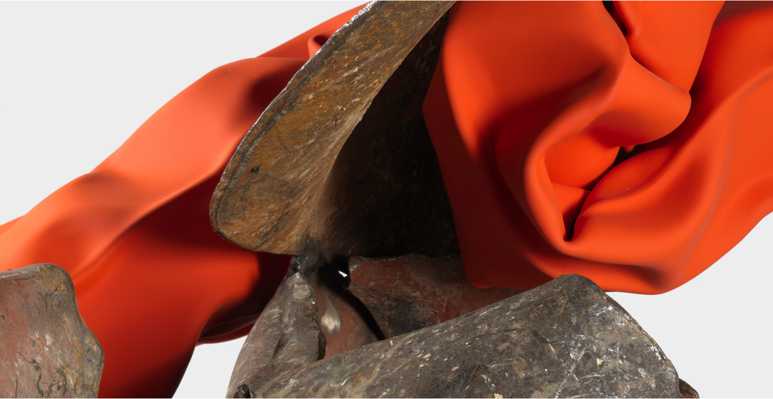
Carol Bove
March 5–August 2, 2026
Guggenheim Museum, NYC
Carol Bove will be the first museum survey and largest presentation to date of the work of American artist Carol Bove. The exhibition will trace pivotal shifts across Bove’s 25-year career, ranging from her early drawings to a new, monumental series of her scrap metal and steel tubing compositions known as “collage sculptures.” The artist will also orchestrate a series of design interventions that subtly inflect the experience of navigating Frank Lloyd Wright’s iconic rotunda, reflecting her longstanding interest in the way objects and images are transformed by their surroundings.
Bove’s inventive practice spans many mediums and formal approaches but is unified by an exacting play of material, scale, color, and space. She places these elements in dialogue with cultural histories and the viewer’s imagination to create the conditions for a resonant perceptual encounter—one that will function, in the words of the artist, as “a way of opening the world.”
This exhibition is organized by Katherine Brinson, Daskalopoulos Curator, Contemporary Art, with support from Charlotte Youkilis, Curatorial Assistant, Exhibitions, and Bellara Huang, former Curatorial Assistant, Exhibitions.
Carol Bove was born in Geneva in 1971 and raised in Berkeley, California. She earned a BS from the New York University School of Education in 2000. Bove’s work combines sculpture and conceptual assemblage, and transforms disparate materials into arrangements that articulate a minimalist aesthetic while speaking to social history. Her approach is derived from her early, formative encounters with public art installations in Berkeley.
Interested in the social dynamics of the late 1960s and early ’70s, Bove uses period-specific artifacts, such as a copy of Betty Friedan’s 1963 book The Feminine Mystique (a feminist touchstone), to create almost anthropological displays that memorialize the era. One such installation, Vague Pure Affection (2012), is an assemblage of books, periodicals, and brass and concrete objects set on wall-mounted shelves crafted from wood and steel. Bove’s choices regarding materials and arrangement create an interconnectedness of objects that presents an atmosphere of bohemianism within a structure that gestures toward modernist abstract sculpture. The installation The Foamy Saliva of a Horse (2011), originally presented at the Venice Biennale, includes driftwood suspended within a bronze frame, a curtain woven of thousands of silver links, and a rusty oil drum found on the Hudson River shore near the artist’s studio in Red Hook, Brooklyn. Bove alters the room-size arrangement for each exhibition space, producing a unique environment that examines the ingrained symbolism of individual objects and the relationship between the components. Her recent large-scale sculptures exist in the realm of public art. One example is Caterpillar (2013), a group of seven works commissioned by New York’s High Line and displayed in the last wild and untouched stretch of the public park and former railway.
Bove’s work has been the subject of numerous solo exhibitions, including those at the Institute of Contemporary Art, Boston (2004); Kunsthalle Zürich (2004); Blanton Museum of Art, Austin, Texas (2006); Horticultural Society of New York (2009); Palais de Tokyo, Paris (2010); and the Common Guild, Glasgow (2013). Her work has been featured in group exhibitions at P.S. 1 Contemporary Art Center (now MoMA PS1), New York (2004 and 2005); New Museum of Contemporary Art, New York (2007); The Museum of Modern Art, New York (2007 and 2009); Tate Modern, London (2007); Whitney Museum of American Art, New York (2008); and Palais des Beaux-Arts, Paris (2013). She also participated in the exhibition Contemplating the Void: Interventions in the Guggenheim Museum, New York (2010), and the Venice Biennale (2011) and Documenta, Kassel, Germany (2012). Bove lives and works in Brooklyn.
https://www.guggenheim.org
 팝아티스트 클라에스 올덴버그 'Claes Oldenburg: Drawn from Lif...