

메트로그라프: 막스 오퓔스 감독 회고전 'Max Ophüls: Motion WIthin Motion'(1/24- )
Beginning January 24
Metrograph In Theater
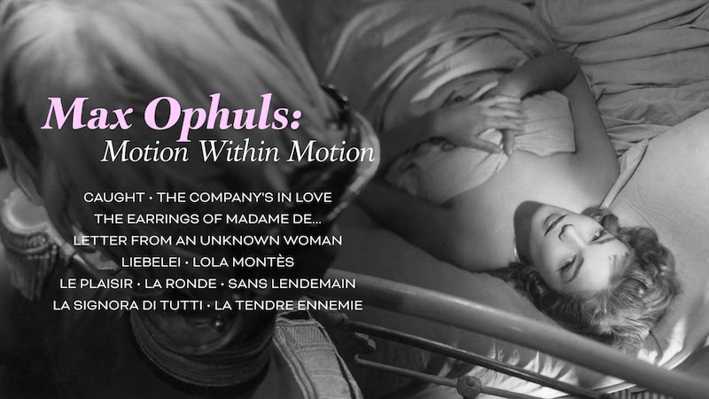
MAX OPHULS: MOTION WITHIN MOTION
A Career-Apanning 12-Film Max Ophuls Retrospective, Held on the Occasion of a New 2K Remaster of Ophuls’s Debut Feature, 1931’s THE COMPANY'S IN LOVE
Featuring LIEBELEI, LA TENDRE ENNEMIE, LETTER FROM AN UNKNOWN WOMAN, THE RECKLESS MOMENT, THE EARRINGS OF MADAME DE..., and LOLA MONTÈS on 35mm
Metrograph presents Max Ophuls: Motion Within Motion, a wide-reaching survey of the master storyteller's feature work, beginning January 24 at Metrograph In Theater.
“A shot that does not call for tracks / Is agony for poor dear Max / Who, separated from his dolly / Is wrapped in deepest melancholy. / Once, when they took away his crane / I thought he’d never smile again.” Actor James Mason’s tribute to Max Ophuls, his director on Caught and The Reckless Moment (both 1949), is a piece of good-natured ribbing in verse, but also touches on something essential about Ophuls, a native of Saarbrücken, Germany, whose career would include stops in Vienna, Berlin, Hollywood, and Paris—namely, that camera movement was at the emotional and expressive core of his filmmaking practice. A career-spanning, 12-film retrospective of Ophuls’s singularly kinetic, often startlingly emotional cinema, which has been celebrated and studied in all of its balletic grace by such latter day past masters of the unchained camera as Stanley Kubrick and P.T. Anderson, held on the occasion of a new remaster of Ophuls’s debut feature, 1931’s The Company’s in Love.
Max Ophuls: Motion Within Motion runs from January 24 to March 1, with select encore screenings to follow.
Titles include Caught, The Company's in Love, The Earrings of Madame de..., Letter from an Unknown Woman, Liebelei, Le Plaisir, Lola Montès, The Reckless Moment, La ronde, Sans lendemain, La Signora di Tutti, and La Tendre Ennemie.
THE COMPANY'S IN LOVE/ Die verliebte Firma
1932, 73 min, DCP
Ophul’s feature directorial debut, digitally remastered in 2023, is a rollicking send-up of the industry he’d just managed to break into, concerning the cast and crew of a musical comedy and their struggles to complete their ill-starred picture in the face of creative disagreements, clunker performances, out-of-control egos, and an epidemic infatuation with the film’s fresh-faced ingénue. Briskly funny and remarkably candid in its address of sleazy casting couch shenanigans, The Company’s in Love shows novice Ophuls handling new sound technology with a poise that many a battle-tested veteran of the silents might envy, and its brisk box-office performance—aided, no doubt, by the presence of popular stars Anny Ahlers, Lien Deyers, and Gustav Fröhlich—helped to launch a brilliant career.
US premiere of 2K digital remaster
A film from the holdings of the Friedrich-Wilhelm-Murnau-Stiftung in Wiesbaden.
LIEBELEI/ Affair/ 리벨라이
1933, 88 min, 35mm
Produced on the cusp of the Weimar Republic’s total collapse—by the time of its release the Reichstag had burned, the Jewish Ophuls had fled for France, and his name was removed from the credits of release prints—this adaptation of Arthur Schnitzler’s play of the same title was, in its fairly explicit anti-militarism, as against the grain of the prevailing mood as any German picture of its day. The touching tale of a fraught romance between a violinist’s daughter and a young officer in turn-of-the-last-century Vienna, both torn between desire and duty, and the first film in which Ophuls’s camera exhibits the grace and fluidity that will become his visual signature.
35mm print courtesy of the Academy Film Archive
LA SIGNORA DI TUTTI/ Everybody's Woman/ 만인의 여인
1934, 89 min, DCP
We first encounter starlet Gabriella Murge (Isa Miranda) at the height of her fame and in the trough of despair; in the aftermath of her attempted suicide, a series of fragmentary flashbacks (and flashbacks within flashbacks) show us the primrose path that led her to the operating table. Much more than a dry run for Lola Montés, with which it shares certain similarities, La Signora di Tutti displays an extravagant emotionalism that makes it an outlier in Ophuls’s filmography, perhaps attributable to the fact that this was the only film he made in famously voluble Italy. “In retrospect, Isa Miranda’s full-bodied and warm-blooded incarnation of Gaby Doriot should have been hailed as one of the iconographical landmarks of the Thirties.”—Andrew Sarris
LA TENDRE ENNEMIE/ The Tender Enemy/ 부드러운 적
1936, 69 min, 35mm
From the beyond, three dead men watch and endeavor to intervene as the very-much-alive Annette (Simone Berriau), a woman whom they all loved madly—and were ultimately destroyed by—endeavors to buffalo her daughter into a loveless marriage of convenience. Part boulevard comedy roundelay, part supernatural drama, and altogether a miracle of elaborate yet consistently lucid construction. “A mighty masterwork that’s as rare and unheralded as it is brisk and modest… A metaphysical comedic romance… Should be mandatory viewing in film schools, as a lesson in the unity of technical and lyrical imagination.” —The New Yorker
35mm print courtesy of BFI National Archive
SANS LENDEMAIN/ There's No Tomorrow/ 내일은 없다
1939, 82 min, DCP
Seduced and abandoned with a young son to support, Evelyn (Edwige Feuillère) keeps the lights on by hoochie coo dancing in a sleazy nightclub—until a former flame appears on the scene, and lends her enough money to put up a facade of propriety. Per Ophuls, the film, which makes deft and innovative use of flashbacks and is lent a lyric sheen by cinematographer Eugen Schüfftan, was “born of my impressions of Paris, the sensations and the episodes lived during the course of many nights, in places and among people whose very mention shocks the upright citizen. I had always been attracted to the universe of pimps and girls, the universe in which rested so many unknown soldiers of love. I often dreamed of making a film truly devoted to this subject. A film whose script would come from a modern Maupassant.”
LETTER FROM AN UNKNOWN WOMAN/ 미지의 여인으로부터 온 편지
1948, 87 min, 35mm
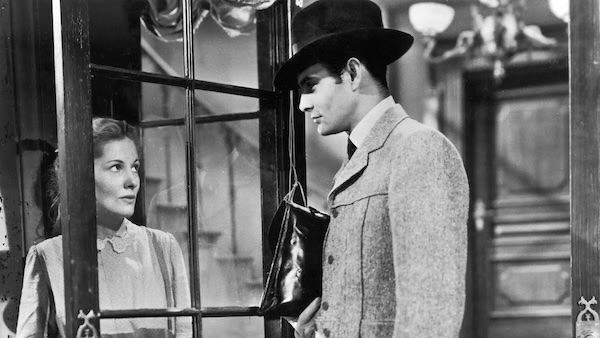
In a deliciously artificial fin-de-siecle Vienna—stops include the Prater Park as seen under a blanket of snow— concocted with impeccable craftsmanship on a Universal backlot, Ophuls conducts a veritable symphony of moving camerawork, turning Stefan Zweig’s short story of consuming romantic delusion into a voluptuous tragedy, initiated when a young woman (Joan Fontaine) develops a consuming fascination with a dissolute concert pianist neighbor (Louis Jourdan). It opens with the ominous lines, “By the time you read this letter, I may be dead…” and proceeds through a series of beautifully wrought flashbacks, ending, invariably, without a dry eye in the house.
35mm print courtesy the UCLA Film & TV Archive
CAUGHT/ 포획
1949, 88 min, 4K DCP
Fashion model Leonora Eames (Barbara Bel Geddes) seems to be living in a fantasy when she’s swept off her feet by suave multimillionaire Smith Ohlrig (Robert Ryan)—the character is based on Howard Hughes—but soon discovers that her husband is an egomaniacal and tyrannical ogre who intends to treat her as another acquisition rather than as an equal. A potent proto-feminist melodrama/thriller, with James Mason, in his American debut, as the idealistic slum pediatrician who lends Leonora a shoulder to cry on. “A critique of the Cinderella complex, Caught dramatizes [Leonora’s] struggle to escape the constraints of conventional womanhood and illustrates the ways in which femininity is reified through advertising and the media.” —J. Hoberman, The New York Times
THE RECKLESS MOMENT/ 무모한 순간
1949, 82 min, 35mm
When Joan Bennett’s comfortable-but-deathly-bored California housewife takes it on herself to cover up a crime committed by her daughter, she finds herself involuntarily involved with James Mason’s unscrupulous Irish-born criminal—but then unwelcome emotions begin to develop between the unlikely duo that make mere blackmail look like child’s play. While twining together aspects of noir and melodrama, Ophuls creates an emotional experience that transcends genre limitations, exploring the often-destructive illogic that spurs sexual hunger. “One of the director’s most perverse stories of doomed love… Ophuls spins a network of fine irony out of the lurid material.” —Dave Kehr, Chicago Reader
LA RONDE/ Roundabout/ 윤무
1950, 93 min, 4K DCP
Based on a play by Arthur Schnitzler, as had been Ophuls’s 1933 Liebelei, La Ronde, set in turn-of-the-last-century Vienna, is a baton-passing narrative consisting of 10 individual vignettes in which pairs of lovers—among their ranks Simone Signoret, Serge Reggiani, Simone Simon, and Jean-Louis Barrault—meet, couple, and then change partners, until finally the “dance” comes full circle. Remarkably free of tut-tutting moralism and a marvel of light-footed mise en scène, censors were appalled by Ophuls’s bed-hopping merry-go-round, overseen by “Master of Ceremonies” Anton Walbrook, but audiences in Europe and North America flocked to it in droves.
LE PLAISIR/ House of Pleasure/쾌락
1952, 97 min, DCP
Ophuls’s penultimate film, much admired by Stanley Kubrick, is a triptych in which each section is drawn from a Guy de Maupassant story (the “author,” voiced by Jean Servais, narrates), with its longer, altogether more ebullient central section, depicting the madam of a small-town brothel shepherding her girls to her niece’s First Communion, bookended by briefer and rather more melancholy tales that illustrate “pleasure” as something very distinct from happiness. Madeleine Renaud, Simone Simon, Jean Gabin, and Danielle Darrieux are but a few of the immortals of French cinema invited to dance with Ophuls’s ever-on-the-move camera in this rich, wise film, so terribly Gallic in its weary fatalism you might forget that it was made by a German.
THE EARRINGS OF MADAME DE.../ 마담 드...
1953, 105 min, 35mm
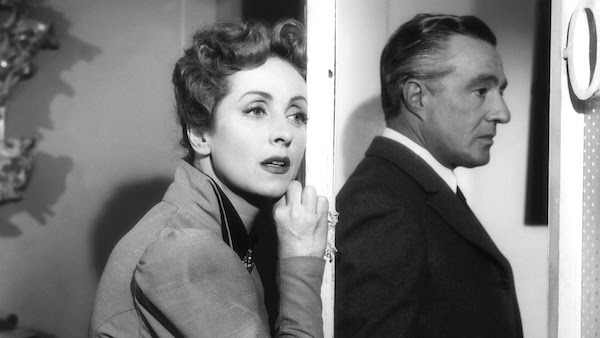
Noblewoman Danielle Darrieux, desperate for cash, sells a pair of diamond earrings gifted by aristocrat spouse Charles Boyer, only to have them borne back to her by Vittorio de Sica’s handsome Italian baron, a gift initiating a potentially destructive love affair. An exquisite evocation of Paris in the Belle Époque, in which Ophuls’s camera moves through ballrooms and bedchambers with the weightless grace of a prima ballerina. “A difficult work, in the fullest sense of the word, even in its writing, one in which everything aims to disconcert, distract the viewer from what is essential through the accumulation of secondary actions, wrong turns, repetitions and delays; a work in which the picturesque tries hard to conceal the pathetic.” —Jacques Rivette
LOLA MONTÈS/ 롤라 몽테스
1955, 116 min, 35mm
Ophüls’s final film before his early death at age 54, and his first in widescreen and color, which makes one yearn to see what else he might have yet been able to do. The title’s famous courtesan (Martine Carol) has been reduced to working as a circus attraction for ringmaster Peter Ustinov, nightly reliving her famous affairs with Franz Liszt and Bavaria’s King Leopold I, realized in opulent, garish storybook flashbacks negotiated by sinewy moving camera. Rainer Werner Fassbinder’s third favorite film of all-time, and a call-to-arms cause for French cinephiles at the time of its release, with a fired-up François Truffaut trumpeting, after its Paris opening: “If we must fight [for Lola Montés], we shall; if we must polemicize, so be it.”
Metrograph
7 Ludlow St New York, NY 10002
https://metrograph.com
 이화여대 미대 동문 녹미회 8인전 'On the Verge'@알재단 갤러리(...
 프릭컬렉션, 토마스 게인즈버러 '초상화 속 패션'(Gainsborough: ...