

이건희컬렉션 워싱턴 D.C. 아시아미술관, 시카고아트인스티튜트, 대영박물관 순회전
이건희 컬렉션과 국보와 보물 20점을 포함 총 200여점의 한국미술품을 선보이는 특별전 '한국의 보물: 모으고, 아끼고, 나누다(Korean Treasures: Collected, Cherished, Shared)'가 워싱턴 D.C. 국립아시아미술관(11/15-2/1, 2026), 시카고아트인스티튜트(Korean National Treasures: 2,000 Years of Art, 3/7-7/5, 2026), 그리고 런던의 브리티시뮤지엄(The British Museum)으로 이어진다.
Korean Treasures: Collected, Cherished, Shared
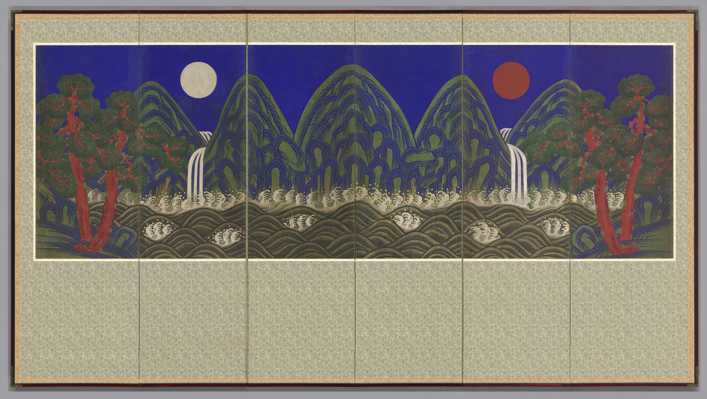
일월오봉도
The Smithsonian’s National Museum of Asian Art will present Korean Treasures: Collected, Cherished, Shared this fall, the first U.S. exhibition of significant works from the renowned Lee Kun-Hee Collection. On view Nov. 8 through Feb. 1, 2026, “Korean Treasures” features over 200 works, including a dozen National Treasures designated by the Korean government. The largest and most comprehensive presentation of Korean art ever mounted at the National Museum of Asian Art, the exhibition spans 1,500 years—from ancient Buddhist sculptures and ceramics to paintings, furnishings and modern masterpieces of the 20th century.
Donated to the Republic of Korea in 2021 by the family of the late Samsung Chairman Lee Kun-Hee, the collection reflects more than 70 years of generational collecting and comprises more than 23,000 works, a testament to a decades-long commitment to preserving and sharing Korea’s artistic legacy and cultural heritage. “Korean Treasures” presents a remarkable selection from the collection to American audiences for the first time, alongside additional loans from the Leeum Museum of Art in Seoul, Korea, shown exclusively in Washington, D.C. This exhibition is co-organized by the Art Institute of Chicago, the National Museum of Korea and the National Museum of Modern and Contemporary Art, Korea, and draws from the National Bequest of Lee Kun-Hee’s Collection.
“‘Korean Treasures’ is a rare and extraordinary opportunity to share the richness and depth of Korean art with U.S. audiences,” said Chase F. Robinson, director of the National Museum of Asian Art. “From Buddhist sculpture of the Three Kingdoms period to Joseon dynasty furnishings created for the studies of the scholar-gentry and bold 20th-century paintings, these works span centuries of innovation and creativity. Lee Kun-Hee was a visionary collector, and the gift made by his family to Korea stands as one of the most significant in the country’s history. As a museum founded through a similar transformative act of generosity, we are honored to share this remarkable story of cultural legacy on the international stage.”
Arranged thematically across 10 galleries, the exhibition explores the character of Korean art and culture with a mixture of pre-modern and 20th-century works, highlighting the depth and diversity of Korea’s artistic legacy. It opens and closes with a reflection on the practice of collecting in Korea, drawing inspiration from the tradition of chaekgado—vibrant painted screens depicting scholarly books and treasured objects. These galleries illustrate how historical collectors acquired, appreciated and displayed their possessions, evoking parallels to cabinets of curiosity. Among the works on view is a painted 19th-century chaekgado featuring rare books, scholarly implements, antiques and curiosities imported from China.
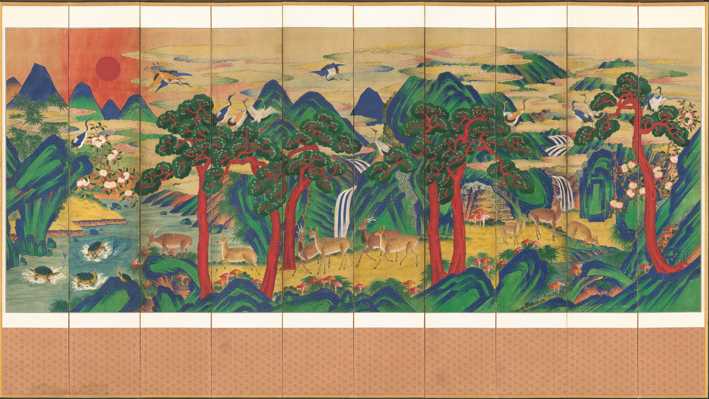
십장생도
Other sections illuminate key subjects in Korea’s cultural history, from the values of the Neo-Confucian elite and the visual splendor of the royal court to the enduring legacy of Buddhist art and bold experiments in modern painting. Highlights include:
- Sarangbang: Scholars at Home: Spanning centuries of cultural evolution, several sections of the exhibition center on the Joseon Dynasty (1392‒1910). A key setting for Neo-Confucian practice during this period was the sarangbang, or scholar’s study. Modest yet meticulously crafted furnishings are on view alongside writing tools, portraits of accomplished scholar-officials and accounts of virtuous men and women, reflecting the tastes and morals of Korea’s scholarly elites.
- Art at the Joseon Court: The ideals, aesthetics and patronage systems of the Joseon court played a pivotal role in shaping Korean culture. Early royal palaces such as Gyeongbokgung (built in 1395) and Changdeokgung (started in 1404) are depicted in artworks featured in this gallery. Their refined courtly culture is evident in a display of furniture, ceramics, ceremonial objects and paintings.
- Buddhism and its legacy: Immersing visitors in 1,500 years of Buddhist art, this gallery explores how Buddhism endured in Korea after arriving from China. Transmitted Buddhist imagery inspired early artworks crafted for local preferences. Sacred texts and ritual objects on view provide a holistic understanding of Buddhist devotional practice, while later Joseon-era altar paintings depict events in the Buddha’s life and the array of Buddhist deities worshipped in Korea.
- Transcending tradition: By the 20th century, traditional modes of appreciating art—once centered in intimate settings like the scholar’s study—had begun to shift. Pioneering artists such as Lee Sangbeom (1897–1972), Park Saengkwang (1904–1985) and Lee Ungno (1904–1989) sought new visual languages by merging Western and Korean concepts and subject matter. By the 1950s, many artists’ radical approaches began to redefine Korean painting in a modernizing world.
“This exhibition features artworks from the collection generously donated by the family of the late Chairman Lee Kun-Hee,” said You Hong June, director of the National Museum of Korea. “Spanning the Three Kingdoms period to the early 20th century, the selected works illuminate the cultural roots of what is today known globally as K-culture. We hope that audiences, particularly those who are beginning to take an interest in Korean popular culture, may find in this exhibition an opportunity to explore its historical origins and enduring vitality, thus bridging past and present.”
“The upcoming exhibition in Washington is generating great anticipation through its curatorial vision that bridges tradition with modern and contemporary art, enriched by the collaboration on the timeless Lee Kun-hee Collection,” said Kim Sunghee, director of the National Museum of Modern and Contemporary Art, Korea. “I believe this exhibition will serve as a meaningful platform to reflect how Korean culture and art, while deeply rooted in tradition, are evolving toward new directions that embrace historical diversity and hybridity.”
“The Lee family’s generous contribution reflects a profound commitment to sharing Korea’s cultural heritage with the world,” said Yoonie Joung, president and CEO of Samsung Electronics North America. “We are honored to present this exhibition, which not only showcases the richness and accomplishments of Korean art, but also serves as a meaningful platform to share Executive Chairman Jay Y. Lee and his family’s enduring philosophy of social giving with the American public.”
Related to the exhibition, a major international symposium dedicated to the topic of collecting Korean objects and paintings is planned for Jan. 22–23, 2026. Distinguished scholars from the United States, the United Kingdom and Korea will discuss topics including the historical development of collecting in Korea, the rise of the Korean art market, the formation of national collections and the collecting of Korean art abroad. The exhibition will also be accompanied by a major catalog distributed by Yale University Press in fall 2025.
Following its premiere in Washington, D.C., the exhibition will travel to the Art Institute of Chicago where it will be on view March 7, 2026, through July 5, 2026. Both venues feature a unique curatorial approach, highlighting different selections from the Lee Kun-Hee Collection. The presentation at the National Museum of Asian Art is curated by Keith Wilson, the June and Simon K.C. Li curator of Chinese art; Carol Huh, associate curator of contemporary Asian art; and Sunwoo Hwang, the Korea Foundation assistant curator of Korean art and culture. The lead curator for “Korean Treasures” is Yeonsoo Chee, the Korea Foundation associate curator of Korean art at the Art Institute of Chicago.
About the Museum’s Korean Art Program
Since its founding as the Freer Gallery of Art, the National Museum of Asian Art was one of the first museums in the nation to display Korean art. Today, it cares for nearly 800 Korean objects; the entire Korean collection can be viewed online. Through the partnership with the National Museum of Korea, the National Museum of Asian Art continues to grow its respected Korean art program. In 2024, the museum appointed its first Korea Foundation assistant curator of Korean art and culture, Sunwoo Hwang, and received a landmark $1.4 million grant from the National Museum of Korea to support a wide range of initiatives—including staff exchanges, public and scholarly programming, the planned reinstallation of the permanent Korean art gallery and the presentation of “Korean Treasures.” The museum has also deepened its engagement with modern and contemporary Korean art through recent exhibitions such as Park Chan-kyong’s first solo presentation in a U.S. museum, “Gathering” (2023–2024), and the installation of Do Ho Suh’s commissioned monument “Public Figures” facing the National Mall (2024–2029). Reflecting continued public interest, the museum’s annual Chuseok celebration welcomed more than 7,000 visitors in 2024, up from 5,000 the previous year. These broader developments signal the National Museum of Asian Art’s long-term commitment to elevating Korean art and culture on a national and international stage.
Credit
This exhibition, drawn from the National Bequest of Lee Kun-Hee’s Collection, is organized by the Smithsonian’s National Museum of Asian Art, the Art Institute of Chicago, the National Museum of Korea, and the National Museum of Modern and Contemporary Art, Korea.
The National Museum of Asian Art acknowledges its long-standing partnership with the National Museum of Korea. This exhibition is made possible by this special relationship and a multiyear grant awarded through the museum’s Overseas Korean Galleries Support Program.
Samsung is the Presenting Corporate Sponsor of “Korean Treasures: Collected, Cherished, Shared.”
About the Smithsonian’s National Museum of Asian Art
The Smithsonian’s National Museum of Asian Art is committed to preserving, exhibiting, researching and interpreting art in ways that deepen the public and scholarly understandings of Asia and the world. The museum opened in 1923 as America’s first national art museum and the first Asian art museum in the United States. It now stewards one of the world’s most important collections of Asian art, with works dating from antiquity to the present. The museum also stewards an important collection of 19th- and early 20th-century American art.
Today, the National Museum of Asian Art is emerging as a leading national and global resource for understanding the arts, cultures and societies of Asia, especially at their intersection with America. Guided by the belief that the future of art museums lies in collaboration, increased access, and transparency, the museum is fostering new ways to engage with its audiences while enhancing its commitment to excellence.
Located on the National Mall in Washington, D.C., the museum is free and open 364 days a year (closed Dec. 25). The Smithsonian is the world’s largest museum, education and research complex and welcomes 20–30 million visitors yearly. For more information about the National Museum of Asian Art, visit asia.si.edu.
스미스소니언 국립아시아미술관, 《A Collector's Eye: Masterpieces of Korean Art》
이건희 컬렉션 대표 작품, 미국 최초 공개
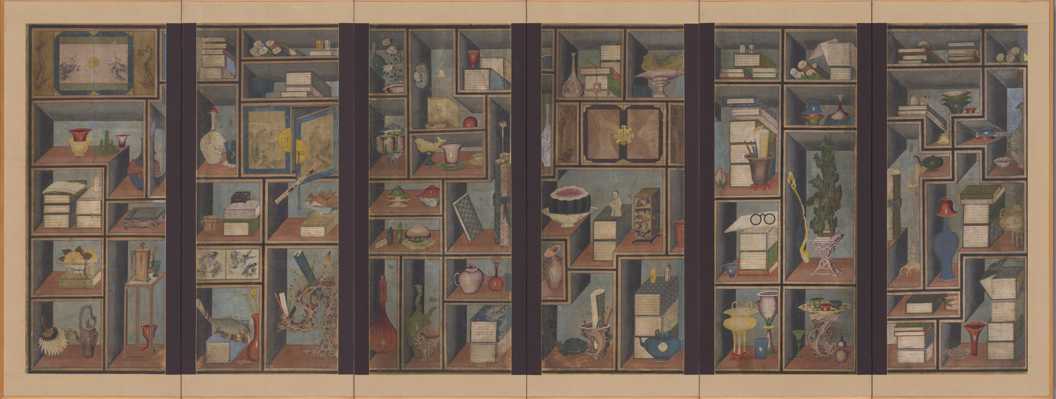
19세기 책가도
스미스소니언 국립아시아미술관은 이건희 컬렉션에서 엄선한 주요 작품을 미국에서 처음 공개하는 《한국의 보물: 모으고, 아끼고, 나누다(Korean Treasures: Collected, Cherished, Shared)》 특별전을 개최한다. 오는 11월 8일부터 2026년 2월 1일까지 열리는 이번 전시에서는 국가 지정 국보와 보물 20여 점을 포함해 총 200여 점의 작품을 선보인다. 국립아시아미술관에서 열린 한국 미술 전시 중 SI-187-2025 가장 규모가 크고 포괄적인 이번 특별전은 고대 불교 조각과 도자기부터 회화, 목가구, 그리고 20세기 근현대 미술에 이르기까지 약 1,500년에 걸친 역사를 아우른다.
2021년 삼성그룹 고(故) 이건희 회장의 유족이 국가에 기증한 이 컬렉션은 2만 3천여 점에 이르며, 70여 년에 걸친 대를 이은 수집의 역사는 한국 문화유산의 보존과 공유를 위한 오랜 헌신과 기여를 보여준다. 이번 특별전은 미국 관람객을 위해 엄선한 이건희 컬렉션 작품들을 처음 전시하는 자리로, 워싱턴 D.C.에서만 출품되는 리움미술관 소장품도 함께 선보인다. 이건희 컬렉션의 국가 기증품을 바탕으로 마련된 이번 전시는 스미스소니언 국립아시아미술관, 시카고박물관, 국립중앙박물관, 그리고 국립현대미술관이 공동으로 주최한다.
국립아시아미술관장 체이스 F. 로빈슨(Chase F. Robinson)은 “《한국의 보물》 특별전은 미국 관람객에게 한국 미술의 풍부함과 깊이를 선보이는 드문 기회로, 삼국시대 불교 조각부터 조선시대 선비의 사랑방 가구, 그리고 대담한 20세기 회화에 이르기까지 수세기에 걸친 혁신과 창의성을 보여준다”고 말했다. 이어 그는 “이건희 회장은 선견지명을 지녔던 수집가로, 삼성 일가가 국가에 기증한 작품들은 한국 역사상 가장 뜻깊은 기부 중 하나로 손꼽힌다. 국립아시아미술관 또한 이러한 아낌없는 기증을 기반으로 설립된 기관인 만큼, 이 귀중한 문화유산의 이야기를 해외에 전하게 된 것을 큰 영광으로 생각한다”고 덧붙였다.
10개의 주제별 공간으로 구성된 본 전시는, 근대 이전과 20세기 작품을 아울러 한국 미술의 깊이와 다양성을 조명한다. 전시의 도입부와 마무리는 각종 서책과 진귀한 기물을 화려하게 채색한 책가도에서 영감을 받아 수집의 의미를 되짚어본다. 호기심의 방(cabinets of curiosity)을 연상시키는 이 공간은 과거 수장가들이 소장품을 어떻게 수집하고 감상하며 전시했는지를 보여준다. 전시품 중에는 중국에서 들여온 희귀 서적과 문방구, 골동품 등을 묘사한 19세기 책가도 병풍도 포함되어 있다. 그 외 전시 공간에서는 조선시대 성리학적 이상을 추구한 사대부의 가치관과 화려한 조선의 왕실 문화, 불교미술의 유구한 전통, 그리고 현대 회화의 대담한 실험정신에 이르기까지, 한국 문화사의 주요 주제를 조명한다.
대표적인 전시 공간은 다음과 같다.
• 사랑방, 선비의 공간: 수세기에 걸친 문화의 흐름을 조망하는 이번 전시의 일부 공간은 조선시대를 중심으로 구성됐다. 당시 성리학 실천의 중심이라 할 수 있는 사랑방은 선비의 서재로, 소박하면서도 정교하게 제작된 목가구와 문방구, 명망 높은 문신의 초상화, 그리고 덕과 2 효를 갖춘 인물들에 관한 이야기 등을 통해 조선 지식인 계층의 미적 취향과 도덕적 가치관을 살펴본다.
• 조선 왕실의 미술: 조선 왕실의 이상과 미감, 그리고 후원 체계는 한국 문화 형성에 중요한 역할을 했다. 이 전시 공간에서는 1395년에 건립된 경복궁과 1404년에 조성이 시작된 창덕궁 등 궁궐의 모습을 담은 작품들을 선보인다. 아울러 목가구, 도자, 의례용품, 회화 등 다양한 유물을 통해 왕실 문화의 면모를 한 자리에서 감상할 수 있다.
• 유구한 불교 문화: 이 전시 공간은 불교가 한반도에 전래된 이후 1500여 년에 걸쳐 발전해 온 불교 미술의 세계로 관람객을 안내한다. 중국에서 들어온 불상을 바탕으로 한국적 미감으로 재해석된 불교 조각을 비롯해 경전과 의식구, 그리고 부처의 생애와 다양한 존상을 묘사한 불화는 한국 불교의 신앙과 의례를 다각도로 보여준다.
• 전통을 넘어: 20세기에 들어서면서 사랑방과 같은 공간에서 이루어지던 전통적 미술 감상 방식은 점차 변화를 맞이했다. 이상범(1897–1972), 박생광(1904–1985), 이응노(1904–1989) 등 선구적인 작가들은 서양과 한국의 개념과 주제를 결합해 새로운 시각적 언어를 모색했다. 1950년대에 이르러 다수의 작가들이 시도한 혁신은 근대화가 진행되던 세계 속에서 한국 회화를 새롭게 정의하는 계기가 되었다.
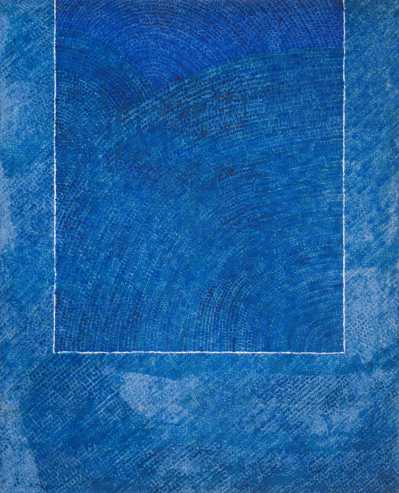
김환기 작, 산울림
유홍준 국립중앙박물관장은 “이번 전시는 이건희 회장의 기증품으로 꾸며졌지만, 삼국시대부터 20세기 초까지를 아우르는 엄선된 작품들은 오늘날 전 세계의 주목을 받는 K-컬처의 원류이기도 하다”라고 설명하며, “한국 대중문화에 대한 관심을 갖기 시작한 미국의 관람객들이 이번 전시에서 그 기원을 찾아 한국 전통문화의 아름다움을 발견하고, 과거와 현재를 관통하는 한국 문화의 힘과 예술성을 느낄 수 있는 기회를 얻길 바란다”라고 밝혔다.
이어 김성희 국립현대미술관장은 “이번 워싱턴 전시는 한국의 전통과 근∙현대 미술을 잇는 전시 기획과 이건희 컬렉션과의 협업이 더해져, 더욱 풍성해진 내용으로 큰 기대를 모으고 있다”고 말하며 “이 전시는 한국의 문화와 미술이 전통에 뿌리를 두면서도, 역사적 다양성과 혼성성을 포용하는 새로운 방향으로 나아가고 있음을 보여주는 의미 있는 플랫폼이 될 것이라 믿는다”고 전했다.
아울러 정윤 삼성전자 북미총괄장은 “이건희 회장 유족이 베푼 아낌없는 기증은 한국의 문화유산을 전 세계와 나누겠다는 확고한 신념을 보여준다”라고 언급하며, “이번 전시는 한국 미술의 풍부함과 성취를 선보일 뿐 아니라, 이재용 회장과 그 일가가 이어온 사회공헌 철학을 미국 대중과 나누는 뜻깊은 플랫폼이 될 것”이라고 덧붙였다.
이번 전시와 연계해, 한국 미술 수집을 주제로 한 국제 심포지엄이 2026년 1월 22일과 23일 양일간 개최될 예정이다. 이 학술 행사에는 미국, 영국, 한국의 저명한 학자들이 참여해 서화 수장(收藏)의 역사, 미술 시장의 형성, 국가 소장품의 구축, 그리고 해외에서의 한국 미술 수집 등 다양한 주제를 심도 있게 다룰 예정이다. 또한 이번 전시의 도록은 2025년 가을 예일대학교 출판부에서 출간된다.
워싱턴 D.C.에서 첫선을 보인 이번 전시는 2026년 3월 7일부터 7월 5일까지 시카고미술관(Chicago Art Institute)으로 이어진다. 두 기관은 각기 다른 큐레이션을 통해 이건희 컬렉션의 공통된 작품과 차별화된 선별작을 함께 선보인다. 스미스소니언 국립아시아미술관의 특별전 《한국의 보물: 모으고, 아끼고, 나누다》는 키스 윌슨(Keith Wilson) 준 & 사이먼 K. C. 리 중국 미술 큐레이터, 캐롤 허(Carol Huh) 현대 아시아 미술 어소시에이트 큐레이터, 황선우(Sunwoo Hwang) 한국국제교류재단 한국 미술과 문화 어시스턴트 큐레이터가 공동 기획했다. 이 전시의 총괄 기획은 시카고박물관의 지연수(Yeonsoo Chee) 한국국제교류재단 한국 미술 어소시에이트 큐레이터가 맡았다.
국립아시아미술관 한국 미술 프로그램 프리어미술관(Freer Gallery of Art)으로 처음 설립된 스미스소니언 산하 국립아시아미술관은 미국에서 일찍이 한국 미술을 선보인 박물관 중 한 곳이다. 현재 800점에 달하는 한국 미술 소장품을 보유하고 있으며, 전 소장품은 온라인상에서 열람할 수 있다. 국립아시아미술관은 국립중앙박물관과의 긴밀한 협력을 바탕으로 한국미술 프로그램을 꾸준히 확장해 왔다. 2024년에는 한국국제교류재단 한국미술과 문화 어시스턴트 큐레이터로 황선우를 최초로 임명하고,국립중앙박물관으로부터 약 140만 달러의 지원금을 받아 전문 인력 교류, 문화 및 학술 행사 진행, 한국실 재설치, 《한국의 보물》 특별전 개최 등 다양한 사업을 추진하고 있다.
또한 국립아시아미술관은 한국 현대미술과의 교류를 꾸준히 확대해 왔다. 대표적으로 미국 박물관에서 열린 박찬경 작가의 첫 개인전 《모임(Gathering)》(2023–2024)을 선보였으며, 내셔널 몰(National Mall) 맞은편에는 서도호 작가의 커미션 작품 《공인들(Public Figures)》(2024–2029)을 설치했다. 이와 더불어 한국 문화에 대한 대중의 높은 관심을 반영하듯, 2024년 개최된 연례 추석 행사에는 7,000명 이상이 참여해 전년도 5,000명보다 크게 증가했다. 이러한 결실은 국립아시아미술관이 국내외에서 한국 미술과 문화를 널리 알리고 그 위상을 강화하려는 의지를 잘 보여준다.
주최 및 후원 이건희 컬렉션의 국가 기증에서 고안된 본 전시는 스미스소니언 국립아시아미술관, 시카고박물관, 국립중앙박물관, 국립현대미술관이 기획했다. 국립아시아미술관은 국립중앙박물관과 다져온 오랜 협력 관계에 깊은 감사를 표한다. 이번 전시는 양 기관이 쌓아온 특별한 파트너십과 국외박물관 한국실 운영 지원 사업을 통한 다년간의 후원으로 성사되었다. 삼성은 《한국의 보물: 수집하고, 아끼고, 나누다》 특별전의 대표 후원사이다. 스미스소니언 국립아시아미술관 워싱턴 D.C. 내셔널몰에 위치한 스미스소니언 국립아시아미술관은 아시아와 세계에 대한 대중과 학계의 이해를 넓히기 위해 소장품의 보존, 전시, 연구 및 해석에 힘쓰고 있다. 1923년 개관하여 미국 최초의 국립미술관이자 아시아미술 전문 기관으로 자리매김했으며, 고대부터 현대까지를 아우르는 세계적 위상의 아시아 미술품을 소장하고 있다. 더불어 19세기와 20세기 초 미국미술의 중요 작품들도 함께 보유하고 있다.
오늘날 국립아시아미술관은 미국과 아시아가 맞닿는 연결 지점에서 아시아의 미술과 문화, 그리고 사회를 이해하는 데 국내외를 선도하는 거점으로 자리매김하고 있다. 또한 미래는 협력과 확대된 접근성, 그리고 개방성에 있다는 비전 아래, 관람객과의 새로운 소통 방식을 모색하며 전문성을 한층 강화하고 있다. 워싱턴 D.C. 내셔널몰에 위치한 국립아시아미술관은 매년 12월 25일을 제외한 364일 동안 무료로 개방된다. 스미스소니언은 세계 최대 규모의 박물관·교육·연구 복합 단지로, 매년 약 2천만에서 3천만 명의 방문객을 맞이한다. 국립아시아미술관에 대한 보다 자세한 정보는 asia.si.edu에서 확인할 수 있다.
 페미니스트 누드화가 '조안 시멜: 육체 속에서(Joan Semmel: In t...