



고갱, 반 고흐, 뭉크, 르동...상징주의 화가들의 상상 'Strange Realities: The Symbolist Imagination' @시카고아트인스티튜트(10/4-1/5, 2026)
Strange Realities: The Symbolist Imagination
19세기말 '본 것'보다 '느낀 것'을 그렸던 화가들
Oct 4, 2025–Jan 5, 2026
Chicago Art Institute
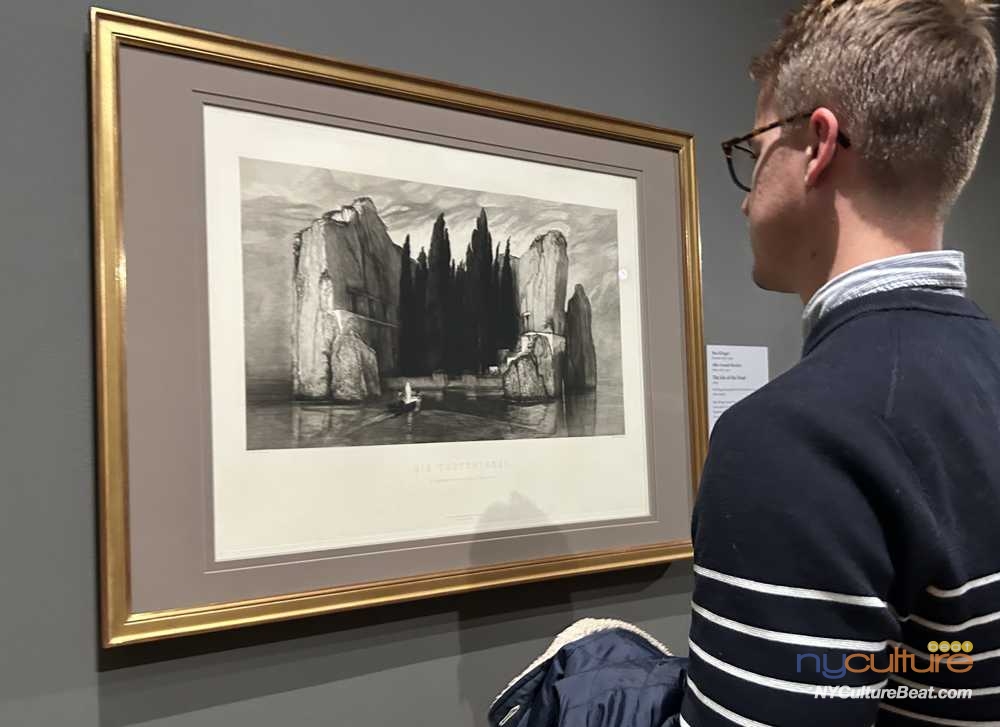
Strange Realities: The Symbolist Imagination, Chicago Art Institute. Photo: Sukie Park/ NYCultureBeat
유럽에서 19세기 후반 10년간은 '세기말'의 분위기가 팽배했다. 미술, 문학, 음악 전반에 걸쳐 인간의 내면, 꿈, 상상, 신비, 감정, 철학적 세계를 표현하는 상징주의(Symbolism)이 지배하게 된다. 외부 세계의 객관적 재현과 시각적 인상에 집중했던 사실주의와 인상주의와의 결별이었다.
문학에서는 프랑스 시인 보들레르(Charles Baudelaire), 말라르메(Stéphane Mallarmé), 랭보(Arthur Rimbaud) 등이 상징주의의 토대를 닦았으며, 미술계에선 귀스타브 모로(Gustave Moreau), 오딜롱 르동(Odilon Redon), 스위스의 아르놀트 뵈클린(Arnold Böcklin), 벨기에의 페르낭 크노프(Fernand Khnopff), 네덜란드의 얀 토로프(Jan Toorop), 노르웨이의 에드바르 뭉크(Edvard Munch), 그리고 오스트리아의 구스타프 클림트(Gustav Klimt)가 대표적이다.
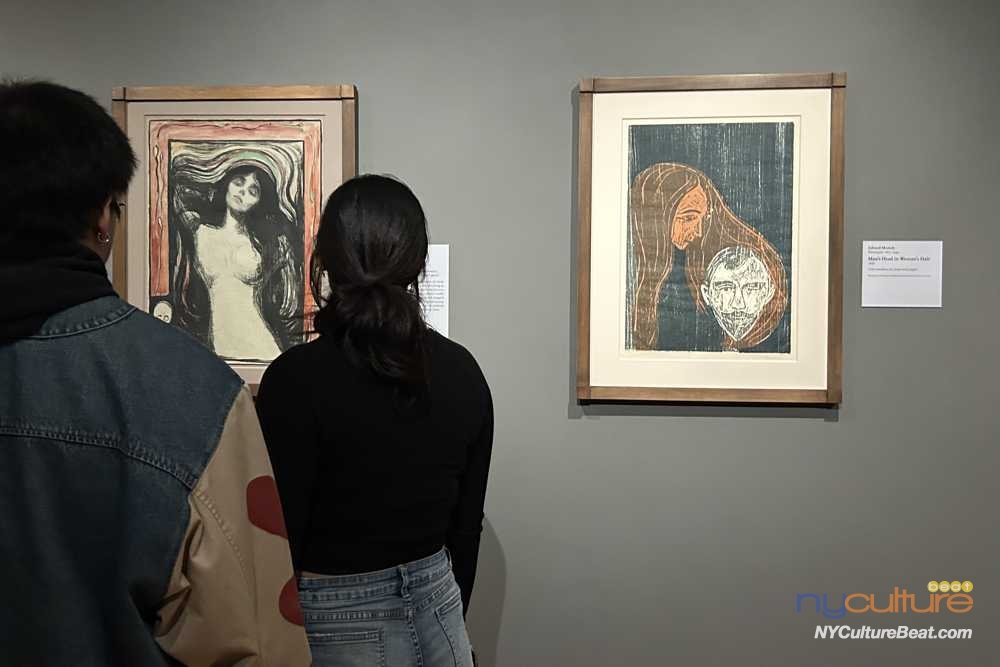
Strange Realities: The Symbolist Imagination, Chicago Art Institute. Photo: Sukie Park/ NYCultureBeat
모네, 르누아르, 피사로, 드가, 시슬리 등 인상파 화가들이 '보는 것을 그린' 지각 중심이었다면, 상징주의 화가들은 '느끼는 것을 그린' 감정 중심의 화가들이었다. '보이는 것 너머의 세계'를 탐구한 상징주의는 후대 표현주의와 초현실주의에 영향을 주게 된다.
시카고아트인스티튜트에서 상징주의 화가들의 세계를 탐구한 특별전 '이상한 현실: 상징주의의 상상(Strange Realities: The Symbolist Imagination)'이 열리고 있다.
폴 고갱과 상징주의
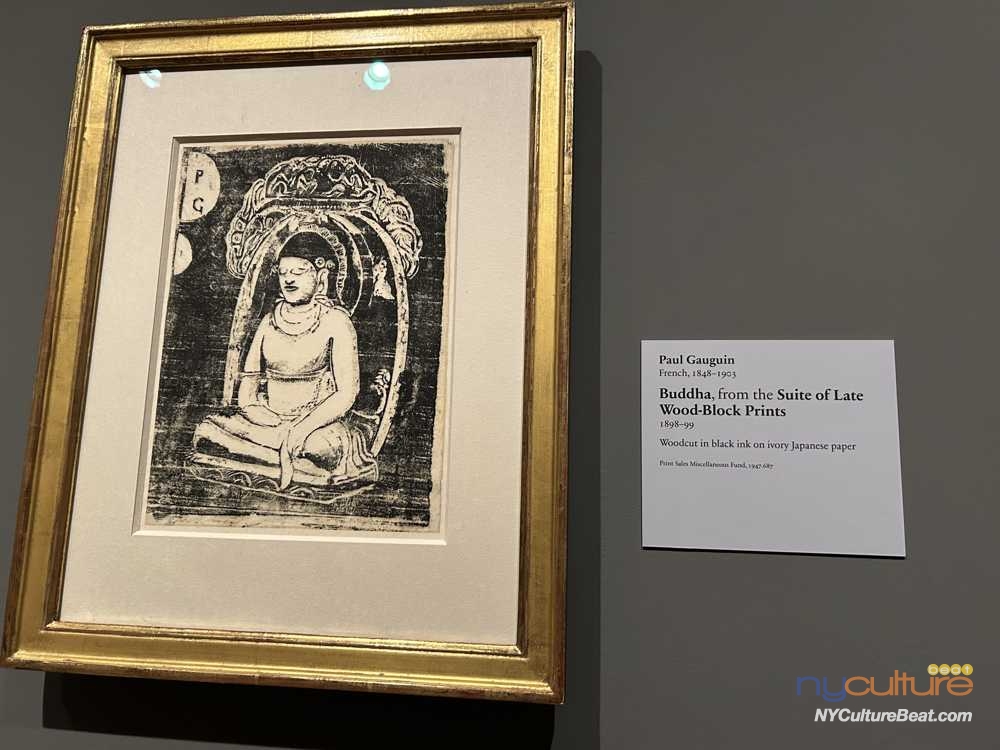
Strange Realities: The Symbolist Imagination, Chicago Art Institute. Photo: Sukie Park/ NYCultureBeat
이 전시에선 폴 고갱(Paul Gauguin)의 작품이 주목을 끌었다. 고갱은 초기에 모네, 피사로 등 인상주의 화가들과 교류했지만, 점차 시각적 인상보다는 내면적 감정과 상징적 의미에 더 끌렸다. 그가 사용한 강렬한 컬러는 상징을 담았다. 붉은색은 열정, 불안, 신비, 노란색은 신성과 내면의 빛, 녹색은 자연, 영혼의 평화를 상징하는 컬러였다.
증권 브로커였던 고갱은 전업화가로 전향해 문명과 도시를 떠나 타히티에 정착했다. 산업화된 서구문명에 대한 반발이자, 순수한 인간 본성과 신비적 세계로의 귀환이었다. 삶의 순환을 묻는 걸작 '우리는 어디서 왔는가? 우리는 누구인가? 우리는 어디로 가는가?(1897–98, 보스턴미술관 소장)과 이 전시에 소개된 '부처 목판화(Buddha, from the Suite of Late Wood-Block Prints, 1898–99)'는 고갱의 상징주의 성향을 드러내는 작품들이다.
반 고흐와 상징주의
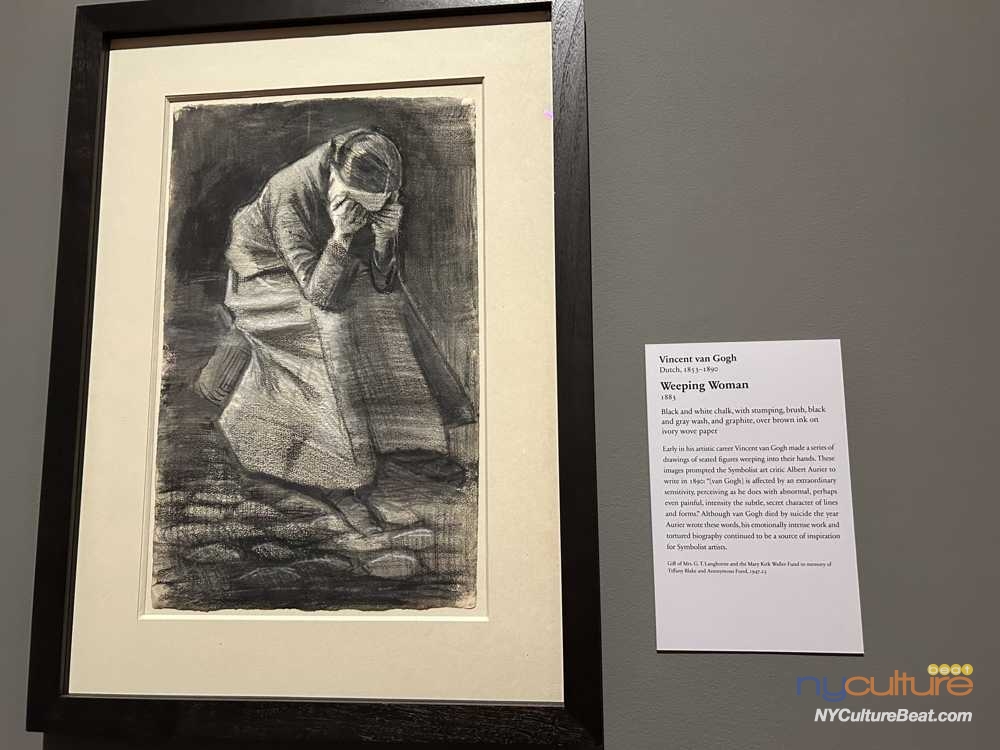
Strange Realities: The Symbolist Imagination, Chicago Art Institute. Photo: Sukie Park/ NYCultureBeat
빈센트 반 고흐(Vincent van Gogh) 상징주의 화가로 분류되지는 않지만, 초기엔 내면의 정서와 종교적 영성을 상징적으로 드러내려는 경향이 강하게 보였다. 그의 드로잉 '울고 있는 여인(Weeping Woman, 1883)'은 대표적인 작품이다.
목사 가정에서 자랐고, 목사가 될뻔했던 반 고흐는 화가 농민들의 화가 장 프랑수아 밀레를 존경했다. 반 고흐는 네덜란드 하층민, 노동자, 농민의 삶을 그리면서 인간의 비극과 존엄성을 탐구했다. '울고 있는 여인'은 마치 기도하는듯 하다. 그녀는 삶의 고통을 상징하는 실존이다.
'메두사'와 '위대한 개츠비'
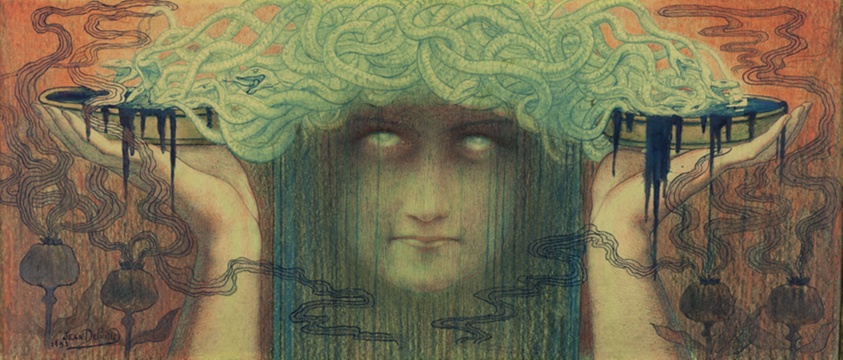
Strange Realities: The Symbolist Imagination, Chicago Art Institute. Photo: Sukie Park/ NYCultureBeat
낯설은 벨기에 화가 장 들빌(Jean Delville)의 '메두사(Medusa, 1893)'는 F. 스캇 피츠제랄드(Francis Scott Fitzgerald)의 소설 '위대한 개츠비(The Great Gatsby, 1925)'의 표지를 연상시켰다. 그리스 신화에서 메두사는 보석처럼 빛나는 눈을 가졌으며 보는 것을 모두 돌로 만들어버리는 능력을 가졌다. 상징주의 전성기에 제작된 '메두사'는 괴물 메두사가 아니라 아름다움이 가진 파괴적 매혹, 영혼을 마비시키는 에로스와 죽음을 상징한다.
'메두사'에서 눈동자는 인간 내면의 거울이자 진리의 빛, 머리의 뱀들은 본능과 욕망의 무의식, 푸른빛 피부는 인간을 초월한 차원, 빛과 그림자의 대비는 신성함과 타락, 연혼과 육체의 갈등을 상징하는 것으로 해석된다.
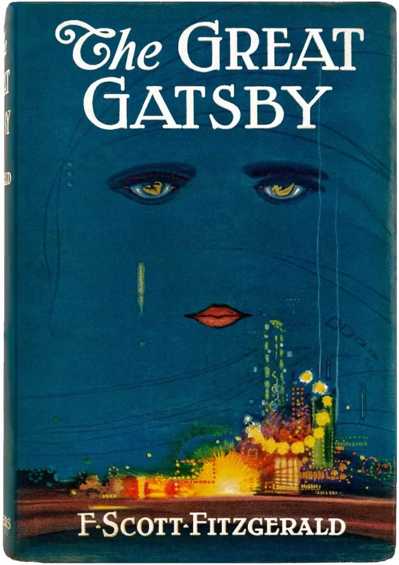
'위대한 개츠비' 표지는 스페인 출신 일러스트레이터이자 할리우드에서 영화포스터를 그렸던 프란시스 쿠가트(Francis Cugat, 1925)'의 '천상의 눈(Celestial Eyes)'이 담겼다. 재즈시대에 그려진 이 작품은 도시의 푸른 밤 하늘 놀이공원 위에 떠있는 여성의 눈과 입이 얼굴 윤곽 없이 묘사했다. 눈 속에는 여성의 누드가 보이고, 오른쪽에 눈물이 흘러내린다. 몽환적인 얼굴은 제이 개츠비가 갈망했던 데이지 부캐넌이며, 탐욕, 아름다움, 비극 등을 상징하는 표지로 해석되고 있다.
Strange Realities: The Symbolist Imagination
Oct 4, 2025–Jan 5, 2026
Chicago Art Institute
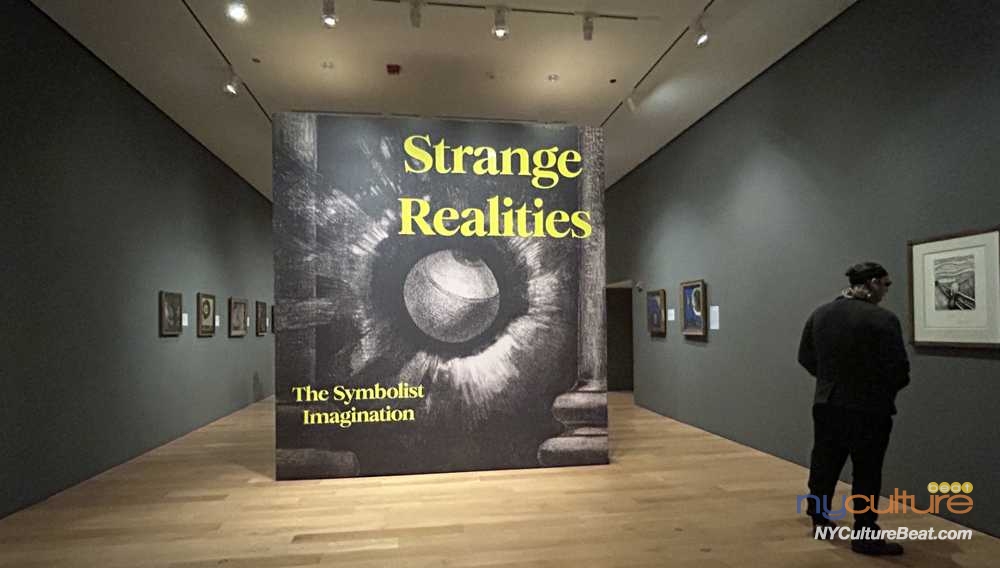
Strange Realities: The Symbolist Imagination, Chicago Art Institute. Photo: Sukie Park/ NYCultureBeat
The last decade of the 19th century in Europe saw an explosion of evocative and disturbing works of art, reflecting a cultural cynicism felt around rapid industrialization, a perceived moral decline, and the rural flight to urban centers.
These anxieties inspired Symbolist artists to draw on a dark and mysterious vocabulary of demons, skeletons, femmes fatales, and the visual manifestation of inner dreams and nightmares. Strange Realities: The Symbolist Imagination explores this cultural landscape from many perspectives and geographies, including France, Belgium, Norway, and Germany. On the eve of Halloween, join curator Jay A. Clarke to take a closer look at these psychologically intense and relevant works.
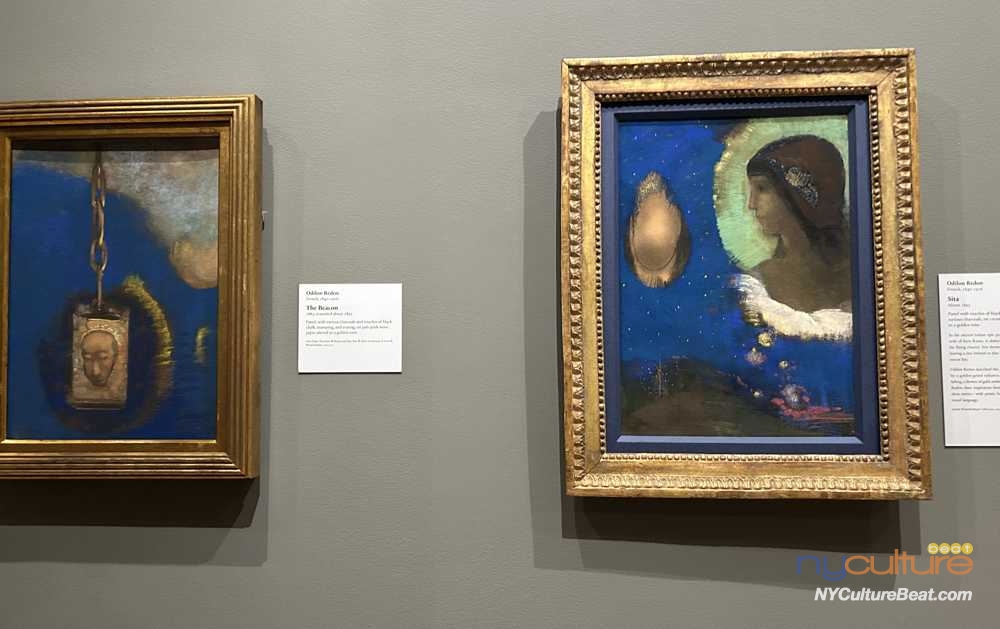
Strange Realities: The Symbolist Imagination, Chicago Art Institute. Photo: Sukie Park/ NYCultureBeat
Symbolism is among the most complex art movements to define. Although it followed on the heels of Impressionism, whose imagery was accessible and bright, Symbolism’s dark and mysterious vocabulary is far less known.
A work made of pastel, with touches of black conté crayon, over various charcoals, on cream wove paper altered to a golden tone.
While Symbolist artists were aligned in their embrace of the creative imagination, they used diverse styles and drew inspiration from the past, the future, and the interior self. Complicating the movement further was its lack of a single central hub; instead Symbolism was a loosely connected trend across Europe.
Symbolism, in fact, began as a literary movement in France in the 1880s and later expanded to visual art in Belgium, Germany, Norway, and elsewhere. Reacting against rationalism, materialism, and Impressionism’s focus on the external world, Symbolist artists sought instead to represent the unseeable—ideas and emotions. These artists shared a general cynicism about the late 19th century’s moral decline, technological advancements brought about by rapid industrialization, and the rural flight to urban centers.
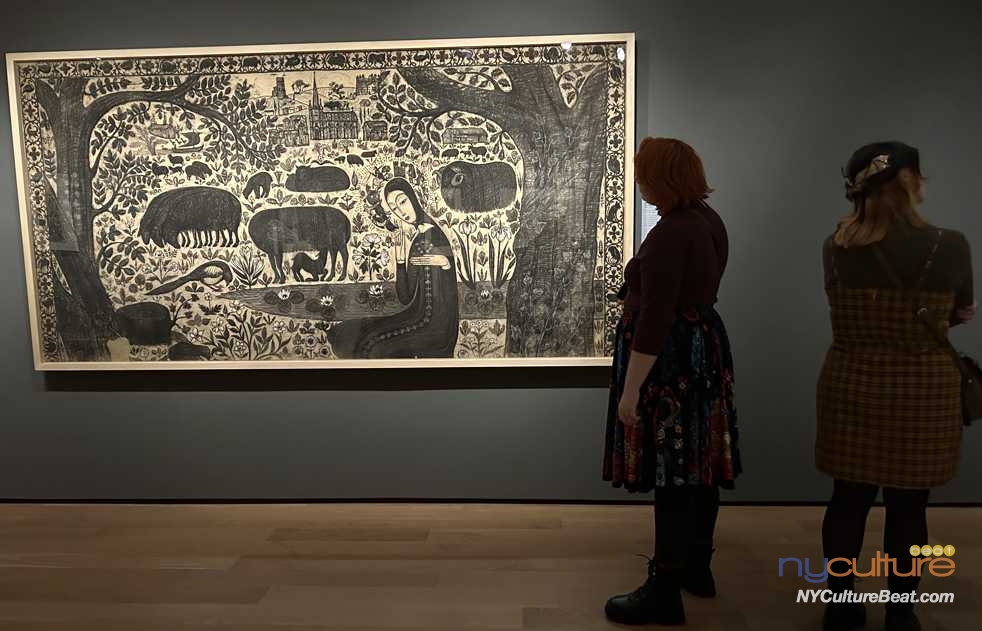
Strange Realities: The Symbolist Imagination, Chicago Art Institute. Photo: Sukie Park/ NYCultureBeat
A very wide color drawing shows a woman's face in the center, receding behind vertical streaks of blue. Her head is crowned with a mass of bright green writhing snakes. Her hands hold small plates on either side of her head, on which the snakes slither. Drawn over top are four bulb-like flowers that emit trails of smoke or odor.
In response they made art that invented alternate realities. Some artists turned to the past, transposing mythological and religious subjects onto the present moment; others turned to the future, imagining anarchist or idyllic worlds; while still others sought meaning by examining and excavating the self.
Painting shows the silhouette of a woman in a long dress seen from behind as she looks out at a body of water sparkling in the moonlight. In the background a house can be seen with light shining from its windows.
This exhibition features works on paper by iconic Symbolist artists such as Norwegian Edvard Munch, as well as lesser-known figures like the Austrian Emilie Mediz-Pelikan, the Belgian Léon Spilliaert, and the French Gustav Adolf Mossa. Drawn from the Art Institute of Chicago’s rich and historic collection of drawings and prints, including the largest collection in America of the French Odilon Redon and Paul Gauguin, this display features over 85 works that capture the beauty and strangeness of a mysterious generation of artists.
Strange Realities: The Symbolist Imagination is curated by Jay A. Clarke, Rothman Family Curator, Prints and Drawings, and Jamie Vaught-Karasek, collection manager, Photography and Media.
https://www.artic.edu
 루이스 부르주아의 백일몽 'Louise Bourgeois: Gathering Wool'@...
 오노 요코 회고전 'Yoko Ono: Music of the Mind'@시카고현대미술...