

'모네와 베니스(Monet and Venice)'@브루클린뮤지엄(10/11-2/1, 2026), @SF미술관(3/21-7/26, 2026)
클로드 모네의 베니스 회화를 모은 특별전 '모네와 베니스(Monet and Venice)'가 브루클린뮤지엄(10/11-2/1, 2026)과 이이서 샌프란시스코미술관(3/21-7/26, 2026)에서 열린다. 이 전시는 모네의 작품 19점을 비롯, 카날레토, 존 싱거 사전트, J.M.W.터너, 오귀스트 르누아르, 제임스 맥닐 휘슬러까지 약 100점의 작품, 서적, 관련 물품을 소개한다.
1908년 부인 알리스의 격려로 지베르니를 떠나 방문했을 때 베니스는 이미 오염과 넘치는 관광객들로 어려움을 겪고 있었다. 하지만, 모네는 베니스의 눈부신 빛과 화려한 건축에 매료되어 "그리기에는 너무 아름답다"라고 말한 것으로 알려졌다. 모네와 알리스는 몇년 후 다시 베니스를 여행할 계획이었지만. 1911년 알리스가 중병으로 사망하고 만다. 슬픔에 잠긴 모네는 작업실로 돌아가 베니스 그림을 완성했고, 1912년 파리에서 열린 전시에서 호평받았다.
Monet and Venice
October 11, 2025–February 1, 2026@Brooklyn Museum
March 21 –July 26, 2026@Fine Arts Museums of San Francisco
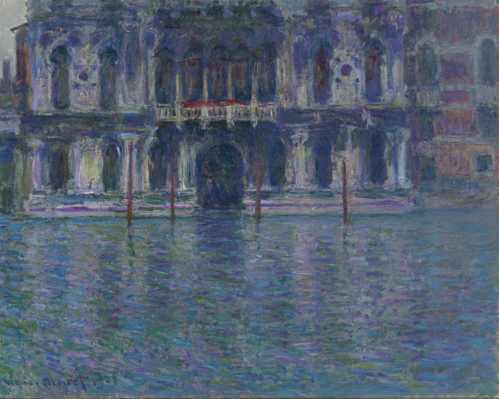
Claude Monet. The Palazzo Contarini, 1908. Oil on canvas. Hasso Plattner Collection
Tickets are now on sale for Monet and Venice, an exhibition that will reunite a selection of Claude Monet’s extraordinary Venetian paintings—a radiant yet underexplored chapter in the artist’s late career. The exhibition, New York’s largest museum show dedicated to Monet in over 25 years, will feature more than one hundred artworks, books, and ephemera, including nineteen of Monet’s Venetian paintings. It will mark the first dedicated exploration of Monet’s luminous Venetian works since their debut in 1912, placing them in context with select paintings from key moments throughout his career, and in dialogue with portrayals of the city by artists such as Canaletto, John Singer Sargent, J. M. W. Turner, and Pierre-Auguste Renoir. The exhibition follows past presentations on the artist at the Brooklyn Museum, such as Monet’s London: Artists‘ Reflections on the Thames, 1859–1914 (2005), Monet and the Mediterranean (1997), and Monet & His Contemporaries (1991). Monet and Venice at the Brooklyn Museum is sponsored by Bank of America.
Organized with the Fine Arts Museum of San Francisco, and cocurated by Lisa Small, Senior Curator of European Art, Brooklyn Museum, and Melissa Buron, former Director of Curatorial Affairs, Fine Arts Museums of San Francisco and current Director of Collections and Chief Curator, Victoria & Albert Museum, London, the exhibition offers a rare opportunity for visitors to experience Monet’s unique vision of the fabled city.
“It’s thrilling to reunite so many of Monet’s radiant paintings of Venice, including Brooklyn’s own Palazzo Ducale, which was acquired in 1920 and is emblematic of the Museum’s trailblazing commitment to modern French art,” said Lisa Small. “Monet found the lagoon city an ideal environment for capturing the evanescent, interconnected effects of colored light and air that define his radical style. In his Venice paintings, magnificent churches and mysterious palaces, all conjured in prismatic touches of paint, dissolve in the shimmering atmosphere like floating apparitions. We’re eager for our visitors to ‘travel’ to Venice and immerse themselves in the unfolding beauty of these dazzling paintings.”
“We’re delighted to present this groundbreaking exhibition offering a fresh opportunity for visitors to engage with one of the world’s most celebrated artists in a bold new way,” said Anne Pasternak, Shelby White and Leon Levy Director, Brooklyn Museum. “Through thoughtful interpretation and design, we invite our audiences to see Venice through Monet’s eyes and feel inspired by his vision.”
“At Bank of America, we believe that investing in the arts has a positive impact on individuals, families, and communities, and partners like the Brooklyn Museum continue to validate this,” said José Tavarez, President, Bank of America, New York City. “Our long-standing relationship with the Museum continues to deepen connections with innovative programming and compelling experiences. We’re proud to have partnered on conservation projects, free museum programming, and exhibitions and are looking forward to our newest sponsorship of Monet and Venice.”
Although the city was already grappling with the effects of pollution and overtourism when he visited, Monet remarked that Venice was “too beautiful to be painted.” In 1908, encouraged by his wife Alice, who hoped the journey would reinvigorate him during a pivotal moment in his career, Monet reluctantly left Giverny and soon became captivated by Venice’s radiant light and architectural splendor. Often overshadowed by his iconic depictions of the French landscape, Monet’s Venetian works are among the most luminous yet underexplored of his career. The pair had planned to return to Venice years later, but in 1911 Alice fell gravely ill and passed away. In mourning, Monet retreated to his studio, where he completed the Venetian paintings and, in 1912, exhibited them to great acclaim in Paris. These were the last new works shown publicly in his lifetime.
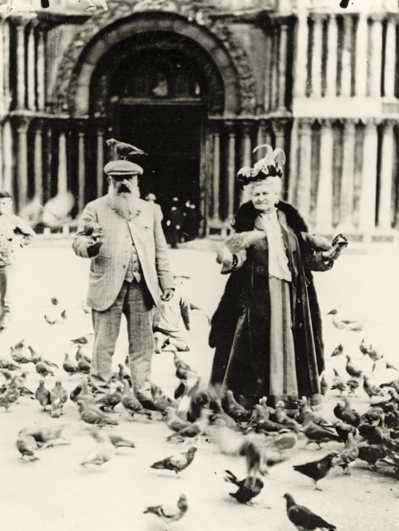
Claude Monet and his wife, Alice, in Piazza San Marco, Venice, October 1908. Musée Marmottan Monet, Paris. Photo: Bridgeman Images
Monet visited Venice only once, yet the city profoundly impacted him. With its fragile beauty and delicate interplay of land and sea, Venice became a site of both formal experimentation and symbolic resonance for the artist. Key examples of Venetian imagery by artists who preceded or were contemporaneous with Monet, including Pierre-Auguste Renoir, John Singer Sargent, J. M. W. Turner, James McNeill Whistler, and others, will be showcased, situating Monet’s works within a rich tradition of Venice as a subject of artistic inquiry. Standout works from the Museum’s collection, including four watercolors by Sargent that have been in the collection since 1909, and a group of Whistler’s famous Venice etchings, will be on view. Unlike the bustling scenes painted by artists like Canaletto, Monet’s Venice is almost devoid of human presence. Instead, he focused on rendering the city’s architecture and canals emerging through and dissolving in the encompassing and unifying color and light that he described as the enveloppe.
In addition to Monet’s paintings of Venice, the exhibition will present over a dozen other works created throughout his career that show his lifelong fascination with water and reflection. Paintings from Monet’s time in Normandy, London, and his home in Giverny—including three of his famed water lily canvases from the Musée Marmottan Monet in Paris, a private collection, and the Fine Arts Museums of San Francisco—will be displayed, drawing connections between the artist’s Venetian experiments and his broader oeuvre. Monet’s trip to Venice was his last major international journey, serving as both an interruption and a replenishment of his artistic focus. He returned invigorated, with a new perspective on the water lily paintings created in Giverny. As Monet asserted, “My trip to Venice has had the advantage of making me see my canvases with a better eye.”
The exhibition also features historical ephemera such as guidebooks of Venice and postcards written by Alice to her daughter, including one marking where the couple stayed for part of their trip. Select postcards, photographs, and letters are on loan to the Museum from the collection of Philippe Piguet, Alice Monet’s great-grandson from her first marriage.
Monet and Venice will further engage audiences through multisensory elements, including an original symphonic score inspired by the artist’s Venice paintings by the Brooklyn Museum’s Composer in Residence, Niles Luther. Upon entering the Museum’s fifth-floor rotunda, visitors will be greeted by an immersive installation that captures Venice’s unique atmosphere produced by Brooklyn-based design and technology studio Potion. It features film by Joan Porcel and his Venice-based Joan Porcel Studio, and an ethereal soundscape by Luther, using field recordings he captured in Venice and fragments of melodic themes drawn from his symphony. This visual and aural experience sets the stage for the visitor’s journey through Venice in the subsequent exhibition galleries.
“In composing for this exhibition, I’ve approached the paintings as souvenirs in the way Monet described them—memories infused with both beauty and melancholy,” says Luther. “My process is one of discovery, not invention—uncovering music no one has yet heard. Blending Italian, French, and American traditions, the composition mirrors Monet’s shimmering, dissolving Venice, transforming brushstrokes into living sound that surrounds the listener with both light and longing.”
In the culminating gallery, Luther’s full symphony enters into dialogue with Monet’s paintings of Venice. Three paintings, depicting the Palazzo Dario, the San Giorgio Maggiore, and the Palazzo Ducale, helped inspire and shape the emotional landscape of the composition. Just as Monet sought to render Venice‘s unique atmospheric enveloppe—where light, water, and architecture merge into unified sensory impressions—Luther translates these dissolving effects into an immersive sonic experience, deepening and enriching the visitor’s journey to Venice with Monet. After exiting the exhibition into an educational activity area, visitors will be surrounded by wall murals that depict archival imagesof the re-creation of Venice at Dreamland in Coney Island, linking the borough with the mythologized city.
A fully illustrated exhibition catalogue will accompany Monet and Venice, featuring an introduction by Melissa Buron and essays by Lisa Small, Niles Luther, and leading scholars of Impressionism and nineteenth-century art, including André Dombrowski, Donato Esposito, Elena Marchetti, Félicie Faizand de Maupeou, Jonathan Ribner, and Richard Thomson. These contributions explore Monet’s Venice works from sociohistorical and ecocritical perspectives, enriching our understanding of this pivotal moment in the artist’s career.
*모네가 꿈꾸었던 정원@뉴욕식물원(NYGB) 특별전, 2012
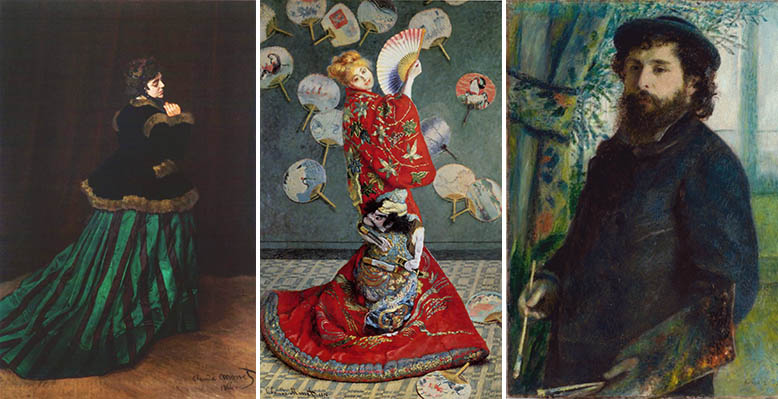
*아티스트와 뮤즈 (7) 클로드 모네의 뮤즈-부인 카미유 동시외(Camiile Doncieux)
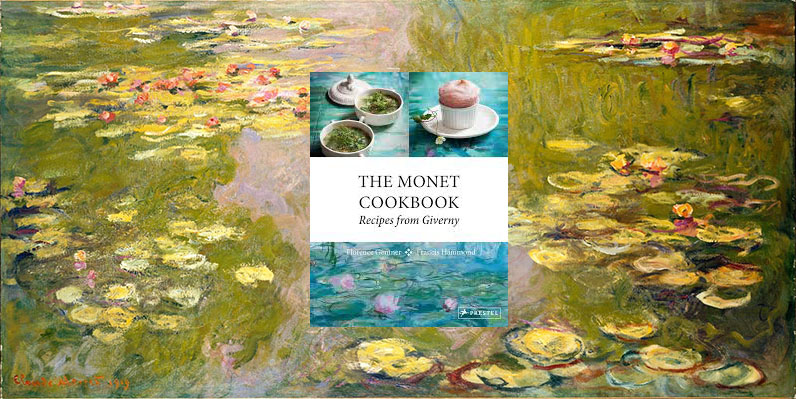
*위대한 음식 열정 (6) 클로드 모네의 지베르니 정원과 식탁
 미영화박물관(MoMI) 70년대 여성 특별전 'American Woman: Refram...