

미영화박물관(MoMI) 70년대 여성 특별전 'American Woman: Reframing ’70s Cinema'(11/14-1/4)
퀸즈 아스토리아에 자리한 미영화박물관(MoMI, Museum of the Moving Image)이 11월 14일부터 내년 1월 4일까지 '미국 여성들: 1970년대 영화를 재정의하다(American Woman: Reframing ’70s Cinema)'를 주제로 영화제를 연다. 상영작은 다이앤 캐롤, 셸리 듀발, 팸 그리어, 제인 폰다, 다이앤 키튼, 바바라 코플, 엘레인 메이, 다이애나 로스, 지나 롤란스, 조안 미클린 실버, 씨시 스페이섹, 바브라 스트라이샌드 등이 출연한 27편이다.
https://movingimage.org
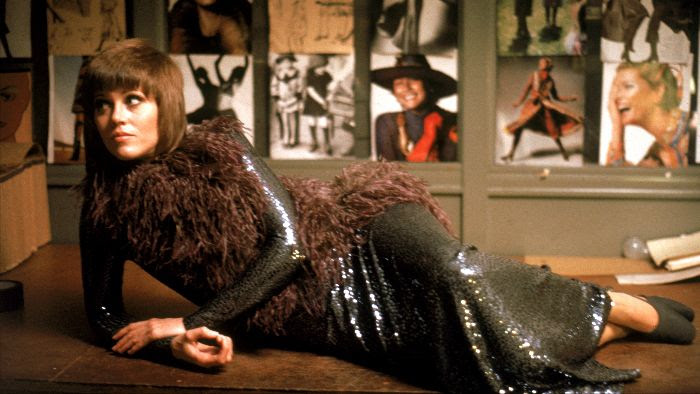
Jane Fonda in Klute (courtesy of Park Circus)
MoMI presents 27-film screening series “American Woman: Reframing ’70s Cinema”
Series focuses on women stars and filmmakers of the 1970s, including Diahann Carroll, Shelley Duvall, Pam Grier, Jane Fonda, Jo Heims, Diane Keaton, Barbara Kopple, Elaine May, Barbara Loden, Julia Reichert, Diana Ross, Gena Rowlands, Joan Micklin Silver, Sissy Spacek, Barbra Streisand, Claudia Weill, and more
November 14, 2025–January 4, 2026: featuring an array of special in-person guests including filmmakers Kopple and Weill, and critics and scholars, including a career conversation with Molly Haskell
Astoria, New York, October 16, 2025 — From November 14 through January 4, Museum of the Moving Image will present the 27-film series American Woman: Reframing ’70s Cinema, a reconsideration of this legendary era, retraining the spotlight on the women, both in front of and behind the camera, who equally made filmmaking what it was.
“When one talks of the venerated American cinema of the 1970s, the same titles invariably come up: The Godfather, The French Connection, The Conversation, Chinatown... and that's just the tip of the uber-male iceberg. The American Woman series flips the script to explore American cinema during the cultural ascendance of second-wave feminism and the megastars and filmmakers who shaped the period,” notes Senior Curator of Film Michael Koresky, who organized the series with assistance from Emily Greenberg, Film and Public Programs Manager, and Sarah Luciano, Associate Director of Special Programs.
American Woman: Reframing ‘70s Cinema centers on icons such as Jane Fonda and Barbra Streisand and Diana Ross; critical darlings like Diane Keaton, Gena Rowlands, Pam Grier, Diahann Carroll, Sissy Spacek, and Barbara Loden; trailblazing filmmakers such as Barbara Kopple, Elaine May, and Claudia Weill, fiction and documentaries alike.
Throughout the series, screenings will be presented with a host of special guests and conversations around these unforgettable films, some of which remain provocative to this day, all of them worth seeing on the big screen. The opening weekend features A Woman Under the Influence (35mm), starring Gena Rowlands, introduced by critic and author Carrie Courogen on November 14; and Klute (35mm), starring Jane Fonda, accompanied by an extended conversation with groundbreaking 1970s feminist film critic Molly Haskell on November 15. Additional guests include critic Kelli Weston with 3 Women, starring Shelley Duvall, Sissy Spacek, and Janice Rule on November 21; director Barbara Kopple with her Academy Award–winning documentary Harlan County USA (35mm) on November 23; director Claudia Weill in person with her classic Girlfriends on December 7; critic and author Melissa Anderson with Town Bloody Hall, accompanied by a book signing of Anderson’s The Hunger: Film Writing 2012–2024, on December 12; programmer Cristina Cacioppo introducing Clint Eastwood’s Breezy (35mm), which was written by Jo Heims, on December 20; and others to be confirmed.
In addition, the following titles will also be presented in 35mm: Diary of a Mad Housewife; Looking for Mr. Goodbar; Lady Sings the Blues, in a 35mm IB Technicolor print; What’s Up, Doc?; Paper Moon; Up the Sandbox; A New Leaf; and New York, New York.
Additional films may be added.
Friday, November 14, 6:30 p.m. introduced by author Carrie Courogen
Sunday, November 16, 5:45 p.m.
Dir. John Cassavetes. 1974, 155 mins. U.S. 35mm. Working with her husband John Cassavetes, Gena Rowlands delivered one of the most seismic performances in the history of American cinema, portraying Mabel Longhetti, a housewife and mother heading towards a mental breakdown that threatens to create an ever larger schism between her and her uncomprehending husband, Nick (Peter Falk). Yet any description of A Woman Under the Influence cannot prepare the viewer for the emotional roller coaster of the film, the relentless intimacy and intensity of which remain unparalleled
Klute
November 15, 2:00 p.m. followed by a conversation with critic Molly Haskell
November 22, 6:00 p.m.
Dir. Alan J. Pakula. 1971, 114 mins. U.S. 35mm. The conventions of film noir mingle with sexual-revolution candor in this archetypal example of 1970s “paranoia cinema,” starring a groundbreaking Jane Fonda as Bree Daniels, a sex worker who becomes an essential and unwilling participant in a missing persons case being overseen by Donald Sutherland’s John Klute. Cinematographer Gordon Willis employs daringly dim lighting and disorienting camera angles to amplify the atmosphere of unrelenting dread, but it’s Fonda, in her first Oscar-winning role, who provides the emotional, vividly humane center of Pakula’s film.
The film will be followed on November 15 by a conversation with legendary film critic Molly Haskell, whose writing on women in film in the 1970s set the template for decades of feminist film criticism.
The Way We Were
Sunday, November 16, 3:15 p.m.
Dir. Sydney Pollack. 1973, 118 mins. U.S. DCP. An absolute classic of romantic heartbreak, The Way We Were iconically paired Barbra Streisand and Robert Redford as the ultimate odd couple: Katie is a politically committed leftist Jew, Hubbell is a WASP without strong commitments. Nevertheless, after the two meet in college in the late thirties, they get swept up, both in love and in the anti-communist purges of the McCarthy-era blacklist of the postwar era. Stretching from New York City to Malibu, Pollack’s decade-spanning film is a superb, intelligent entertainment that features Redford at his most dazzlingly handsome and gave an Oscar-nominated Streisand one of her greatest dramatic film roles and most popular theme songs.
3 Women
Friday, November 21, 6:30 p.m. introduced by critic Kelli Weston
Saturday, November 22, 3:30 p.m.
Dir. Robert Altman. 1977, 124 mins. U.S. DCP. With Shelley Duvall, Sissy Spacek, Janice Rule. Altman’s dreamlike study of down-and-out women existing in a liminal state between reality and fantasy in a tiny California town shows the filmmaker at the summit of his powers as both surreal image-maker and humane storyteller. After having worked with the great Shelley Duvall throughout the decade, Altman gifted her a role of astonishing depth and pathos in Millie, a self-involved health spa worker whose life intersects with that of a mysterious new coworker named Pinky, played by Spacek. Altman’s oneiric vision is a singular mix of otherworldly and earthy thanks to the intensely grounding performances of Spacek and Duvall, the latter of whom won Best Actress at both the Cannes Film Festival and the Los Angeles Film Critics Association.
Claudine
Saturday, November 22, 2:00 p.m.
Dir. John Berry. 1974, 92 mins. U.S. DCP. The brilliant Diahann Carroll—who had been known best for her leading role on the groundbreaking series Julia and had also been the first Black woman to win a Tony for leading actress in a musical in No Strings—gave her most acclaimed film performance in Claudine, for which she was nominated for an Oscar. Carroll plays a single mother in Harlem who opens up to the possibility of romance with James Earl Jones’s good-natured garbage collector. Directed by formerly blacklisted director John Berry with a sharp eye for environment and texture, this authentic romantic comedy is one of the delights of the decade.
Two x Julia Reichert: Union Maids + Growing Up Female
Sunday, November 23, 1:00 p.m.
Union Maids
Dir. Julia Reichert, Jim Klein, Miles Mogulescu. 1976, 48 mins. U.S. DCP
Growing Up Female
Dir. Dir. Julia Reichert, Jim Klein. 1971, 52 mins. U.S. DCP.
When she won her belated first Oscar in 2019 for the epic documentary American Factory, the world finally caught up with the brilliance of Julia Reichert, a trailblazing nonfiction filmmaker whose 1970s films peered into the lives of women across social strata. We present two of her finest films: Union Maids, a retrospective look at young women’s attempts at industrial organizing in the early twentieth century; and the boldly feminist Growing Up Female, which closely follows the lives of six women, from young children to adults in their thirties, as they reckon with the social forces that shape and try to define them.
Harlan County U.S.A. with Barbara Kopple in person
Sunday, November 23, 3:00 p.m.
Dir. Barbara Kopple. 1976, 103 mins. U.S. 35mm. Kopple’s epochal, Oscar-winning documentary charting a Kentucky coal miners’ strike is among the great American films of the 1970s, a sensitive yet uncompromising look at the struggles and triumphs of union organizing against growing corporate greed. The director was granted astonishing access to the workers’ year-plus struggle, resulting in unforgettable vérité scenes. A complex and miraculous feat of nonfiction filmmaking, Harlan County USA is also a beautifully rendered portrait of a time and place, capturing its rural atmosphere with boundless respect and intimacy.
Diary of a Mad Housewife
Sunday, November 23, 4:00 p.m.
Dir. Frank Perry. 1970, 95 mins. U.S. 35mm. Working from a script by Eleanor Perry and Sue Kaufman, adapting her own 1967 novel, director Frank Perry helped fashion one of the defining films of the early American 1970s. Carrie Snodgress earned a much deserved Oscar nomination as Tina, a stultified housewife and mother gradually coming to the realization that she cannot bear her insufferable, manipulative man-child of a husband (Richard Benjamin). Soon she falls into an affair with a more commanding lover (Frank Langella), though fulfillment remains far in the distance. Diary of a Mad Housewife is a frank and sensitive transmission from the margins of American life, darkly comic in its despair.
Preceded by A Comedy in Six Unnatural Acts (Dir. Jan Oxenberg. 1979, 26 mins. U.S.). Experimental filmmaker Oxenberg constructs a witty, endlessly amusing short consisting of vignettes about the different lesbian stereotypes perpetuated in cinema.
What’s Up, Doc?
Friday, November 28, 6:30 p.m.
Sunday, November 30, 3:30 p.m.
Dir. Peter Bogdanovich. 1972, 94 mins. U.S. 35mm. Bogdanovich’s loving and raucous tribute to the screwball comedies of the thirties, his follow-up to The Last Picture Show, is a comedy classic all its own, brimming at breakneck speed with incredible sight gags, stunts, and goo-goo eyed romantic glances between Ryan O’Neal, as a bespectacled musicologist studying igneous rocks, and Barbra Streisand, comic perfection as a girl named Judy (but whose name might as well be Trouble). The film’s wild cast of characters converge at a San Francisco hotel conference where the mistaking of identical suitcases launches the couple into a fight for their lives.
Paper Moon
Saturday, November 29, 3:00 p.m.
Sunday, November 30, 5:30 p.m.
Dir. Peter Bogdanovich. 1973, 102 mins. U.S. 35mm. Real-life father and daughter Ryan and Tatum O’Neal play a con man and a girl who may be his daughter. They work their way across the Depression-era South in Bogdanovich’s lyrical, funny movie, beautifully photographed in black and white by Laszlo Kovacs. This exquisitely directed film made 10-year-old Tatum the youngest-ever Oscar winner, and she all but owns the film, perhaps the most convincing and captivating wiseacre kid ever put on-screen. Between this film and The Bad News Bears and Little Darlings, Tatum O’Neal reinvented teen girlhood in cinema with no-nonsense flair.
Up the Sandbox
Sunday, November 30, 1:30 p.m.
Dir. Irvin Kershner. 1972, 97 mins. U.S. 35mm. Just a few years into her movie career, Barbra Streisand, already one of the biggest stars in the world, co-founded a new production company called First Artists, alongside Paul Newman and Sidney Poitier, allowing actors to maintain control over their projects. Her first outing was Up the Sandbox, an idiosyncratic take on seventies womanhood in contemporary New York, based on first-generation feminist Anne Roiphe’s 1970 novel. Directed with grit and verve by Irvin Kershner (The Empire Strikes Back), this irreverent comic drama enters the daydreams and fantasies of a bored housewife who resists telling her neglectful husband she’s pregnant.
Carrie
Friday, December 5, 6:30 p.m.
Sunday, December 7, 5:30 p.m.
Dir. Brian De Palma. 1978, 98 mins. U.S. DCP. In the able hands of Brian De Palma, Stephen King’s best-selling debut novel became one of the big screen’s greatest supernatural chillers, about a mercilessly teased—and telekinetic—high schooler who exacts outsized revenge on her peers at the prom. Grounding all the kinetic mayhem is a brilliant, Oscar-nominated Sissy Spacek, whose achingly humane portrayal of this misunderstood monster makes her plight all the more tender and scary. As her abusive mother, Piper Laurie, also Oscar-nominated, transformed into one of horror cinema’s most frightening villains.
Hester Street
Saturday, December 6, 2:00 p.m.
Saturday, December 13, 4:00 p.m.
Dir. Joan Micklin Silver. 1975, 90 mins. U.S. DCP. Silver’s finely etched jewel of a film gorgeously evokes turn-of-the-century lower east side Manhattan tenement life in telling the story of a young wife named Gitl (Carol Kane) who has arrived from an Eastern European shtetl. Made with sensitivity and singular authenticity, Silver’s film charts the gradual awakening of Gitl, both to the new world and to her own personhood. Kane received an Oscar nomination for her delicate performance, which launched one of American cinema’s most versatile careers, and Silver—who would go on to direct the beloved Crossing Delancey, a contemporary mirror image of this film—would forever be known for this enduring vision of Jewish downtown New York.
An Unmarried Woman
Saturday, December 6, 4:30 p.m.
Saturday, January 3, 2:00 p.m.
Dir. Paul Mazursky. 1978, 124 mins. U.S. DCP. Mazursky’s smash comedic drama stars a breakthrough Jill Clayburgh as a well-to-do Manhattan woman whose snake of a husband (Michael Murphy) leaves her, without warning, for a younger woman after sixteen years of marriage. With delicacy, wit, and heartrending realism, the film charts her coming into her own, including falling into an affair with an attractive painter (Alan Bates). Mostly, though, this is a tribute to a woman’s newfound independence. The invigorating film received Oscar nominations for Best Picture, Actress, and Original Screenplay.
Freaky Friday
Saturday, December 7, 1:00 p.m.
Dir. Gary Nelson. 1976, 95 mins. U.S. 35mm. This live-action Disney family classic about a mother and daughter who awake one morning, following a bitter argument, to find that their bodies have been supernaturally switched, established a tried-and-true comic formula that has proven durable for decades. Written by Mary Rodgers, based on her own young adult novel, Freaky Friday also provided a perfect showcase for two of the era’s quirkiest and most delightful women: Barbara Harris (one year after Nashville), in a comic tour de force as put-upon mom Ellen, and Jodie Foster (the same year as Taxi Driver!), perfectly winning as surly teen Annabel—both of whom hilariously discover it’s not so easy to live in another person’s skin.
Girlfriends
Sunday, December 7, 3:15 p.m. with director Claudia Weill in person
Dir. Claudia Weill. 1978, 88 mins. U.S. DCP. With Melanie Mayron, Anita Skinner, Bob Balaban, Christopher Guest, Eli Wallach, Viveca Lindfors. This perfectly rendered low-budget gem of the 1970s, directed by Claudia Weill and written by Vicki Polin, follows twentysomething Upper East Side photographer Susan (Mayron) who, alongside her poet roommate Anne (Skinner), is trying to navigate the professional and romantic dead ends of 1970s city living. Torn between the desire for self-sufficiency and the need for a relationship, Susan stands in for a new breed of independent city women of the era, and Weill surrounds her with a vivid, delightful supporting cast, each of whom adds warmth and color to this honest, authentic New York gem.
Town Bloody Hall
Friday, December 12, 7:00 p.m. introduced by Melissa Anderson, and featuring a book signing of Anderson’s The Hunger: Film Writing 2012–2024
Sunday, December 14, 2:00 p.m.
Dirs. D. A. Pennebaker, Chris Hegedus. 1979, 88 mins. U.S. DCP. In April 1971, a major smackdown literary event occurred at New York’s Town Hall theater, called a “Dialogue on Women’s Liberation,” pitting provocateur Norman Mailer (whose recent essay “The Prisoner of Sex” ignited a storm of outrage) against a panel of women activists and writers: Germaine Greer, Jill Johnston, Jacqueline Ceballos, and Diana Trilling. Documentary filmmakers extraordinaire D. A. Pennebaker and Chris Hegedus were there to film it. Released eight years later but still containing all the verve and passion of a culture in transition, Town Bloody Hall is one of the great vérité documents of second wave feminism, featuring appearances by Susan Sontag and Cynthia Ozick.
A New Leaf
Saturday, December 13, 6:00 p.m.
Sunday, December 20, 1:00 p.m.
Dir. Elaine May. 1971, 102 mins. U.S. 35mm. As writer, star, and first-time director, Elaine May established herself as a distinctly original talent with this oddball romance and black comedy. Walter Matthau plays a spoiled playboy who loses his wealth and plans to marry a klutzy botanist (May) and murder her for her money. Infamously taken away from May by the studio heads and mercilessly chopped down, A New Leaf nevertheless, miraculously, maintains a singular and brilliant blend of dark humor and redemptive pathos.
Grey Gardens
Sunday, December 14, 5:30 p.m.
Dirs. Albert Maysles, David Maysles, Ellen Hovde. 1975, 95 mins. U.S. DCP. The Maysles’s and Ellen Hovde’s unforgettable documentary is one of the most beloved American nonfiction films of the 1970s and introduced the world to iconic hoarders Big Edie and Little Edie Beale, funhouse mirror images of their cousin, Jackie Onassis. Hermetic recluses in East Hampton, the Beales live in their own circumscribed world. The vérité camera follows them everywhere, yet they are hardly mere subjects for the lens: the indomitable Little Edie especially emerges as a strong-willed independent figure in her own right, and her singular clothing style would make her something of a renowned fashionista.
Breezy introduced by programmer Cristina Cacioppo
Sunday, December 20, 3:00 p.m.
Dir. Clint Eastwood. 1973, 106 mins. U.S. 35mm. Kay Lenz plays a free-spirited hippie in her late teens named Breezy, who enters the life of a lonely, middle-aged divorcé (William Holden). Eastwood’s May-December love story was written by Jo Heims (who also worked on the script for Play Misty for Me), who worked on films throughout the sixties and seventies before her death from cancer in 1978 at age 48. Initially dismissed by audiences and critics, Breezy has attained a cult following for its tender evocation of an unexpected relationship, embodied by Lenz and Holden with delicacy and restraint.
Looking for Mr. Goodbar
Saturday, December 20, 6:00 p.m.
Sunday, December 21, 5:15 p.m.
Dir. Richard Brooks. 1977, 134 mins. U.S. 35mm. With Diane Keaton, Tuesday Weld, William Atherton, Tom Berenger, Richard Kiley, Richard Gere. Based on the best-selling novel by Judith Rossner, this disturbing, controversial film about the sex life of a single schoolteacher on the dating scene in New York gave Diane Keaton one of her most complex roles. Keaton’s Theresa Dunn spends most of her nights in bars, seeking intimate moments and hookups, trying to reconcile her desires with her conservative religious upbringing. With its frank eroticism, bursts of shocking violence, and tender evocation of a woman’s inner life, Looking for Mr. Goodbar became a touchstone mainstream film about the sexual revolution, its portrayal of the pleasures and pitfalls of liberation hotly debated to this day.
Foxy Brown
Sunday, December 21, 3:00 p.m.
Sunday, January 4, 1:00 p.m.
Dir. Jack Hill. 1974, 92 mins. U.S. DCP. With Pam Grier, Antonio Fargas, Peter Brown. This lurid, top-notch Blaxploitation classic stars a dazzling Pam Grier as the take-no-prisoners title character, seeking vengeance against the drug-dealing thugs who killed her boyfriend. A fearless, violent crime saga that allows its protagonist to follow no set rules of propriety, Foxy Brown was a centerpiece of a revolutionary movement in low-budget filmmaking and gives Grier one of her most lasting iconic roles.
New York, New York
Friday, January 2, 6:15 p.m.
Saturday, January 3, 6:00 p.m.
Dir. Martin Scorsese. 1977, 164 mins. U.S. 35mm. With Robert De Niro, Liza Minnelli, Lionel Stander. Scorsese’s ode to classic MGM musicals and 1940s jazz marked a departure for him, combining his gritty hard-boiled realism (he had just made Taxi Driver) with a celebration of the surreal artificiality of Hollywood. Undoubtedly one of the director’s masterworks, the film brilliantly depicts the difficulty of a marriage between two independent creatives, and Scorsese pushes the story of the doomed relationship between a jazz singer and a saxophonist into dark, exhilarating territory. The final half hour makes for one of his most sustained feats of grand filmmaking, while Minnelli’s climactic belting of the now-classic title song (written by Fred Ebb and John Kander for the film) is a true show-stopper.
Lady Sings the Blues
Saturday, January 3, 3:00 p.m.
Sunday, January 4, 5:15 p.m.
Dir. Sidney J. Furie. 1972, 144 mins. U.S. 35mm IB Technicolor print. With Diana Ross, Billy Dee Williams, Richard Pryor. In her big screen debut, Diana Ross plays jazz icon Billie Holiday in a performance that earned her an Academy Award nomination for Best Actress. Based on Holiday's best-selling autobiography, the film charts her rise from a traumatic youth to a fledgling career, a fraught romance with her manager (Williams), eventual superstardom, and a derailing addiction. Roger Ebert wrote in the Chicago Sun-Times, "[Ross] doesn't sing in her own style, and she never tries to imitate Holiday, but she sings somehow in the manner of Holiday. There is an uncanny echo, a suggestion, and yet the style is a tribute to Billie Holiday, not an impersonation."
Wanda
Sunday, January 4, 3:00 p.m.
Dir. Barbara Loden. 1970, 102 mins. U.S. DCP. With Barbara Loden, Michael Higgens, Dorothy Shupenes, Peter Shupenes. A singular classic of seventies American cinema that was only fully rediscovered in the 21st century, Wanda stars its writer and director Barbara Loden as an aimless divorced housewife and mother who relinquishes custody rights of her kids, and ends up an accomplice to an abusive petty thief with whom she has a one-night-stand. Wanda is the kind of female character you rarely see at the center of a movie—an abrasive, self-defeating loser—and Loden situates her in a remarkably authentic, often funny portrait of wayward souls set against a desolate rural eastern Pennsylvania landscape, shot on gorgeously grainy 16mm.
 '모네와 베니스(Monet and Venice)'@브루클린뮤지엄(10/11-2/1, 2...
 갤러리 장, 셰인 구포그 개인전 'Shane Guffogg: Memories of Our...