

NYFF63 (4) Portrait of a Family in an Age of Disconnection 'Father Mother Sister Brother' ★★★★☆
NYFF63 (9/26–10/13)
Father Mother Sister Brother ★★★★☆
What We Talk About When We Talk About Family
Read Jim Jarmusch’s Films Like Poetry
*소통이 멈춘 시대, 가족의 초상 '파더 마더 시스터 브라더(Father Mother Sister Brother)' ★★★★☆ <Korean version>
Father Mother Sister Brother by Jim Jarmusch #NYFF63
Jim Jarmusch emerged as a beacon of independent cinema with his low-budget black-and-white trilogy, beginning with Stranger Than Paradise (1984). Moving through New York, Cleveland, and Florida, the film captures the quiet, almost weightless drift of two men and a woman—three souls suspended in the rhythm of everyday desolation, a portrait of minimalist cinema at its purest. Made on a shoestring budget of $150,000, it earned $2.5 million in North America and won the Caméra d’Or at Cannes. Yet despite this early success, Jarmusch never entered the Hollywood system, instead nurturing a cinematic rhythm and voice entirely his own.
More than forty years after that breakthrough, Jarmusch was honored with the Golden Lion at the Venice Film Festival for his omnibus film Father Mother Sister Brother. If Stranger Than Paradise captured the aimless alienation of youth, this new work turns inward, tracing the quiet failures of communication within families. Even in the most familiar spaces, his characters remain solitary—connected yet apart, their lives overlapping only at the fragile edges of understanding.
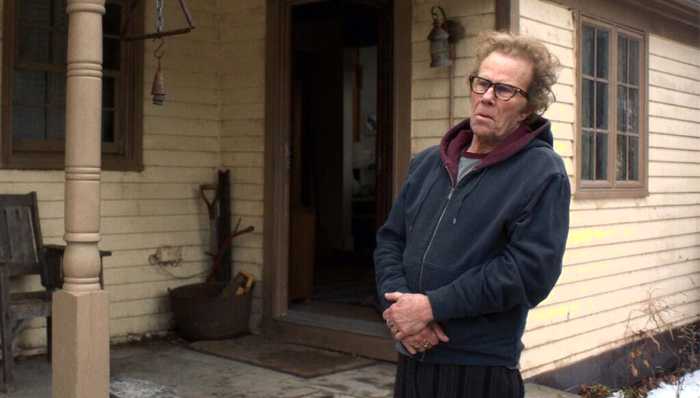
In the first segment, Father, siblings (Adam Driver and Mayim Bialik) travel to their father’s modest home in rural New Jersey during the dead of winter. The frozen lake, the seemingly disheveled house, and ceremonial toasts with water and tea, punctuated by the faint drip of a faucet, create a quiet, persistent tension.
The siblings experience an awkward reunion with their father, noticing the Rolex on his wrist. When they ask about it, he brushes it off and covers it with his clothing. The moment leaves behind a quiet discomfort—a sign of the delicate distance and unspoken estrangement that can exist within a family. The Rolex reappears in later segments, worn by other characters, its shimmer a recurring motif of material comfort—or perhaps illusion. In Jarmusch’s hands, it becomes a poetic device, a subtle question about authenticity and the façades we construct to connect or conceal.
Father Mother Sister Brother by Jim Jarmusch #NYFF63
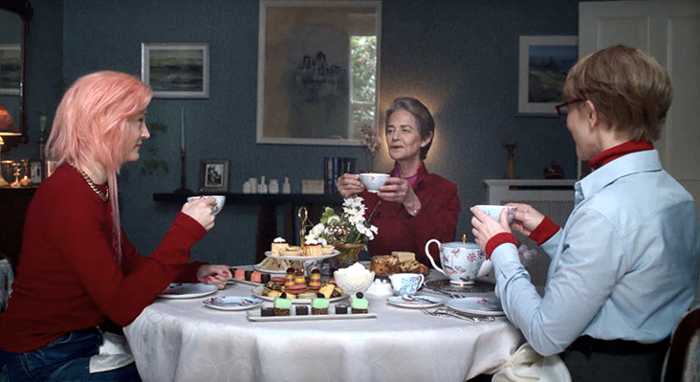
In Mother, two daughters visit their author mother (Charlotte Rampling) in Dublin. The older, obedient daughter (Cate Blanchett) conforms to tradition, while the younger, pink-haired influencer daughter (Vicky Krieps) moves with irreverent energy. In a brief exchange about their Chinese zodiac signs, Cate’s character mentions she was born in the Year of the Goat, while Vicky’s was the Year of the Dragon, symbols subtly reflecting their temperaments: the compliant and the untamed, the grounded and the free. Vicky’s character hides her girlfriend, chatters about her boyfriend, and mocks her mother’s book title. The clashes, humorous yet tense, reveal how different worlds can coexist within a single family—a delicate interplay of rebellion and obligation.
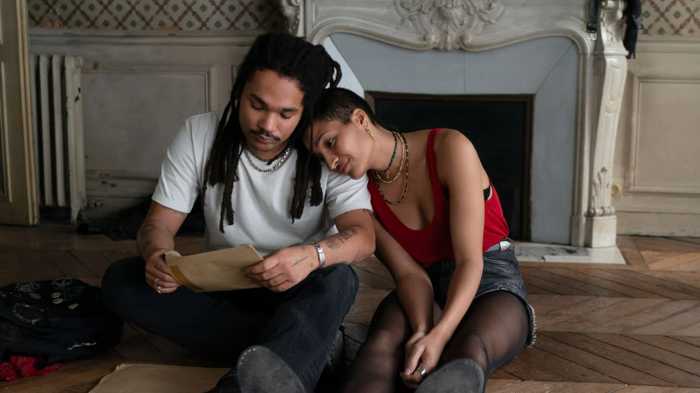
The final segment, Sister Brother, follows a biracial twin pair (India Moore and Luca Sabat) exploring their deceased parents’ Paris apartment. Old photos, marriage and birth certificates, and stored belongings uncover surprising truths, threading memory, secrecy, and family history into a subtle mosaic. The recurring presence of the Rolex connects this chapter to the first, a small but resonant continuity.
Jarmusch structures the film with quiet symmetry, each segment unfolding around a familial pair. In Father, a father and his two adult children circle one another with polite unease; in Mother, two sisters embody opposing temperaments—obedience and defiance; and in Sister Brother, a set of twins face the fragile inheritance of identity and memory. These mirrored relationships form a gentle continuum, reflecting Jarmusch’s fascination with connection and distance, with how resemblance can both unite and divide.
Father Mother Sister Brother by Jim Jarmusch #NYFF63
Water recurs as a symbolic motif throughout all three segments. Jarmusch described it at a post-screening press conference as the essence of life, a kind of medicine, and his favorite drink. Like Bruce Lee’s teaching to “be like water,” his vision moves with quiet fluidity—shaping itself to each story, flowing through characters and spaces, essential and profound. Amid social facades and polite falsehoods, it illuminates the subtle currents of human connection, the understated sincerity that persists beneath the surface.
Jarmusch has long embraced the road movie form. In his films, life is an unpredictable path, and cars provide both a confined space and a lens to explore isolation. Young characters skating or moving alongside the road hint at freedom and risk, yet they remain untouched by the burdens and guilt of adult experience. The title, Father Mother Sister Brother, without commas, suggests both unity and subtle fracture, a visual and linguistic reflection of connection and distance.
Jim Jarmusch and Tom Waits #NYFF63
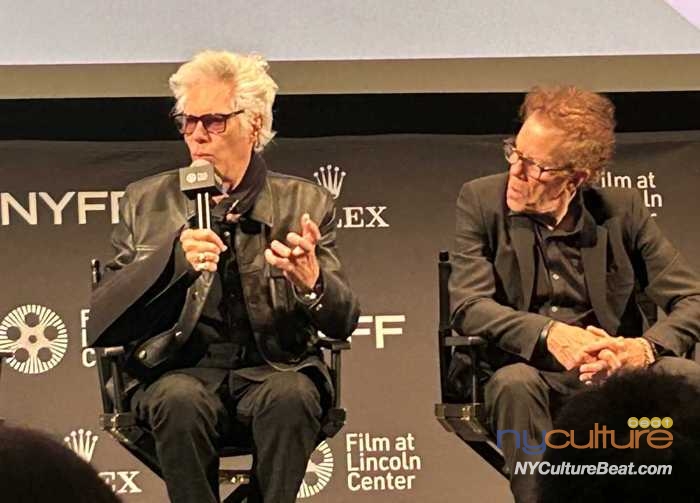
His characters are outsiders, estranged from society, and Tom Waits captured this sentiment perfectly: “The key to Jim is that he had white hair at fifteen… that sensibility permeates all his films.” Across his omnibus works—including Mystery Train (1989), Night on Earth (1991), and Coffee and Cigarettes (2003)—he eschews conventional plot arcs, climaxes, and tidy resolutions. Life, for Jarmusch, is a mosaic of fleeting moments, fragmentary dialogues, and long silences.
His minimalist approach—concise, repetitive dialogue, long takes, and carefully measured pauses—reveals a poetic sensibility that has defined his cinema from the start. In Paterson (2016), Adam Driver’s bus-driving poet speaks sparingly, repeats phrases, and lets silence breathe between words, like the spaces in a poem. The three segments of Father Mother Sister Brother unfold with similar rhythm—linked vignettes in a larger composition, each resonating with quiet emotion. Jarmusch’s cinema celebrates solitude, connection, and the luminous fragments that make life meaningful. Like shards of everyday experience forming a mosaic, his films leave a gentle, lasting resonance in the mind.
Sparse in dialogue yet rich in rhythm, Father Mother Sister Brother reads like a poem in images, composed of pauses, repetitions, and lingering silences. In a world obsessed with connection, Jarmusch once again reminds us how fragile, and how human, our disconnection can be.
Showtimes
Fri. Oct 3 6:00 PM, 6:30 PM, 9:00 PM, 9:30 PM
Wed, Oct 8 3:30 PM
Thu, Oct 9 6:30 PM
Mon, Oct 13 8:45 PM
https://www.filmlinc.org/nyff/films/father-mother-sister-brother
*나를 움직인 이 한편의 영화 '천국보다 낯선'(Stranger Than Paradise) ★★★★★
*뉴욕 영화제 (3)'패터슨(Paterson)' ★★★★★ 시 쓰는 버스운전수의 일주일
 NYFF63 (5) 줄리아 로버츠의 공허한 캠퍼스 스릴러 '애프터 더 헌...
 NYFF63 (4) '파더 마더 시스터 브라더(Father Mother Sister Brot...