

NYFF63 (1) Sirāt and the Allegory of Life ★★★★★
NYFF63 (9/26–10/13)
Cannes Jury Prize Winner Oliver Laxe’s Sirāt ★★★★★
A journey with desert ravers in search of a missing daughter—an allegory of loss and hope
Produced by Pedro Almodóvar, Spain’s 2026 Oscar International Feature submission
*NYFF63 (1) 칸영화제 심사위원상 수상 '시라트(Sirāt)'와 인생의 알레고리 ★★★★★ <Korean version>
Sirāt by Oliver Laxe #NYFF63
In the vast Moroccan desert, electronic beats thunder across the dunes as young people surrender to ecstatic dance. In the middle of this rave, a middle-aged man, Luis (Sergi López), hands out flyers with his young son Esteban (Bruno Núñez Arjona) and their dog Pipa, desperately searching for his missing daughter. Convinced she may be among the ravers, he plunges into their unfamiliar world. But what unfolds is a journey filled with dread, as if walking on the edge of a cliff, shadowed by visions of the world’s end.
Spanish director Oliver Laxe’s Sirāt, winner of the Cannes Jury Prize, is a majestic desert road movie—an odyssey that probes loss and hope. The title refers to the Islamic concept of the sirāt: a razor-thin bridge connecting heaven and hell, finer than a hair, sharper than a sword, that every soul must cross. The righteous pass swiftly to paradise; the wicked fall into the fires below. In the film, the desert journey becomes a living metaphor for this perilous crossing.
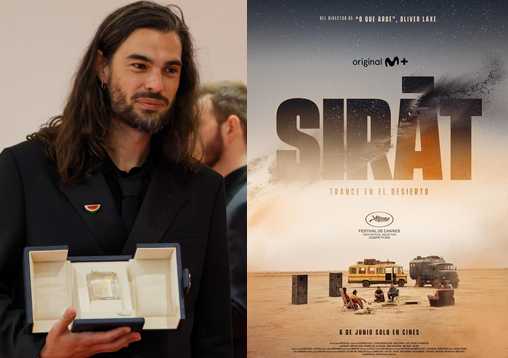
Sirāt by Oliver Laxe #NYFF63
When soldiers break up the party, Luis and his son join a group of ravers from France and Spain (Stef, Jade, Tonin, Bigui, Josh, and their dog Lupita). Their vans roar across the desert, vital lifelines in an unforgiving landscape. Luis pays for their fuel, they help him ford rivers, and Esteban shaves his head into a punk style. Even the dog falls ill after ingesting LSD waste. As hardships mount, the unlikely group shares food, laughter, and solidarity, slowly forming a fragile bond.
The ravers, scarred and restless, resemble outcasts from Easy Rider—bodies marked by tattoos, wounds, even amputations. They are hedonists who flee family and convention, clinging only to their battered vans as homes and lifeboats. Yet they are also creative: recycling scrap into sound systems, painting, staging puppet shows. Their dance is primal—whether in joy, anger, or sorrow—driven by pounding electronic noise that feels hellish yet to them is pure ecstasy. Their freedom, however, is crushed by soldiers and armored vehicles.
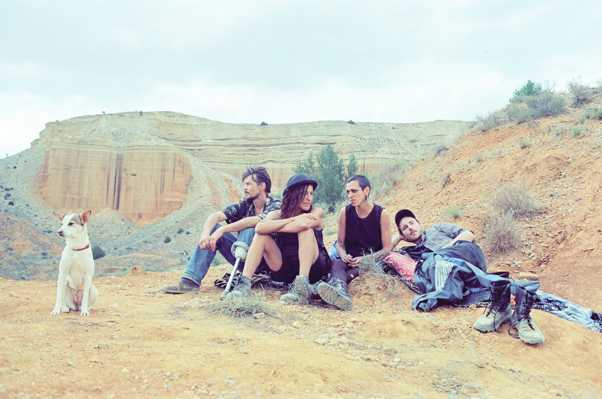
Sirāt by Oliver Laxe #NYFF63
In contrast, Luis embodies reason, responsibility, and bourgeois stability. His goal is clear: to restore his broken family by finding his daughter. When Esteban asks the ravers about “family,” one replies, “I had one, but I like this family better.” Luis and his son, with their relative abundance, even share chocolate desserts—a small act of redistribution.
Together, Luis and the ravers evoke Freud’s 'pleasure principle' and 'reality principle'—perhaps even the eternal conflict of id, ego, and superego within a single psyche. Desire, reason, and morality collide on the stage of the desert, where fragile human emotion meets the harsh logic of survival.
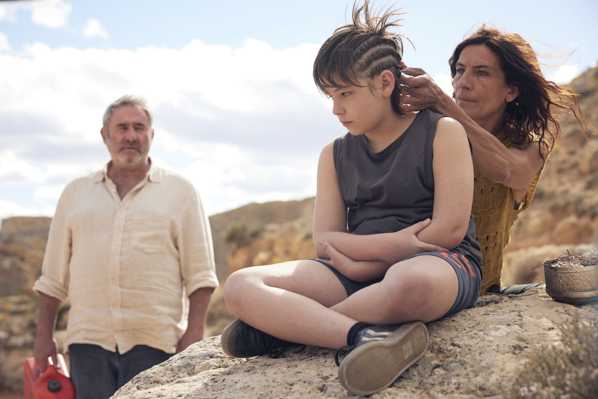
Sirāt by Oliver Laxe #NYFF63
Tragedy strikes when Luis loses his son and dog in an accident. Alone in the desert, he collapses in grief under the blazing sun, framed between a blood-red sky and ashen earth. This tableau crystallizes existence itself—life and death, heaven and earth, human fragility—recalling the East Asian triad of Heaven, Earth, and Humanity (天地人). It feels like the director’s ultimate existential question.
Beyond the desert, reality is no less bleak. The radio warns of war, resource depletion, and diplomatic collapse—an impending World War III. Landmines erupt across the landscape, metaphors for life’s unpredictable violence. Luis later reflects that he avoided stepping on mines only because he walked “without thinking.” This recalls the Buddhist state of munyeom musang (無念無想)—a pure emptiness of mind, reached through meditation and discipline. Is this the world Oliver Laxe longs for?
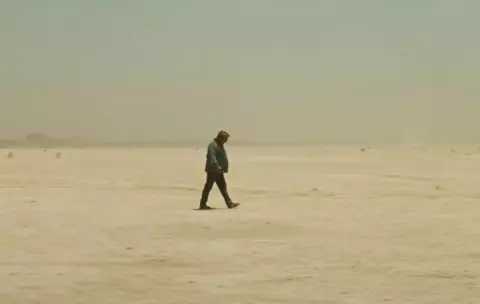
Sirāt by Oliver Laxe #NYFF63
The desert storms and surreal vistas evoke not only Western landscapes but also the spare beauty of East Asian ink paintings, reminding us of humanity’s smallness before nature. The silence and vastness suggest that God—if not in doctrine, then in nature itself—is watching.
Luis’s cry is more than the lament of a lost family—it reveals the fundamental anxiety of human existence, caught between desire and repression. On the desert stage, this story ultimately circles back to an ancient question: who are we, and where are we bound?
With its hypnotic imagery, primal dances, and the visceral pulse of electronic sound, Sirāt is less a film than a rite to be experienced through the full power of cinema. For a generation accustomed to watching on phones and laptops, this is a work that restores faith in the big screen. Produced by Spanish master Pedro Almodóvar, this 115-minute odyssey is one that must be seen in theaters. All That Cinema!

NYFF63 상영일정
Wed, Oct 1 9:00 PM Q&A
Thu, Oct 2 8:45 PM Q&A
Sat, Oct 11 8:45 PM
https://www.filmlinc.org/nyff2025/films/sirat
 NYFF63 (2) 잊혀진 시인 윌렘 데포의 '뒤늦은 명성 (Late Fame)' ...
 NYFF63 (1) 칸영화제 심사위원상 수상 '시라트(Sirāt)'와 인생의 ...