

프랑스 세브르국립도자기박물관 특별전 'Sèvres Extraordinaire!'@바드대학원센터 갤러리(9/10-11/16)
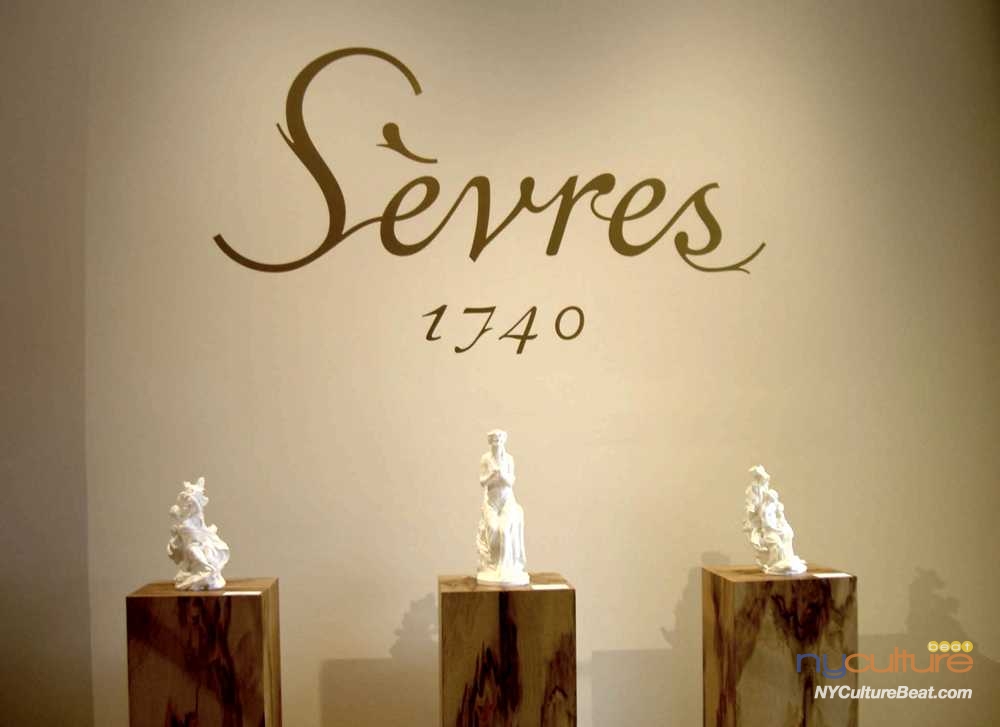
도자기는 중국에서 당나라(618-907) 때 처음 만들어졌으며, 원나라(1279-1368) 때 유럽으로 전파됐다. 파리 근교의 세브르(Sèvres)는 경기도 이천처럼 예로부터 도자기로 유명한 도시다. 1824년 세브르 국립도자제작소(Manufacture nationale de Sèvres)의 디렉터 알렉상드르 브롱니아르( Alexandre Brongniart)가 세계 최초의 도예 뮤지엄으로 창설했다.
세브르국립도자박물관(Musée National de la Céramique, Sèvres)은 고대 그리스 도기에서 터키 이즈닉, 일본의 이마리, 한국 분청까지 세계의 도자기 5만여점을 소장하고 있으며, 이중 5천여점은 세브르에서 생산된 도자기다.
2025년 맨해튼 어퍼웨스트사이드 바드대학원센터 갤러리(Bard Graduate Center Gallery)에서 1740년부터 오늘까지 세브르국립도자박물관 소장품을 소개하는 전시 'Sèvres Extraordinaire!'(9/10-11/16, 2025)를 연다. 이번 전시엔 '드럼치는 큐피드', 프라고나르가 디자인한 도자기, 루이스 부르주아의 조각 등이 전시된다.
2007년 봄 파리 여행 중 들렀던 세브르 도자박물관의 하이라이트를 소개한 바 있다.
https://www.nyculturebeat.com/?mid=Travel2&document_srl=4163034

Sèvres Extraordinaire!
Sculpture from 1740 until Today
September 10 – November 16, 2025
Bard Graduate Center Gallery, NYC
Sèvres Extraordinaire! Sculpture from 1740 until Today presents the history of the Sèvres Manufactory and its production of extraordinary sculptural objects in various ceramic pastes.
Organized by Sèvres, Manufacture et Musée nationaux and Bard Graduate Center (BGC), the exhibition is the first outside of France to highlight the production of sculpture made at the famed porcelain manufactory. From extravagant Rococo to restrained Neoclassical, from romantic, neo-Gothic inventions to the elegant curves of the Art Nouveau or the geometries of the Art Deco, and in partnership with artists associated with Surrealism, Abstract Expressionism, and Pop art, Sèvres has continually pushed the boundaries of ceramic production, creating objects that are neither functional nor decorative but rather art that it simply calls “sculpture.”
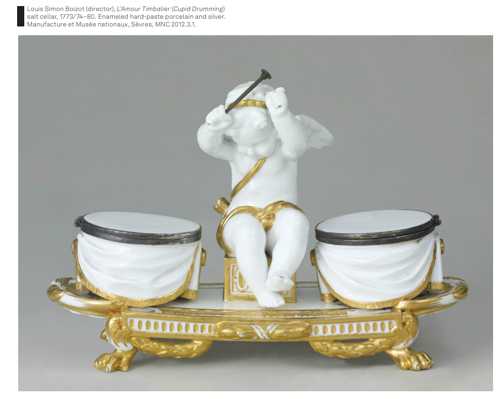
루이즈 시몬 보이즈(감독), 드럼 치는 큐피드, 1773-74
One of the main characteristics of the manufactory, from its origins in the disused premises of the Château de Vincennes until the present day, is the unsurpassed variety of its production. The exhibition considers the term “sculpture” in its broadest sense and features three-dimensional vases, centerpieces for a dining table, clocks, inkstands, and rare cups and saucers alongside more expected objects such as busts, figures, and medallions.
This approach presents the history of the Sèvres Manufactory through a lesser-known part of its production while highlighting the significant roles of artists, designers, and architects, whose designs represent a microcosm of larger developments in art and culture. The exhibition reveals the roles of chemical and technological advances as well as artistic innovations in the manufactory’s success, and it presents approximately two hundred works from the collection of Sèvres, Manufacture et Musée nationaux, in ceramic, soft- and hardpaste porcelain, faïence, and stoneware. Other objects highlight the long process of making a sculpture at Sèvres, from initial design to its final painted decoration.
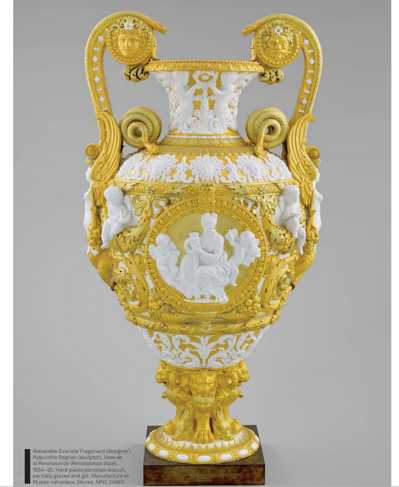
화가 프라고나르 디자인, 레그니에 조각, 1834-35
These items— sketched, drawn, or engraved sources as well as terra-cotta models and plaster molds— represent the institution’s rich, diverse, and mostly unknown archives. Situating sculpture produced at the Sèvres Manufactory in the larger context of French history from 1740 through the twenty-first century, the exhibition tells the story of Sèvres’s relationship to French political power. As a royal, imperial, and then a national manufactory, Sèvres was regularly called upon to produce elaborate porcelain dinner, tea, and coffee services, as well as vases and other objects to be used as diplomatic gifts or to adorn the residences of the French elite. The exhibition is organized chronologically and occupies all four floors of the Bard Graduate Center Gallery.
It reflects the manufactory’s history of collaborations with innovative artists and architects to create new forms and designs aligned with the fashions of their time. Featured works from eighteenth-century artists and designers include those of Jean-Claude Duplessis and Louis-Simon Boizot, among others. Alexandre-Évariste Fragonard, Jean-Baptiste Carpeaux, Albert-Ernest Carrier-Belleuse, and Auguste Rodin represent important collaborations of the nineteenth century. Jean Arp, Louise Bourgeois, and Ettore Sottsass are among the artists whose work demonstrates the manufactory’s artistic output in the twentieth century; and creations by Yayoi Kusama, Johan Creten, Jim Dine, Kristin McKirdy, and Betty Woodman reflect Sèvres’s ongoing commitment to working with the most important living artists of the day. 3 Sèvres Extraordinaire! Sculpture from 1740 until TodayGround Floor: Eighteenth Century The first floor of the exhibition displays works from the early years of the manufactory, when soft-paste porcelain was used as a substitute for Chinese and Saxon porcelain.
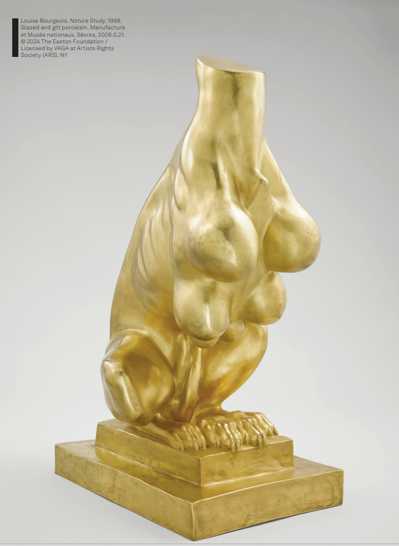
루이스 부르주아, Nature Study, 1998
The objects on this floor showcase the distinctive style pioneered by Sèvres in 1752, when it became the only manufacturer in the world to forgo the application of glaze to its figures. The resulting white, matte objects in biscuit looked as if they were sculpted from marble. This period also saw Sèvres’s first great success with f lowers made from porcelain. Sculptural objects were fashioned into large bouquets to adorn tables, mounted in vases and clocks, and integrated into other decorative objects. Objects on display from the late 1700s showcase the introduction of new pastes and designs at the manufactory including hard-paste porcelain, used exclusively to create f igures and busts; bas-reliefs made in white biscuit on colored paste; and a paste imitating bronze. The exhibition presents different kinds of objects from this period, from cups to saucers to teapots and vases enriched with elements carved in bas-relief in the round.
Organized by Sèvres et Limoges, Manufacture et Musées nationaux, and Bard Graduate Center Curated by Tamara Préaud, former archivist of the Sèvres Manufactory Soazig Guilmin, Sèvres, Manufacture et Musée nationaux, head of the registrar’s department (Service de Récolement et du Mouvement des Oeuvres) Charlotte Vignon, former director of the department of patrimony and collections (Département de Patrimoine et des Collections), Sèvres, Manufacture et Musée nationaux Susan Weber, founder and director, Bard Graduate Center
About Bard Graduate Center
As the leading research institute in the United States dedicated to the study of decorative arts, design history, and material culture, Bard Graduate Center and its gallery have pioneered the study of objects as a means to better understand the cultural history of the material world. Offering experiences for scholars, students, and the general public alike, Bard Graduate Center is built on multidisciplinary study and the integration of research, graduate teaching, and public exhibitions. Since its founding in 1993, it has established a network of more than 500 alumni who work in leading museums, universities, and institutions worldwide to advance new ways of thinking about material culture. bgc.bard.edu
https://www.bgc.bard.edu
Bard Graduate Center Gallery
18 West 86th St.
New York, NY 10024
212.501.3023
*소니아 들로네이(Sonia Delaunay): 아방가르드 미술가, 생활디자인의 여왕, 2024
 화가 키스 헤어링(Keith Haring) 삶 다룬 TV 미니시리즈 제작
