



뮤지컬 '메이비 해피엔딩(Maybe Happy Ending)' 주연 백인 배우 대체 논란
필리핀계 다렌 크리스에서 백인 앤드류 바스 펠드만으로
토니상 수상 BD 왕 "아시안 커뮤니티 소외... 모욕이다"
<2025. 8. 3. Update>
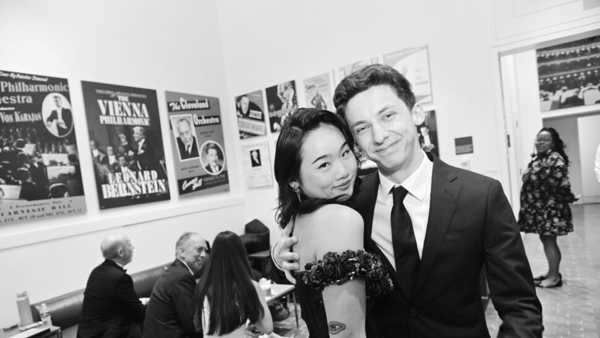
Helen J. Shen and Andrew Barth Feldman Michael Kushner
토니상 최우수 뮤지컬, 작곡, 극본, 남우주연, 연출 및 무대장치상 등 6개 부문상을 석권한 '메이비 해피엔딩(Maybe Happy Ending)'의 남자주연 배우가 새로 발탁되면서 아시안아메리칸 배우들이 불평을 제기하고 나섰다.
주인공 로봇 올리버 역을 맡은 필리핀계 아메리칸 배우 다렌 크리스(Darren Criss)가 하차하면서 9월 2일부터 9주 동안 앤드류 바스 펠드만(Andrew Barth Feldman)으로 대치될 예정이다. 뮤지컬 '디어 에반 핸슨(Dear Evan Hanson)' '노우 하드 필링스(No Hard Feeelings)'에서 주연을 맡았던 펠드만은 여우주연인 헬렌 J. 센(Helen J Shen)의 실제 남자친구이기도 하다.
제작사 측은 7월 31일 캐스팅 결정이 창작팀의 '심도있는 논의'의 결과이며 "로봇의 역할이 항상 그렇게 캐스팅될 것이라 예상하지는 못했지만, 모든 역할을 아시아계 배우가 진정성있게 연기할 수 있는 공연을 창작해서 자부심을 갖는다...우리는 또한 아시안 아메리칸(A.A.P.I.) 커뮤니티의 많은 사람들에게 오리지널 브로드웨이 출연진을 보는 것이 가시성과 대표성의 이정표가 되었다는 점에 감사한다"고 성명서를 냈다.
브로드웨이 연극 '오 메리(Oh Mary!)'에서 에이브라함 링컨 역으로 토니상 남우조연상 후보에 올랐던 필리핀계 배우 콘라드 리카모라(Conrad Ricamora)는 지난 주말 연기 학위를 취득하려는 남성들을 위해 1만8천달러를 기부하며 장학기금 'The Right to Be There'을 론칭했다. 그리거, 4만 8천 달러를 모금했다. 그는 아시안아메리칸 배우들이 겪는 장벽 문제는 지속적으로 논의되어야 한다고 강조했다. 그는 '메이비 해피엔딩'의 새 캐스팅 뉴스에 대해 "절망 속에서 무엇을 할 수 있을지 상상만 했다. 때로는 그 순간에는 아무것도 할 수 없을 것 같다....하지만, 할 수 있는 것은 나중에 자라서 미래에 자랄 수 있는 무언가를 땅에 심는 것이다. 그것이 바로 장학기금을 통해 내가 이루고자 하는 목표"라고 NYT에 말했다.
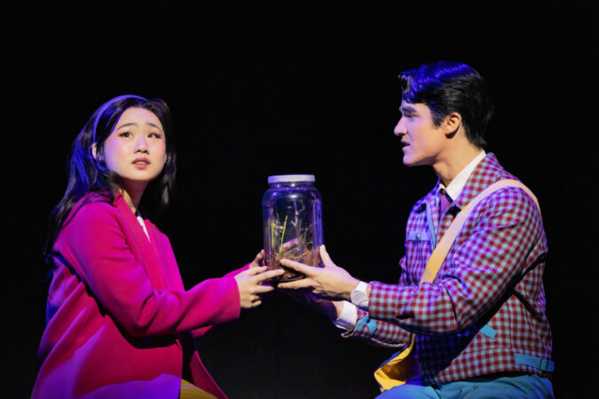
Maybe Happy Ending, Photo: Matthew Murphy and Evan Zimmerman
아시안아메리칸배우행동연합(Asian American Performers Action Coalition)은 수요일 성명을 통해 캐스팅 결정에 대한 "다른 선례가 만들어졌다. 문화적 특수성과 너무나 자주 배제되는 배우 집단의 기회를 축소하는 선례다....만약 이야기의 '보편성'을 보여주려는 의도였다면, 우리는 오랫동안 백인 배우들만 등장하는 백인 이야기를 '보편적'으로 보기를 기대하는 반면, 우리와 닮은 사람들에 대한 이야기는 우리와 닮은 사람들로 가득 차 있을 때 충분히 보편적이라고 여겨지는 경우는 드물다"라고 밝혔다.
데이빗 헨리 황의 'M. 버터플라이'로 토니상 남우조연상(1988)을 수상했던 베테랑 배우 BD Wong은 페이스북에 심경을 토로했다. 그는 "누구도 캐스팅 결정을 가볍게 여기지 않는다는 것을 알고 있다....이 '전환점'은 안타깝게도 'Maybe Happy Ending'이 아시아계 공동체에 가져다준 인정과 축하를 무산시켰다. 이 상황을 목격하고 가슴으로 느끼는 것은 고통스럽다. 아무도 이긴 것이 아니다"라고 올렸다.
BD 웡은 NYT와의 인터뷰에서 "이 모든 상황에 지치고 슬프기도 하다....하지만, 아직 끝나지 않았다고 생각하기 때문에 낙관적이다"라고 밝혔다. 그는 "아시아계 커뮤니티, 특히 배우들은 이 소식에 다소 배신감을 느끼고 있다" "우리는 소외되었다. 고통스럽다" "이 결정은 여전히 아시아계 배우 커뮤니티와 아시아 관객 모두에게 큰 모욕으로 받아들여지고 있다"며 뉴욕타임스에 제출할 칼럼을 페북에 올렸다. (*아래 원문)
한편, '메이비 해피엔딩'의 극본과 작사를 담당한 박천휴(Hue Park)과 작곡가 윌 아론슨(Will Aronson)은 31일 인스태그램에 공동으로 올린 게시글에서 "우리는 MHE을 한국을 배경으로 하고 있지만, 누구나, 어디서든 현하게 공연할 수 있는 작품이 되기를 원했다"고 밝혔다. 이어 "동시에 AAPI 커뮤니티에서 오프닝 나이트에 출연진의 구성이 의미있고도 드문 가시성을 확보하는 계기가 되었다는 것을 알고 있다. 비록 우리의 원래 의도와는 달랐을지라도 이 대표성과 연관해서 사람들이 강렬하게 공감을 했으며, 얼마나 이번 캐스팅 결정이 오래된 상처를 다시 드러냈는지에 대해서 들었다. 미국에서 이 작품을 개발하는 동안 우리는 캐스팅에 여러 접근 방식을 시도했다. 이 여저에서 한 시점에서는 배경을 더 빨리 드러내는데 도움이 될 것이라 생각해서 아시안 배우를 명시적으로 캐스팅했다. 그러나, 우리는 만족하지 못했다. 무대에서 어떤 아시안 배우를 보는 것이 '빨리 한국을 제시한다'는 표현은 과장일뿐만 아니라 퇴행적이며, 한국문화의 고유성을 훼손하는것까지 보였다. 이전 공연뿐만 아니라 브로드웨이 공연에서도 아시안 배우가 주연이었다는 점에 유의해야 한다"고 올렸다.
박천휴와 윌 아론슨이 협업한 '어쩌면 해피엔딩'은 2016년 서울에서 초연됐다. 이 작품을 각색한 브로드웨이 프로덕션 '메이비 해피엔딩'은 지난해 11월 벨라스코시어터에서 초연되어 8명의 출연진(4명 무대 출연, 4명 대역) 중 7명이 아시안아메리칸/하와이 원주민/ 태평양섬 출신이다. 올 토니상 시상식에선 아시안 아메리칸 배우 니콜 셰징거(선셋 불러바드), 다렌 크리스, 프랜시스 주(옐로우 페이스)가 연기상을 수상했으며, 다니엘 대 김 등 4인의 아시안아메리칸 배우들이 후보에 올랐다.
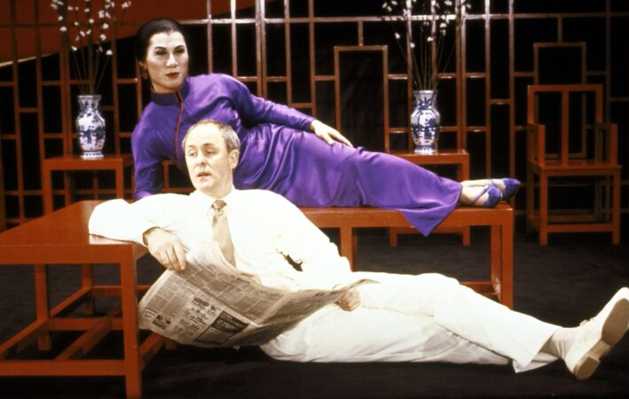
B. D. Wong and John Lithgow in M. Butterfly (1988) Martha Swope/The New York Public Library Digital Collections
Bradley D. Wong
Hey there.
I’ve concocted an opinion essay in response to the MAYBE HAPPY ENDING casting news, that I am going to try to submit to the Times. I would like to accompany it with a list of names, signatures if you will, of people who endorse it.
I make no assumptions of who will or won’t align themself with this. But if you do support this, please do add your name, we’d all be grateful.
If you want to be included, please type your name in the comments. If you want to share this on your own page with the same prompt, please bring your list of signatures back here and I or somebody will compile them. Please don’t cheat or fudge!
It’s astonishing that we’re doing this again, but that should be all the motivation we need.
Thanks, Friends.
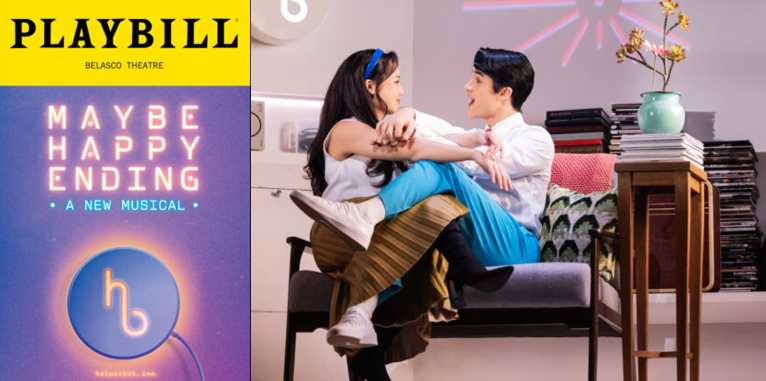
MAYBE. MAYBE NOT.
by BD Wong
In 1990, playwright David Henry Hwang and I were two names on a list of "Asian Americans and others" protesting the casting of a white British actor, playing an Asian role, in yellowface, in a major musical scheduled for Broadway after running on the West End (whole plays have been written about it). This sparked a pivotal conversation about Asians in American Theater that continues today. It revealed fundamental "new" truths. It brought changes in the casting policies of that production, and generally raised the stature and visibility of Asian actors: "progress"? Journalists were dismissive and lacked nuance. A Times writer called me at home, haughtily challenging my motives. The disrespect and dismissiveness surprised, wounded, saddened me. That was then. Today's steady surge in Asian American visibility, again, feels like "progress..."
...kinda.
Last week, MAYBE HAPPY ENDING announced that its Tony-winning hero, the charismatic Darren Criss, ending his run, will be replaced by Andrew Barth Feldman.
This essay concerns the fact that Mr. Criss is of Asian American descent, and Mr. Feldman is not.
The Asian community has had a passionate reaction to this. It's screaming to be heard.
MAYBE HAPPY ENDING is a magical "little" Broadway musical rendered by inspired writers and a masterful director. It features delightful leading performances by Asian actors. It's a rare feat of representation. In challenging times, it deserves survival.
The Asian community, particularly actors, feels rather betrayed by the news. The show's Asian-ness barely enjoyed, this came as a shock. I celebrate MHE's many merits while responding honestly to this news. Wish me luck.
Re Mr. Criss' racial identity: if you believe an Asian person with two Asian parents is "more Asian" than an Asian person with one (etc.), this essay isn't for you. We don’t gauge someone's Asian-ness on a “gradient scale” in my house. As for "how Asian" an actor “reads on stage"? Don't be so shallow! Those who process race this way might be less exposed to race, understood. When one's open to the multi-racial-ness around us, one will encounter diverse racial self-identities...but please don't label someone a "percentage" of something. Percentages are for comparing historical family facts.
So simple, so true: an Asian Person is an Asian Person, "periodt." There aren't "degrees."
I despair explaining this today.
MAYBE HAPPY ENDING's creators truly bring the audience somewhere special. Whence comes such enchantment?
I think the show mesmerizes partly because of its unique origin: created with Korean energy, much of its development was Korean. Its original Korean production, years ago, was wildly successful. When it finally opened on Broadway, its Korean location, sensibility, and its characters were preserved (unlike, for example, the musical adaptation of THE FULL MONTY and film adaptation of STEPPING OUT; both coincidentally relocated from South Yorkshire and North London to Buffalo to make them more relatable).
MAYBE HAPPY ENDING proves good stories can be set everywhere; they don’t need a “baseball” production number to “cater to the locals.” (Instantly I can think of three American musicals that have baseball numbers, as well as one popular musical about baseball; this ain't a stretch).
So MHE brought the American audience to Korea rather than American-izing itself. This felt revolutionary and subversive; bold and modern, and also felt like a gift. It sees Asian people. We can tell a Korean story, with Asian American actors, without people blinking, fainting, or demanding a refund. Transport us to Korea, as Meredith Willson took us to River City (or Anatevka, or Brigadoon) without a Real ID. We boarded the train. We traveled together. When the conductor bellowed "...next station stop, River City, Iowa," nobody looked at their ticket, yelped “OH MY GOD, I'M ON THE WRONG TRAIN” and staggered up the aisle vomiting. Nobody in the MAYBE HAPPY ENDING audience does, either. We. All. Just. Go. To. Korea. Delighted and safe; excited and scared.
They made a Korean world, indicated by proper nouns and the names of cities. It's crystal clear, folks: we're in Korea.
A colorful, romantic, futuristic, musical mural of Korea.
Where the people are Korean people.
Where the robots are Korean robots.
Some say "robots know no race," or fixate on (and labor to justify) what "robots" are or aren't, sure, but MHE's world actually supports the use of actors who’ll deliver us to that Korean place. In some ways, yeah, "it doesn't matter" if Oliver "is Asian or not." If he's not, though, he will clash with the "Korea-verse." In this world, written Korean language takes up visual space; a Korean man listens to American jazz crooners because they transport him. If you "recast" Hwaboon (Oliver's trusty houseplant pet) with a cactus and rename him "Dakota," it would also disrupt this meticulous Korean world.
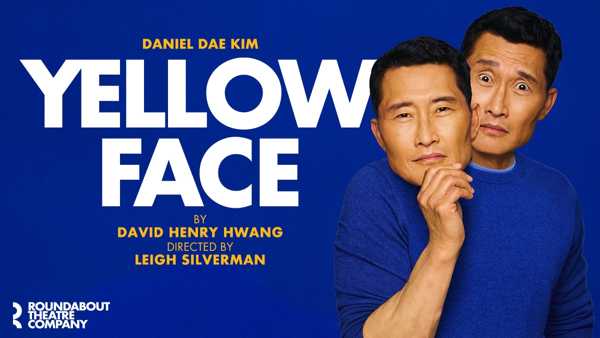
Let me try to make the "yellowface" issue clear.
Start by removing all of that lovely Korean detail from the musical's content and its production. Then, and not until then, should we talk about casting white people in it.
My advocacy on behalf of Asian Oliver is silly. Install a Caucasian Oliver and nobody's gonna die. However, I'm begging you to hear why we fervently concoct elaborate explanations such as Why Oliver Must Be Asian.
It's simply because we're always at war over our own representation.
Advocating for one's own representation is stultifyingly self-debasing. No, we don't want to "get somebody fired." We must express, though, how painful it is to be passed over, yet how used to it we've become. How rare "Asian Shows" are.
The creators may bristle when an outsider proclaims what their show is/isn't. I'm responding honestly to what they've made, and how it unnerves people, given what's happening next.
Arguing something that's already in motion; oy. While perhaps moot, this conversation is extremely important. A bunch of Asian people, gasp, Asian actors, feeling left out? Feelings hurt?!
What can I say? We're left out. It's painful. It's hardwired to real issues. All I have to placate the rage and exclusion this summons is my voice. Can it open the eyes of anyone hesitant to empathize?
Team MHE does what it thinks it must. Producing a Broadway musical is a b*tch. I feel for them. Yet, this decision's still taken as a hard slap in the face of both the Asian actor community and the Asian audience. The long-standing history of exclusion is real. We're incapable of rising above a producer's business decision because our life is steeped in exclusion. We can't receive this news blithely.
Both parties wish the other would cut them some slack. 'Cause it's always hardest being yourself.
There was a subtle attempt to characterize a non-Asian actor playing this role as an example of “inclusion." A "now, anyone can play it!" spin, because “anyone" sounds so "expansive." This almost mocks the struggle for opportunities of the marginalized! It ignores the statistical dominance of white actors in musical leading roles (MHE was a glorious, rare exception to this). It undermines the effort to discuss yellowface and appropriation.
It also seemed unaware of its potentially negative optics.
I know nobody takes casting decisions lightly. This "pivot" unfortunately retracts the validation and celebration that MHE lent the Asian community. This is agonizing to witness and to feel in my heart. Nobody is winning.
Making theater is a series of choices. This choice seems unaware of its effect on the community it excludes, with no understanding, even, that it is in fact excluding. It seems the decision-makers didn't anticipate much reaction. Unfortunately, a community is left betrayed, scrambling to mobilize, wounded. Ironically, its long-built rage points back to the very project that lifted it up, validating it right until last week's announcement.
As I write this, it's as if no time has passed; as if nothing's changed. As if no one learned anything from that racial dismissal and exclusion 35 years ago, as we now stand up to face this racial dismissal and exclusion. My Asian theater family has been sideswiped by this "turn of events." Imagine a Broadway opening celebrating us so glitteringly, leading to historic success come awards season, then rotting like flowers left too long in the dressing room, making us question our faith in allies. We're amazed how rapidly trust dissolves. The explanations given were hollow and ill-thought, cementing our invisibility. It feels like we're not even worth concocting a decent-sounding excuse for. Maybe it's nothing in the scheme of things to the MHE team, but it looms large, like so many steps backward, to us. Nothing has been said. The difficulty and grief has yet to be acknowledged, perhaps even noticed.
More than a thousand names attached to this essay in less than a day. That means something. Go figure. People hunger to be heard. It's brutal.
I can't speak for everyone. I can say Asian Actors, in all their authentic individuality, internal-diversity, talent, resilience, and weary idealism, don't buy this. They don't accept it. They don't accept it, frankly, because by now they've "been to Korea." They've been to the Korea that's celebrated in the show that now eschews them. They know that blossoming In That Korea, just over the garden wall, is respect and validation.
If anything's different in 2025 than in 1990, it's that this community is now painfully aware it deserves, at the very least, respect from this industry. We're constantly fighting like hell for that respect, as we did thirty-five years ago. This time, we have the evolved, unmitigated gall to know that we've got a point. We're rabidly annoyed. We're shellshocked and gobsmacked that we're still brawling, like stray, malnourished street dogs, for even the most emaciated shreds of respect from y’all. Asian Actors once again enter the ring, alone, threatened by the notion of going back to Before Korea, Mother. The old “go back where you came from” shtick? I'm deeply embarrassed to report: it's still a thing, and it doesn't feel as fun as the party we went to "In Korea."
What it does feels like, sadly, is the diametrical opposite of “progress.”
https://www.facebook.com/bdwong/posts/pfbid0U1nduWN9Rt1ng3JRSVTftZdW5zVYHMFXXYrZTCSwNLtSNZzDZogLHwfva5HdHvHul
‘Maybe Happy Ending’ Casting Change Ignites Debate About Representation
When the show said Andrew Barth Feldman, a white actor, would replace Darren Criss, who is of Filipino descent, alarms were sounded by some Asian American actors.
https://www.nytimes.com/2025/07/31/theater/maybe-happy-ending-casting-controversy.html
Maybe Happy Ending Creators and Lead Helen J Shen Respond to Casting Controversy
The decision to replace Darren Criss with Andrew Barth Feldman has been widely criticized.
https://playbill.com/article/maybe-happy-ending-creators-respond-to-casting-controversy
뮤지컬 '메이비 해피엔딩' 남주 앤드류 바스 펠드만 대치
토니상 최우수 뮤지컬, 연출, 남우주연 등 6개 부문상을 석권한 뮤지컬 '메이비 해피엔딩/어쩌면 해피엔딩(Maybe Happy Ending)'의 남주인공 다렌 크리스(Darren Criss)가 8월 30일 공연으로 무대를 떠나고, 9월 2일부터 앤드류 바스 펠드만(Andrew Barth Feldman)으로 대치된다. 뉴욕 맨해셋에서 태어나 하버드대를 중퇴한 후 2019년 '디어 에반 헨슨(Dear Evan Henson'에서 주연을 맡았던 펠드만은 여주인공(클레어) 헬렌 J. 셴(Helen J. Shen)과 실제 연인 사이다. 박천휴 극본-작사, 윌 아론슨 작곡의 '메이비 해피 엔딩'은 서울을 배경으로 쓸모없는 존재로 여겨지는 두 헬퍼봇, 클레어와 올리버의 로맨틱한 모험을 그렸다.
Andrew Barth Feldman Will Co-Star With Offstage Girlfriend Helen J Shen in Broadway’s Maybe Happy Ending
The former Dear Evan Hansen actor will succeed Tony winner Darren Criss.
https://playbill.com/article/andrew-barth-feldman-will-co-star-with-offstage-girlfriend-helen-j-shen-in-broadways-maybe-happy-ending
 뉴욕시 건립 400주년 타임스퀘어서 브로드웨이 뮤지컬 무료 콘서...
 브로드웨이 뮤지컬의 두 여인: 마마 로즈(집시)와 노마 데스몬드(...
---이 상황을 목격하고 가슴으로 느끼는 것은 고통스럽다.
---하지만 아직 끝나지 않았다는 그의 토로는 아시안인인 나도 고통을 느낍니다.
백인이 흥행에 더 좋은 결과를 주어서는 아닐 것 같습니다.
-Elaine-