

이우환(Lee Ufan) 화백 8점 기증...디아비컨(Dia Beacon) 개인전(5/8, 2026- )
이우환 화백이 뉴욕 디아아트 재단(Dia Art Foundation)에 자신의 그림 8점을 기증했다. 아트뉴스페이퍼에 따르면, 이 기증품들은 내년 5월 8일 업스테이트 뉴욕 디아비컨(Dia Beacon)에서 열릴 개인전에 조각과 함께 전시될 예정이다. 기증품은 '점으로부터/ From Point'(1975-80), '선으로부터/ From Line' (1978), '바람과 함께/ With Winds'(1991) 시리즈에 속한다. 전시 큐레이터는 마틸드 기델리 기디(Matilde Guidelli-Guidi)와 전민선(Min Sun Jeon)씨다. https://www.diaart.org
Lee Ufan
Opening May 8, 2026, Dia Beacon
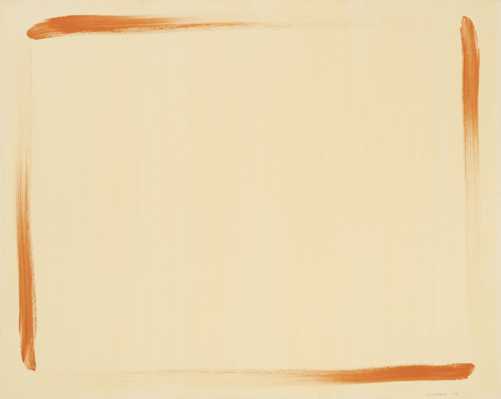
Lee Ufan, From Line, 1978. © Lee Ufan/Artists Rights Society (ARS), New York. Photo: Bill Jacobson Studio, New York
Overview
Lee Ufan is considered a founding member of Mono-ha (School of Things), a loosely defined group of artists who worked in a shared sculptural idiom in Japan roughly between 1969 and ’74. Formally similar to Postminimalism and Arte Povera in the West, Mono-ha artists juxtapose diverse materials in ways that emphasize their inherent properties and consider the spectator as yet another component of the artwork. Accordingly, rather than asserting or denying authorship over an object, in his early works Lee distributes forms across a system of material and physical relations, incorporating within them the viewer.
Opening in spring 2026 at Dia Beacon, this exhibition will enable visitors not only to encounter a conceptual dialogue between Lee’s paintings and sculptural works, but also to deepen their understanding of international contemporaneity of formal and conceptual concerns that developed across regions from the late 1960s to the ’80s.
Lee Ufan is curated by Matilde Guidelli-Guidi, curator and co–department head, with Min Sun Jeon, assistant curator.
All exhibitions at Dia are made possible through the Economou Exhibition Fund.
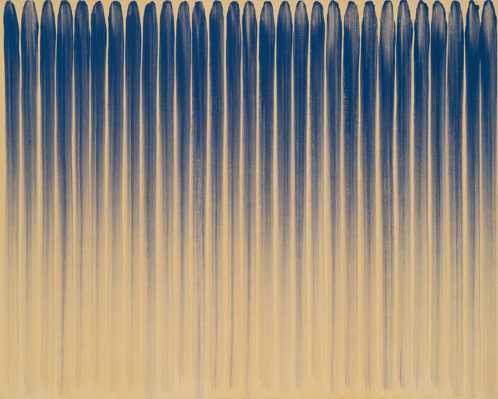
Lee Ufan, From Line, 1978. © Lee Ufan/ Artists Rights Society (ARS), New York. Photo: Bill Jacobson Studio, New York
Dia Art Foundation Announces Major Gift From Lee Ufan and Exhibition at Dia Beacon in 2026
Lee Ufan to further partner with Avant Arte to release three new limited-edition prints in support of Dia
New York, New York, May 22, 2025—Dia Art Foundation today announced an extraordinary gift of eight paintings from the 1970s to the early ’90s from artist Lee Ufan, a key member of the Mono-ha movement. These paintings, alongside important sculptural works from Dia’s collection, will be the subject of an exhibition at Dia Beacon in spring 2026. Additionally, in collaboration with London-based, limited-edition marketplace Avant Arte, Lee will release three new limited-edition screenprints in support of Dia. Proceeds from this edition will be donated to support Dia’s multivalent program.
“We are deeply honored by Lee Ufan’s generous gift, which allows Dia to present a more complete view of his singular vision across both painting and sculpture. Lee’s work has long resonated with Dia’s commitment to the expansion of time, space, and material presence, and the forthcoming exhibition will offer audiences a rare opportunity to experience the full breadth of his contribution to postwar art,” said Jessica Morgan, Dia’s Nathalie de Gunzburg Director. “We are also grateful for his collaboration with Avant Arte, which will raise vital funds to support Dia’s mission and ongoing programming.”
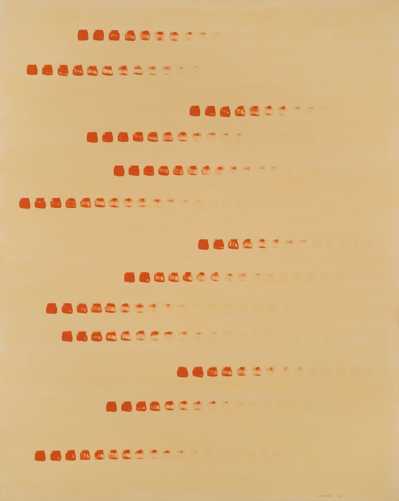
Lee Ufan, From Point, 1978 © Lee Ufan/ Artists Rights Society (ARS), New York. Photo: Bill Jacobson Studio, New York
“I am pleased to entrust these eight paintings to Dia, a unique institution that allows for deep contemplation of and sustained engagement with art. In joining these works with my sculptures at Dia Beacon, I hope viewers will be able to experience the quiet energy that emerges through the dialogue of material, space, and time—a sensibility that has shaped my practice for decades,” said Lee Ufan.
Lee is considered a founding member of Mono-ha (School of Things), a loosely defined group of artists who worked in a shared sculptural idiom in Japan roughly between 1969 and ’74. Formally similar to Postminimalism and Arte Povera in the West, Mono-ha artists juxtapose diverse materials in ways that emphasize their inherent properties and consider the spectator as yet another component of the artwork. Accordingly, rather than asserting or denying authorship over an object, in his early works Lee distributes forms across a system of material and physical relations, incorporating within them the viewer.
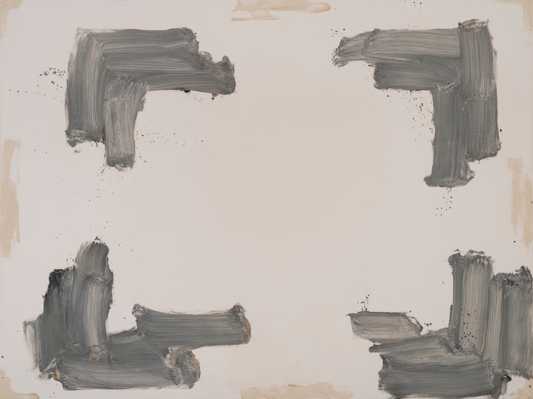
Lee Ufan, With Winds, 1991 © Lee Ufan/ Artists Rights Society (ARS), New York. Photo: Bill Jacobson Studio, New York
Since 2017, Dia has acquired five installations from Lee’s Mono-ha period and presented them at Dia Beacon in May 2019 in a long-term display that proved revelatory to U.S. audiences. This group of eight pivotal paintings now entering the collection uniquely complements Dia’s holdings by the artist, allowing a full representation of his masterful practice. Dating from the 1970s to the early ’90s, Lee’s From Point (1975–80), From Line (1978), and With Winds (1991) series chart the artist’s return to painting after a period in which he focused on site-responsive installation.
In the series From Point and From Line, Lee applies single-mineral pigments in repeated strokes or dots that gradually dissipate, visualizing time’s passage through durational gestures. These works emphasize temporal infinity and eschew expressivity in favor of meditative process and material presence. In the late 1980s, Lee’s With Winds series introduced more delicate yet dynamic brushstrokes, evoking the intangible movement of air across expansive white space. Across all three series, carefully considered empty space—resonating with his sculptural practice—serves as a medium for reflection and balance, creating an interdependence between viewer, artwork, and surroundings.
Opening in spring 2026 at Dia Beacon, the exhibition will enable visitors not only to encounter a conceptual dialogue between Lee’s paintings and sculptural works, but also to deepen their understanding of international contemporaneity of formal and conceptual concerns that developed across regions from the late 1960s to the ’80s. Lee Ufan is curated by Matilde Guidelli-Guidi, curator and co–department head, with Min Sun Jeon, assistant curator.
About Lee Ufan
Lee Ufan was born in Gyeongsangnam-do, Korea, in 1936, while the country was under Japanese occupation. He was trained in traditional ink-brush techniques at Seoul National University High School, and in 1956 moved to Tokyo, where he studied philosophy at Nihon University. In 1967, he had his first solo show at Sato Gallery, Tokyo, and in 1968 his work was included in Contemporary Korean Painting at Tokyo Museum of Modern Art. In 1969, Lee staged an ephemeral happening and made contingent structures for the 9th Contemporary Art Exhibition of Japan at Tokyo Metropolitan Museum of Art, which signaled a departure from his earlier optical, discrete paintings, and brought together Japanese artists identified with Mono-ha (School of Things). Throughout the 1970s, he participated in several exhibitions that juxtaposed North American, East Asian, and European artists to highlight their shared concern with material, process, and site. A dedicated teacher and prolific cultural critic, Lee has published 17 books. In 2010, the Lee Ufan Museum, designed by Tadao Ando, opened in Naoshima, Japan. Increasingly distilled and monumental, his sculptures continue to combine natural and industrial materials, in keeping with his relational philosophy. Lee lives in Kamakura, Japan, and Paris.
About Dia Art Foundation
Taking its name from the Greek word meaning “through,” Dia was established in 1974 with the mission to serve as a conduit for artists to realize ambitious new projects, unmediated by overt interpretation and uncurbed by the limitations of more traditional museums and galleries. Dia’s programming fosters contemplative and sustained consideration of a single artist’s body of work, and its collection is distinguished by the deep and longstanding relationships that the nonprofit has cultivated with artists whose work came to prominence particularly in the 1960s and ’70s.
In addition to Dia Beacon, Dia Bridgehampton, and Dia Chelsea, Dia maintains and operates a constellation of commissions, long-term installations, and site-specific projects, notably focused on Land art, nationally and internationally. These include:
Walter De Maria’s The New York Earth Room (1977) and The Broken Kilometer (1979), Max Neuhaus’s Times Square (1977), and Joseph Beuys’s 7000 Eichen (7000 Oaks, inaugurated in 1982 and ongoing), all in New York
De Maria’s The Lightning Field (1977), in western New Mexico
Robert Smithson’s Spiral Jetty (1970), in the Great Salt Lake, Utah
Nancy Holt’s Sun Tunnels (1973–76), in the Great Basin Desert, Utah
De Maria’s The Vertical Earth Kilometer (1977), in Kassel, Germany
Cameron Rowland’s Depreciation (2018)