

33 Keys to Understanding the Korean Wave #Epilogue: A Brave New World, Hallyu Syndrome Persists
33 Keys to Understanding the Korean Wave #Epilogue: Hallyu Syndrome
A Brave New World, The Persistence of Hallyu Syndrome
*Note to Readers
The columns published in the Zoom section of NYCultureBeat contain selected excerpts—typically the opening paragraphs—from each chapter of the book 33 Keys to Understanding the Korean Wave: Beyond BTS, Parasite, and Squid Game (2025). These previews are meant to introduce the book’s themes and tone.
The complete book—featuring 33 updated chapters and new cultural insights—is available in both paperback and hardcover editions:
Paperback: https://www.amazon.com/dp/B0F7HYLVCL
Hardcover: https://www.amazon.com/dp/B0F7HZ34Y3
© Sukie Park. All rights reserved. These excerpts are for preview purposes only and may not be reproduced in full or redistributed.
Baekbeom Kim Koo’s Desire, and Martin Luther King’s Dream
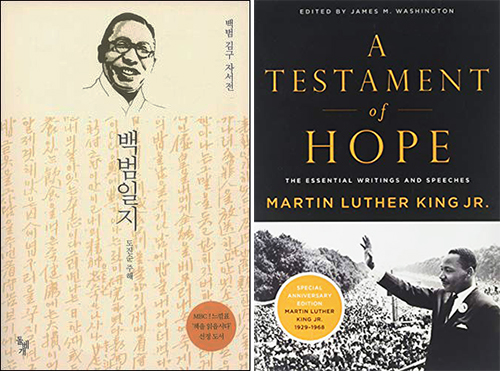
Kim Koo, from “Diary of Baekbeom,” Stone Pillow, 1997 / Martin Luther King Jr., from “A Testament of Hope: The Essential Writings and Speeches,” 2003, HarperOne
The rise of the Korean Wave naturally brings to mind the visionary aspirations of “Baekbeom” Kim Koo (1876–1949), a leader of the Korean independence movement against Japanese imperialism, shares a profound connection with Martin Luther King Jr. (1929–1968), who championed nonviolent resistance against racial discrimination. Despite living in different eras and fighting different battles, both leaders envisioned a world where cultural and human dignity triumphed over oppression. Kim Koo was assassinated in Seoul in June 1949, while Dr. King met the same fate in Memphis in April 1968.
The Korean Wave’s transformation from a local cultural phenomenon to a global force is a testament to Korea’s resilience, creativity, and vision. It has not only reshaped the global cultural landscape but also challenged long-held notions of cultural dominance. As Korea’s music, cinema, literature, and other art forms captivate audiences worldwide, the spirit of cultural exchange evolves into something richer and more inclusive.
Korea’s success is more than an entertainment triumph—it embodies ideals of unity, empowerment, and breaking barriers, reflecting the dreams of visionaries like Baekbeom Kim Gu and Martin Luther King Jr. The Korean Wave’s reach extends beyond fame; it aims to foster a global community grounded in mutual respect, understanding, and appreciation for diverse cultures.
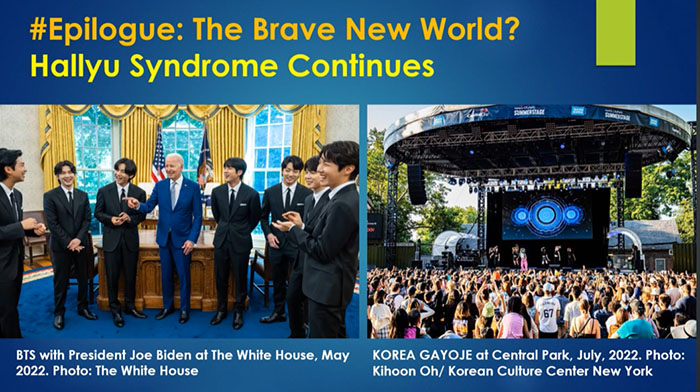
EPILOGUE: Beyond the Wave: Echoes of Hallyu 483
The Korean Wave in the Social Media Era 483
The Genesis of Hallyu: Korea’s 1990 Plan 485
The Titans of Hallyu: Lee, Lee, and Bang 487
Hallyu Leaders in New York 488
Korea’s Resilient DNA in Action 489
Kim Koo’s Desire and Martin Luther King Jr.’s Dream 491
Korean Wave: A Global Dream 493
APPENDIX I 495
References 495
APPENDIX II 506
Expanded Table of Contents 506
About the Author 517
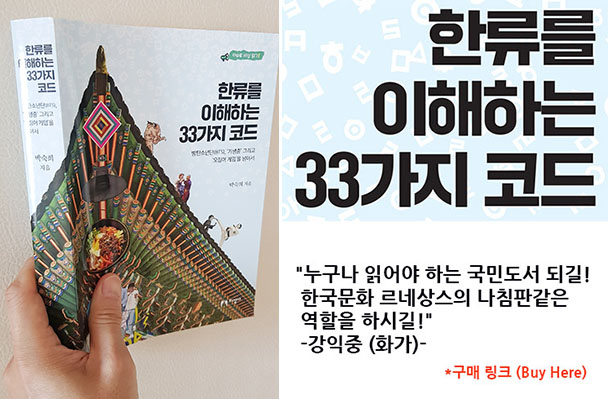
글로벌 한류 팬의 수가 2억 2500만이고, 한류 팬클럽의 총 수는 1748개라는 기사입니다. 상상도 못했던 숫자입니다. 탄성이 절로 나네요.
이런 생각을 해봤습니다. 우리 해외동포가 약700만이라고 하는데, 이들이 한류를 이해하고 즐기면서, 그중에 한가지라도 외국인에게 알리면 한류 펜수는 기하급수적으로 늘어날 게 아닐까 생각했습니다. 700만 동포중에 한명인 나도 한류의 한가지를 무엇으로 꺼내서 알릴까 고민하고 있습니다.
-Elaine-