

33 Keys to Understanding the Korean Wave #30 K-Fashion Rocks
33 Keys to Understanding the Korean Wave #30 K-Fashion Rocks
From People of White Clothes to Global Fashionistas
*Note to Readers
The columns published in the Zoom section of NYCultureBeat contain selected excerpts—typically the opening paragraphs—from each chapter of the book 33 Keys to Understanding the Korean Wave: Beyond BTS, Parasite, and Squid Game (2025). These previews are meant to introduce the book’s themes and tone.
The complete book—featuring 33 updated chapters and new cultural insights—is available in both paperback and hardcover editions:
Paperback: https://www.amazon.com/dp/B0F7HYLVCL
Hardcover: https://www.amazon.com/dp/B0F7HZ34Y3
© Sukie Park. All rights reserved. These excerpts are for preview purposes only and may not be reproduced in full or redistributed.
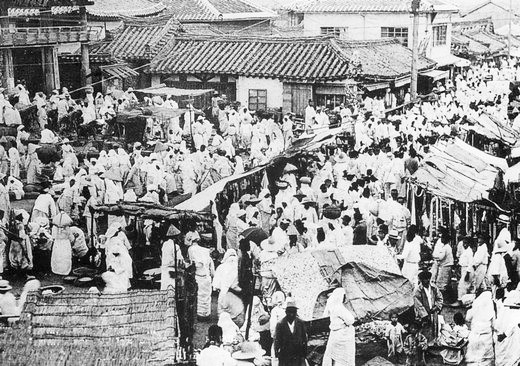
A market day scene at Dongrae Market in Busan during the late Joseon Dynasty. Photo: Busan Metropolitan City Museum.
How did the Korean people evolve into the world’s leading fashion trendsetters within a past 15 years?
Once upon a time, in the land of the morning calm ... when Westerners visited Joseon during the enlightenment period, their attention was captivated by the color of the Joseon people’s attire. In his 1880 book "A Forbidden Land: Voyages to the Corea," German trader Ernst Jakob Oppert (1832-1903) noted the graceful and agile strides of the Korean people, who seemed to move with a flexibility and liveliness reminiscent of the Chinese. In comparison to the Japanese, Koreans had larger and sturdier builds. Moreover, they displayed more vigor and a greater sense of adventure compared to the Japanese... Additionally, the attire of both men and women was predominantly white. Similarly, in his 1898 book “La Coree, Independante, Russe, Ou Japonaise,” French writer Raoul-Charles Villetard de Laguérie (1858-1913) depicted Koreans walking slowly and heavily, emphasizing that everyone adorned white attire.
Various theories attempt to explain the origin of the Korean people’s inclination for white clothing. The most influential among them suggests that white, symbolizing heaven and earth, is an immortal color deeply rooted in the unique faith of worshiping heaven and earth. This belief gave rise to the tradition of wearing white clothes, as well as using white rice cake, white rice, and white alcohol during ancestral rites.
The exceptional fashion sense of the Korean people throughout history should not be overlooked. Highlights include the costumes depicted in the mural paintings in a tomb of Goguryeo, the opulent court costumes of the Joseon Dynasty, the fashion of courtesans, and the hats of scholars that gained global attention through the Netflix drama “Kingdom,” as well as the saekdong jeogori (a girl’s jacket with sleeves of multicolored stripes). The "white clothes" people, pursuing pure, simple, lofty, and clean ideals reminiscent of Joseon's white porcelain moon jars, have now become global fashion icons.
30. K-Fashion Rocks 433
From White Robes to Runways 433
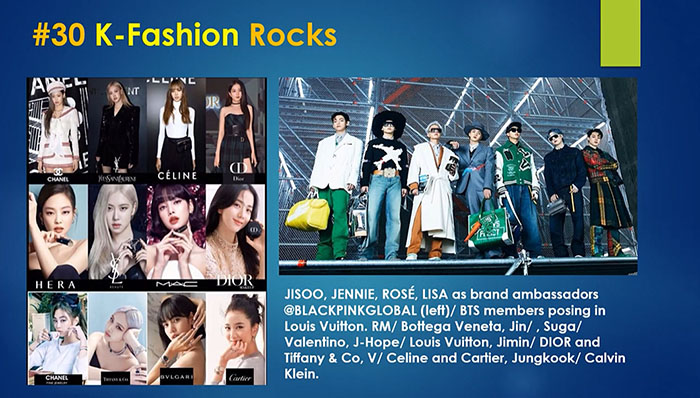
Hallyu Stars as Luxury Ambassadors 434
K-Pop’s Influence on Global Fashion 436
Dongdaemun, “the Mecca of Fashion” 438
Fast Fashion: The Rise and Fall of Forever 21 439
K-Fashion: Sensitivity, Sophistication, Individuality 440
Lee Young-hee: Hanbok Designer 442
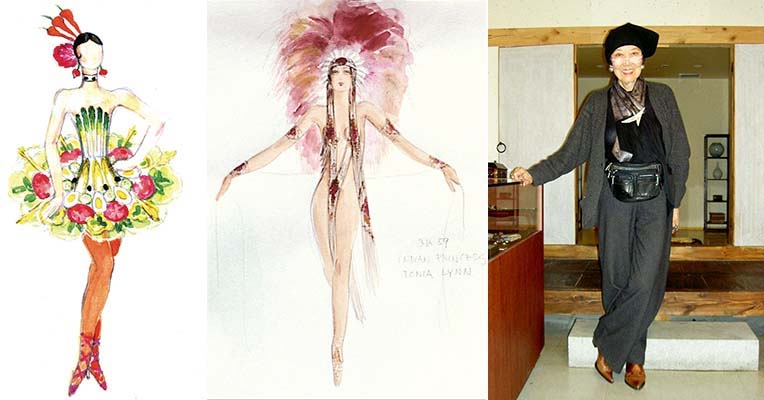
Willa Kim: Two Tonys and an Emmy 444
K-Fashion’s Journey to Haute Couture 446
-Elaine-