

33 Keys to Understanding the Korean Wave #13 EAT
33 Keys to Understanding the Korean Wave, Hallyu! #13 EAT
#13 People who enjoy eating, drinking, singing and dancing
<1> Eat (음/飮/EAT)
*Note to Readers
The columns published in the Zoom section of NYCultureBeat contain selected excerpts—typically the opening paragraphs—from each chapter of the book 33 Keys to Understanding the Korean Wave: Beyond BTS, Parasite, and Squid Game (2025). These previews are meant to introduce the book’s themes and tone.
The complete book—featuring 33 updated chapters and new cultural insights—is available in both paperback and hardcover editions:
Paperback: https://www.amazon.com/dp/B0F7HYLVCL
Hardcover: https://www.amazon.com/dp/B0F7HZ34Y3
© Sukie Park. All rights reserved. These excerpts are for preview purposes only and may not be reproduced in full or redistributed.
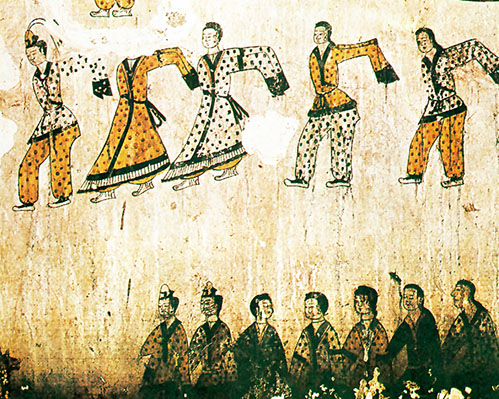
'Dancers' mural in 'Dance Tomb' of Goguryeo in the late 5th century in Jilin Province, China
Koreans have often been described as a people deeply connected to han (恨, sorrow), but perhaps we have always sought to resolve that han with heung (興, excitement). Indeed, the traditions of eating, drinking, singing, and dancing have been part of Korean life since ancient times, seemingly embedded in our cultural DNA.
During the Three Kingdoms period in China (220–280 AD), when the kingdoms of Wei, Shu, and Wu dominated the landscape, historian Jin Su (陳壽) from the Western Jin compiled Dongyi in The Records of the Three Kingdoms. In the section about Buyeo (an ancient Korean kingdom), he noted: "The Jecheon event, held for the New Year, is a national convention where people eat, drink, sing, and dance every day. This event is called Yeonggo."
In the chapter on Goguryeo, Jin Su wrote, "The people love singing and dancing. Every evening, in every village across the country, men and women gather in groups to sing and enjoy games." This passage highlights how integral music and dance were to everyday life in Goguryeo.
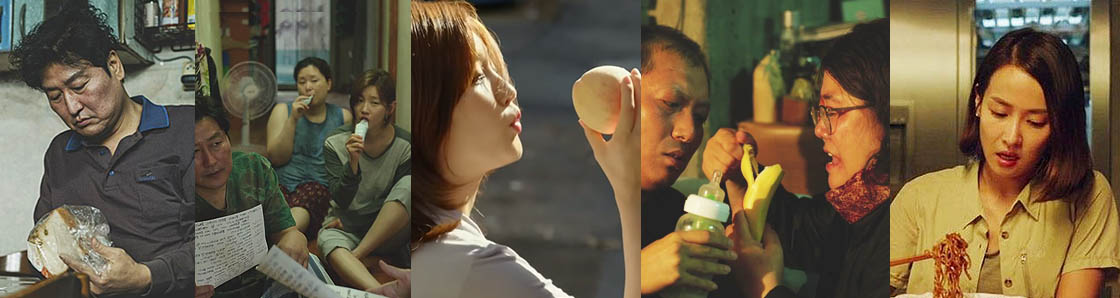
"Parasite"
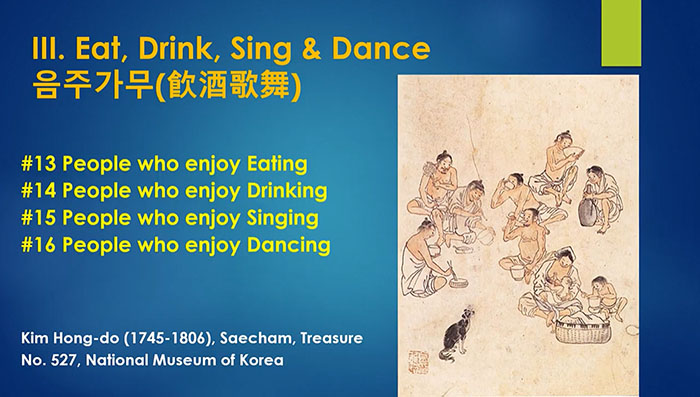
Part III. People Who Love to Eat, Drink, Sing & Dance 173
Ritual and Revelry: Korea’s Traditions 174
13. EAT: K-Food as Culture 177
Why Michelle Zauner Cries at H Mart 177
“Have You Eaten?” Means More Than a Meal 178
Soup, the Heart of the Korean Table 179
K- Food and “Random Access” 180
Korean Food in Culture 181
TV Drama Dae Jang Geum Syndrome 181
Sikgaek: From Comic to Movie to Drama 182
Musical Cookin’ on Off-Broadway 183
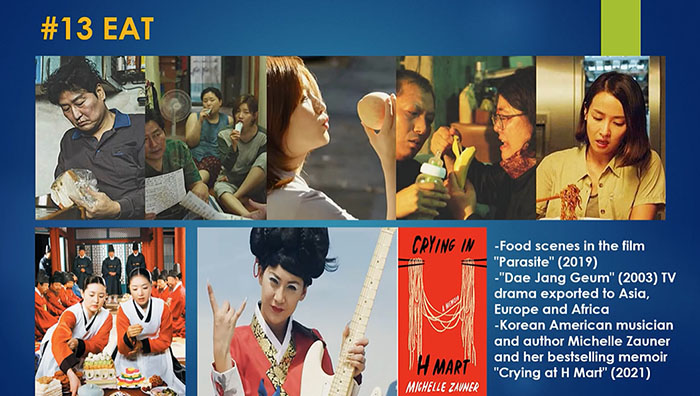
Food Codes in Parasite 184
NYT: Korean American Church Lunch 186
WP: Korean Food Philosophy 187