

33 Keys to Understanding the Korean Wave, Hallyu
#10 Hangeul, the Korean Alphabet
Homer Hulbert and the World's praise of Hangeul
*Note to Readers
The columns published in the Zoom section of NYCultureBeat contain selected excerpts—typically the opening paragraphs—from each chapter of the book 33 Keys to Understanding the Korean Wave: Beyond BTS, Parasite, and Squid Game (2025). These previews are meant to introduce the book’s themes and tone.
The complete book—featuring 33 updated chapters and new cultural insights—is available in both paperback and hardcover editions:
Paperback: https://www.amazon.com/dp/B0F7HYLVCL
Hardcover: https://www.amazon.com/dp/B0F7HZ34Y3
© Sukie Park. All rights reserved. These excerpts are for preview purposes only and may not be reproduced in full or redistributed.
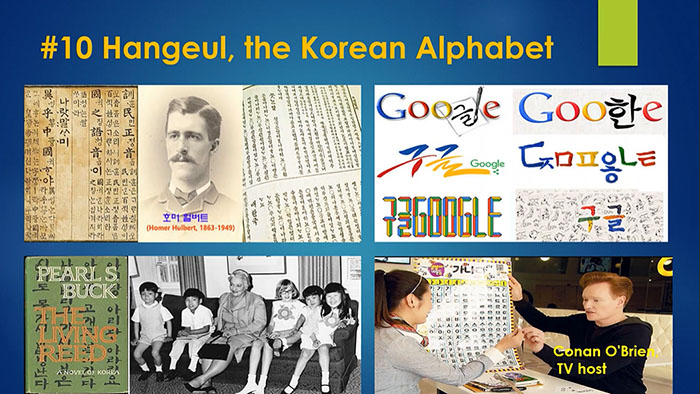
Nobel Prize-winning writers such as Pearl S. Buck and Jean-Marie Gustav Le Clezio and linguists around the world have praised Hangul, the Korean alphabet, as a "scientific letter," "King Sejong is a genius," and "Hangul is a gift from Korea to the world."
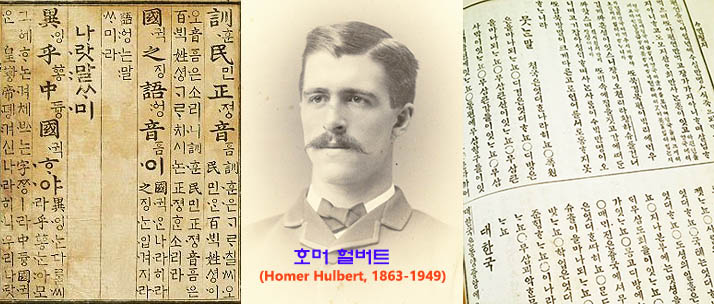
There were other Westerners who discovered the excellence of Hangeul far ahead of them. Homer Hulbert (1863-1949), was an American missionary who went to Joseon at the age of 23 in 1886. He learned to read and write Hangeul in four days, and three years later, he wrote a textbook (Samin Pilji) in Hangeul, and published books on Korean culture and history. As an advisor to Emperor Gojong, he took the lead in promoting Korea's independence. Hulbert, who wrote, "There is no alphabet in the world comparable to Hangeul" (1905), was buried in Korean soil.
Today, people around the world are eager to learn Hangeul amidst the Korean wave, including K-Pop and K-drama. In January 2023, CNN reported in an article titled "South Korea brought K-pop and K-dramas to the world. The Korean language could be next." that Korean was the seventh most-studied language in 2022 on the learning app, Duolingo. The most downloaded language apps of 2022 were English at #1, Spanish at #2, French at #3, then German, Japanese, Italian, and Korean at #7, followed by Chinese, Russian, and Hindi. Korean is the most learned foreign language in the Philippines, and it also ranked high in Thailand, Indonesia, and Pakistan. The Korean language boom is thanks to the Korean Wave, “Hallyu”.
10. Hangeul: The Korean Alphabet 133
Praise for Hangeul from Scholars and Writers 133
Homer Hulbert: A Korean Odyssey 135
Korea’s Voice: Hangeul and Arirang 137
A Voice Against Colonialism 138
Hulbert’s Lasting Tribute to Korea 139
Hulbert’s Final Journey to Korea 139
Is Hangeul the Best Alphabet in the World? 140
The Power of Hangeul in the Digital Age 142
The Korean Language: The Next K-Wave? 142
Hangeul’s Influence Beyond Korea 143