

33 Keys to Understanding the Korean Wave, Hallyu #Prologue: Dynamic Korea, Sparkling Koreans
33 Keys to Understanding the Korean Wave, Hallyu
#Prologue: Dynamic Korea, Sparkling Koreans
Gukpoong (Korean Craze) or Gukppong (Jingoism)?
*Note to Readers
The columns published in the Zoom section of NYCultureBeat contain selected excerpts—typically the opening paragraphs—from each chapter of the book 33 Keys to Understanding the Korean Wave: Beyond BTS, Parasite, and Squid Game (2025). These previews are meant to introduce the book’s themes and tone.
The complete book—featuring 33 updated chapters and new cultural insights—is available in both paperback and hardcover editions:
Paperback: https://www.amazon.com/dp/B0F7HYLVCL
Hardcover: https://www.amazon.com/dp/B0F7HZ34Y3
© Sukie Park. All rights reserved. These excerpts are for preview purposes only and may not be reproduced in full or redistributed.
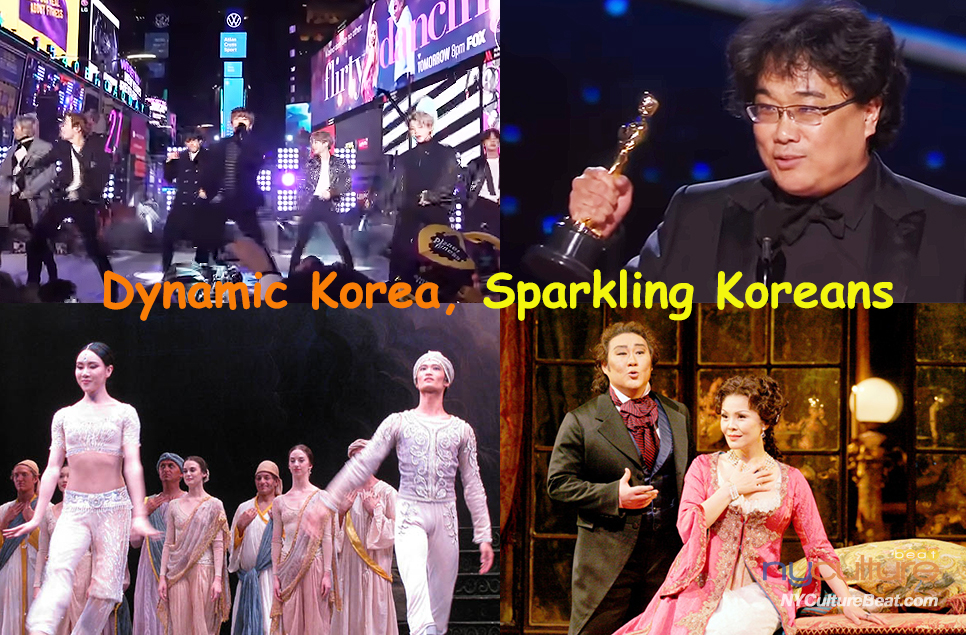
BTS’s 2020 New Year’s Times Square performance (clockwise from left), director Bong Joon-ho, who won the Academy Award for Best Director in February 2020, soprano Hei-Kyung Hong and tenor Wookyung Kim in “La Traviata,” in the first performance with two Asian leads in the history of the Metropolitan Opera in 2007 (Photo : Marty Sohl). Hee Seo and Kimin Kim performing at American Ballet Theatre’s “La Bayadere” in 2015.
In early 1996, at the age of thirty-three, I left Seoul and started a new chapter in New York, with only reckless passion. In Seoul, I was familiar with “The Salad Bowl of Multi cultures” through films by Woody Allen and Jim Jarmusch. But once I put my foot in New York, I was at a loss. New York was stranger than paradise. Back then I was happy whenever I saw Hyundai cars on the road or found “Taekwondo” signs on the quiet street. But in everyday life, I was confronted with language barriers, cultural barriers, and of course racism. My heart filled with passion was cooling down day by day.
Probably most of the Korean immigrants had gone through “hwa-byung,” anger syndrome in Korean, at the beginning of new American life. Maybe it’s still residing with us and comes out like a mole. Although New York City is “the utopia of culture,” it was also a dangerous place where we immigrants could feel like you are in the labyrinth of dystopia.
A couple of years went by, yet I was stumbling in between two cultures. Where do I belong? Korean or America? Out of anguish, I started scribbling about my in-between identity, by comparing two cultures. How the patriarchal Confucian culture made us hurdle in the Olympic game of Koreans’ lives? With very cynical views Life in Seoul, Life in New York, the tale of two cities, my essay ended up with more than 100 topics. It was a portrait of a young woman with feelings of inferiority, dissatisfaction, and anger. I put them together and titled it as “Damn Confucius.” Pretty provocative? Fortunately, I didn't have a chance to publish it.
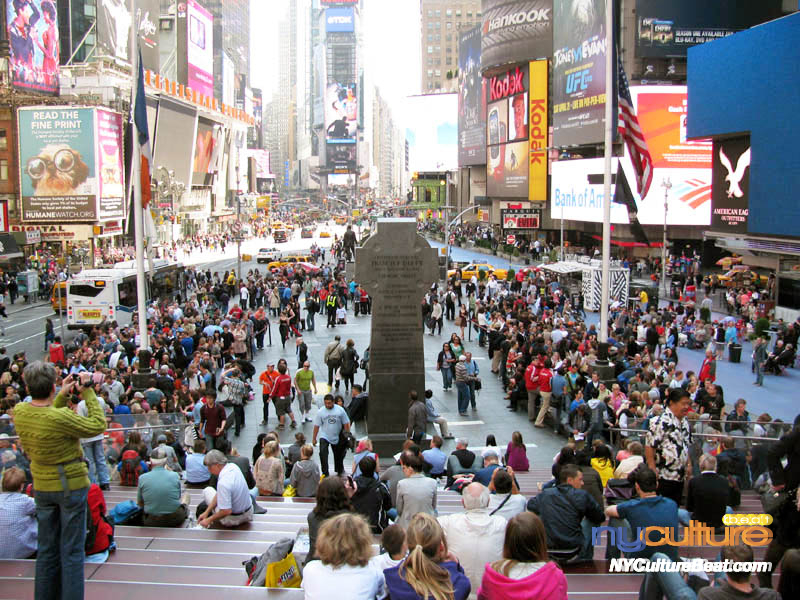
Times Square, New York City
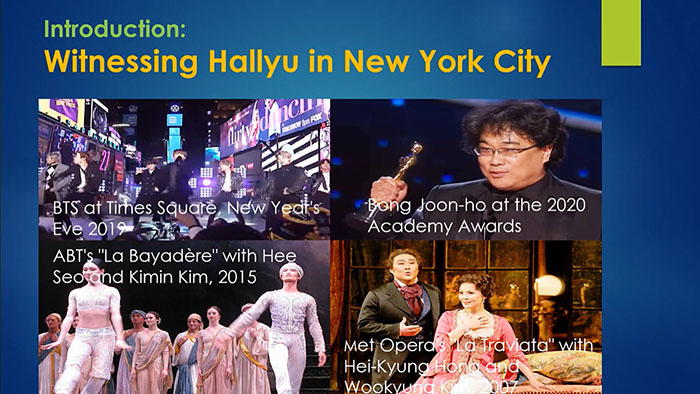
PROLOGUE: Witnessing Hallyu in New York 1
From Hermit Kingdom to Cultural Powerhouse 1
Korean Roots and New York Insights 2
Dynamic Korea, Sparkling Koreans 3
33 Keys to Understanding the Korean Wave 3
-Elaine-