

링컨센터 다이앤 키튼(1946-2025) 회고전 'LOOKING FOR MS. KEATON'(2/13-19)
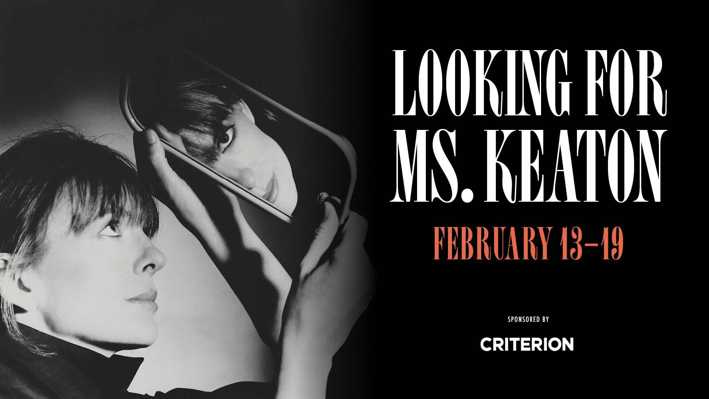
FILM AT LINCOLN CENTER CELEBRATES DIANE KEATON WITH “LOOKING FOR MS. KEATON,” FEBRUARY 13–19
A 15-film retrospective—mostly presented on 35mm—tracing the career of one of American cinema’s most singular and influential screen performers
New York, NY (January 14, 2026) — Film at Lincoln Center announces “Looking for Ms. Keaton,” a series celebrating the singular career of the late Diane Keaton, one of the defining screen performers of the New Hollywood era. Presented February 13–19, the 15-film series traces Keaton’s evolution from breakout star to enduring cinematic icon, spotlighting her collaborations with filmmakers including Woody Allen, Francis Ford Coppola, and Warren Beatty. From her Academy Award–winning turn in Annie Hall to her quietly devastating work in The Godfather trilogy and beyond, “Looking for Ms. Keaton” reveals an artist of remarkable range—vibrant, unconventional, and disarmingly self-aware—whose performances across comedy and drama have left an enduring mark on American cinema.
A trailblazing style icon and countercultural sex symbol whose blithely self-deprecating femininity and disarmingly candid eroticism quickly set her apart from the illustrious cohort of actors with whom she rose to stardom in the New Hollywood heyday of the 1970s, Diane Keaton is rightly hailed as a comedic force of nature who commanded the screen with her winningly off-kilter physicality.
Yet the L.A.-born, New York–trained actress proved equally adept at inhabiting dramatic roles with raw-nerve sensitivity and a knack for excavating deep wells of feeling with a fleeting glance, a slight quaver of the voice, or a quasi-unconscious gesture (The Godfather trilogy). Taken together, Keaton’s performances can be read as an ever-evolving embodiment of late-20th-century feminist thought and affect, grounding ideological abstractions in performances of breathtaking specificity and lived-in sincerity (Little Drummer Girl, Reds).
Her characters channeled the seemingly unresolvable ambivalence, confounding contradictions, and stubbornly human stakes of American sexual politics during a period of immense social and economic change (Looking for Mr. Goodbar, Mrs. Soffel), with expectations of demure wifely propriety giving way to the throes of euphoria and rage that animated the women’s lib movement—and ultimately transformed gendered conventions around sex, love, and family life—when the “baby boom” generation came of age.
Earning three additional Academy Award nominations across her six-decade career, Keaton left a vibrant, inimitable body of work that stands as a testament to her unflagging, uncompromising creative energy. Film at Lincoln Center is proud to present a week-long showcase celebrating this paradigm-shifting performer whose contributions to the art and craft of screen acting cemented her legacy as an auteur in the truest sense of the word.
"Looking for Ms. Keaton" is sponsored by Criterion, your trusted curator of great cinema. Criterion’s offering spans streaming on the Criterion Channel and definitive physical editions through the Criterion Collection, dedicated to presenting films as their filmmakers intended.
Organized by Florence Almozini and Madeline Whittle.
Tickets go on sale Thursday, January 15 at 2pm, with early access for FLC Members beginning at noon. Tickets are $18; $15 for students, seniors (62+), and persons with disabilities; and $13 for FLC Members. See more and save with an All Access Pass for $120 ($90 for Students) or a 3+ Film Package ($16 for GP; $13 for students, seniors (62+), and persons with disabilities; and $11 for FLC Members). https://www.filmlinc.org/series/looking-for-ms-keaton
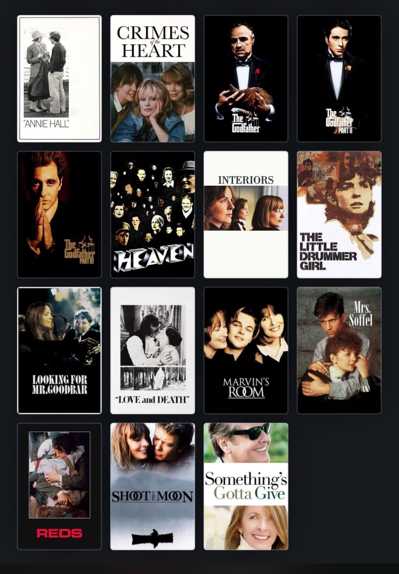
FILMS & DESCRIPTIONS
All films screen in the Walter Reade Theater (165 W. 65th St.)
The Godfather
Francis Ford Coppola, 1972, U.S., 35mm, 175m
With just two prior features under his belt, 33-year-old director Francis Ford Coppola fought the studio at every step of the way to transform Mario Puzo’s pulp bestseller into an improbably rich, profoundly personal meditation on family, power, and the nightmarish underbelly of the American dream. Holding her own alongside Marlon Brando and fellow newcomer Al Pacino, Diane Keaton is quietly penetrating as Kay, the doe-eyed daughter-in-law of mafia boss Don Vito Corleone (Brando), whose youngest son Michael (Pacino) tries and fails to resist the gravitational pull of the family business—inevitably implicating his uninitiated wife. Kay’s dawning awareness of her own precarious position on the margins of a criminal dynasty serves as a kind of moral ballast within what the critic Vincent Canby described as “one of the most brutal and moving chronicles of American life ever designed within the limits of popular entertainment.”
Sunday, February 15 at 1:00PM
The Godfather Part II
Francis Ford Coppola, 1974, U.S., 35mm, 202m
English and Italian with English subtitles For the second installment in his epically scaled adaptation of Mario Puzo’s best-selling novel, Francis Ford Coppola picked up where the first film left off, with Michael Corleone (Al Pacino) having assumed power over his family’s criminal syndicate and relocated the clan to a sprawling, fortress-like Nevada compound. The sequel’s contrapuntal narrative timeline alternates between flashbacks to the early life of Michael’s father, Vito (portrayed here by an Oscar-winning Robert De Niro) and the young don’s postwar attempts to “legitimize” the Corleone enterprise, establish a foothold in the lucrative Las Vegas casino business, and navigate heightened regulatory attention from the federal government. Reprising her role from Part I, Diane Keaton embodies Kay Corleone’s mounting horror at her husband’s activities with understated force, accentuating the tragic stakes of an elemental confrontation between patriarchal legacies of violence and a mother’s fierce drive to protect her children.
Sunday, February 15 at 4:30PM
The Godfather Coda: The Death of Michael Corleone
Francis Ford Coppola, 1990/2020, U.S., 158m
Just when he thought he was out of the family business, an aging, semi-retired Michael Corleone (Al Pacino) finds himself pulled back into a mafia turf war in Francis Ford Coppola’s elegiac epilogue to the Godfather saga, set two decades after the events of Part II. Inspired by a controversial real-life episode in the history of the Catholic Church, the third installment follows Michael’s efforts to buy the Vatican’s controlling interest in a powerful real estate company, with an eye toward keeping the peace between his hot-tempered nephew (Andy Garcia) and a cold-blooded enforcer (Joe Mantegna)—and atoning for his own life of sin. Rebutting widespread critiques of the film’s structure and pacing in the years following its initial release, in 2020 Coppola released a reedited version intended to more closely match his and Puzo’s original vision for the sequel.
Sunday, February 15 at 8:30PM
Love and Death
Woody Allen, 1975, U.S., 35mm, 85m
Two years after first directing Diane Keaton for the screen in the sci-fi satire Sleeper—and two years before launching her to superstardom with a tailor-written leading role in Annie Hall—Woody Allen again joined forces with the actress in 1975, casting her as his romantic opposite for Love and Death: an indiscriminately irreverent, inexhaustibly daffy, Chaplin- and Bergman-quoting send-up of 19th-century Russian literature. Keaton plays Sonia, the passionately loquacious cousin, paramour, and eventual wife of Allen’s Boris, a philosophically inclined son of an aristocratic family, whose reputation for cowardice is put to the test when he enlists to fight in the Napoleonic Wars. The New Yorker critic Penelope Gilliatt, reviewing Love and Death upon its release, singled out the “vividly alert” Keaton as “one of the few witty women in public life so far who have managed also to be clowns without feeling unconsciously bound to mock themselves.”
Friday, February 13 at 1:30PM
Tuesday, February 17 at 8:45PM
4K Restoration
Annie Hall
Woody Allen, 1977, U.S., 93m
“I feel that life is divided into the horrible and the miserable.” One of the most compelling neurotics ever committed to celluloid, Woody Allen’s perpetual outsider Alvy Singer is a twice-married New York comic whose uneasy relationship with his titular WASP girlfriend (Keaton, in her fourth collaboration with Allen) is just one expression of a general uneasiness with life itself—or, as he might put it, with the dubious honor of belonging to a club that would have him as a member. 31-year-old Keaton collaborated with costume designer Ruth Morley to devise her character’s unassumingly sexy, casually gender-bending “look,” which would emerge as a cultural phenomenon unto itself; Keaton would go on to earn an Oscar for her winningly idiosyncratic performance. Borrowing liberally from Bergman and Fellini, Annie Hall pioneered a postmodern rom-com vernacular that would define the genre for decades to come, and cemented Keaton’s status as the endearingly flawed poster child for a generation of women newly coming into their own. “La-dee-da, la-dee-da.”
Monday, February 16 at 1:00PM
Wednesday, February 18 at 8:45PM
Looking for Mr. Goodbar
Richard Brooks, 1977, U.S., 35mm, 136m
Richard Brooks’s adaptation of Judith Rossner’s notorious bestseller, inspired by the 1973 murder of Roseann Quinn, caused quite a stir at the time of its release, announcing itself as a polarizing pop-cultural touchstone in a climate of rapidly shifting sexual mores. Keaton’s dramatic turn in this dark story of fleeting intimacy and wrenching isolation marked a bracing departure from her Oscar-winning comedic tour de force in the same year’s Annie Hall. The star’s extraordinary range is on full display in her embodiment of Theresa Dunn, a keenly sensitive, independent-minded schoolteacher with a penchant for trawling dimly lit singles bars, seeking a good time in the company of men whose own appetites, confronted with the encroaching reality of women’s liberation, might veer at any moment into vindictive aggression. Tuesday Weld earned an Academy Award nomination for her supporting role as the daddy’s-favorite sister, in a cast that also features breakthrough performances by Richard Gere and Tom Berenger.
Friday, February 13 at 6:00PM
Tuesday, February 17 at 3:15PM
Interiors
Woody Allen, 1978, U.S., 35mm, 92m
Following the playful and enormously successful Annie Hall, Woody Allen’s next film was his first foray into full-fledged drama, combining the psychological severity of Ingmar Bergman with the disillusionment and despair of Eugene O’Neill. Interiors excavates a moment of crisis in the lives of three grown daughters—a successful poet (Diane Keaton), a self-involved TV actress (Kristin Griffith), and a frustrated would-be artist (Mary Beth Hurt)—after their parents’ long-struggling marriage ends abruptly in a quasi-unexpected divorce. Reflecting drolly on the carefully wrought dramatic personae of the three sisters, Pauline Kael wrote: “Diane Keaton does something very courageous for a rising star. She appears here with the dead-looking hair of someone who’s too distracted to do anything with it but get a permanent, and her skin looks dry and pasty. There’s discontent right in the flesh… This physical transformation is the key to Keaton’s thoughtful performance: she plays an unlikable woman—a woman who dodges issues whenever she can, who may become almost as remote as her mother.”
Wednesday, February 18 at 6:45PM
Thursday, February 19 at 1:30PM
Shoot the Moon
Alan Parker, 1982, U.S., 124m
Still riding high on the momentum from her late-’70s ascent to mainstream stardom, Diane Keaton’s participation was crucial to securing studio support for Shoot the Moon, a searing, wise, brutally honest divorce drama, directed by Alan Parker from an original screenplay by Bo Goldman. In one of the most nuanced and underrated performances of her career, Keaton brings achingly specific emotional texture to the role of Faith Dunlap, a homemaker and mother of four young daughters, who faces the disintegration of her marriage to the magisterial but volatile George (Albert Finney) when his affair with a younger woman (Karen Allen) comes to light and the fractured family must contemplate an unplanned-for, unknowable future. Finney, newly returning to the big screen after a six-year hiatus, delivers an equally virtuosic performance with his unvarnished portrayal of an ambivalent family man struggling—and largely failing—to gain the upper hand over his own festering dissatisfaction and explosive temper.
Monday, February 16 at 8:30PM
Thursday, February 19 at 3:30PM
The Little Drummer Girl
George Roy Hill, 1984, U.S., 35mm, 130m
Ever eager to explore new emotional registers and develop her expressive palette, Diane Keaton ventured into the espionage thriller genre when veteran director George Roy Hill cast her in the lead role for his penultimate feature, adapted from the John Le Carré novel that would later inspire a 2018 Florence Pugh–starring miniseries. Hill and screenwriter Loring Mandel tweaked the age and nationality of Le Carré’s young British protagonist: Keaton’s Charlie Ross is a 30-something American actress with left-wing, anti-Zionist politics who, while on a job in England, becomes entangled in an Israeli military plot to infiltrate and undermine a cell of fighters affiliated with the Palestinian Liberation Organization. Writing for New York Magazine, the critic David Denby located the movie’s greatest strength in Keaton’s “taut, heartfelt performance,” which “has the force of a confession: Charlie’s desperate shuffling of identities, her grasping at opinions she hasn’t quite made her own, her terrifying sense of vacancy are things that only another actress could fully understand… [Keaton] seems to assert that to play a role well one must possess extraordinary sensitivity to the feelings of others.”
Monday, February 16 at 3:00PM
Tuesday, February 17 at 6:00PM
Mrs. Soffel
Gillian Armstrong, 1984, U.S., 35mm, 110m
In early 1902, a pair of brother inmates at a Pittsburgh county jail, sentenced to death following their conviction on a murder charge, escaped with the help of the jail warden’s wife, Kate Soffel, who then accompanied the men when they fled north in a desperate bid to evade recapture. Eight decades later, when MGM, seeking a director to shoot Ray Nyswaner’s fictionalized screenplay about the jailbreak, recruited Gillian Armstrong for the project, the Australian auteur would become one of the first non-American women hired to direct a major Hollywood studio production. Starring Diane Keaton in the title role alongside Mel Gibson and Matthew Modine as prisoners Ed and Jack Biddle, the resulting film offers a layered portrayal of unruly desires and liberatory impulses, showcasing Armstrong’s signature talent for infusing finely wrought period ambiance with real feeling and immediacy.
Monday, February 16 at 6:00PM
Tuesday, February 17 at 12:45PM
Reds
Warren Beatty, 1985, U.S., 35mm, 195m
English, Russian, and German with English subtitles
Although more widely known for his work as an actor, Warren Beatty won his first and only Oscar for his second directorial effort, a long-gestating passion project whose particulars sound wholly improbable: this big-budget studio biopic about early-20th-century American Communists, helmed by a high-wattage movie star at the height of his powers, achieved robust box office success at the dawn of the Reagan administration, and was roundly celebrated by an industry that still bore the scars of McCarthy-era blacklists. Reds cannily couches its historically rigorous account of Russia’s 1917 October Revolution in the Hollywood-friendly framework of an epically scaled romantic drama, detailing the continent-hopping love story between radical journalists John Reed (Beatty) and Louise Bryant (Diane Keaton), and ingeniously alternating its fictional narrative with documentary testimonies from “witnesses” who knew and worked with the real-life pair. The critic David Thomson, praising Keaton’s Oscar-nominated performance for Film Comment, wrote that the actress “seems to shake and fidget with the threat of provincialism; but she is still uncertain enough to be on the point of giggling at her own outrageousness. It is an ingenious manner, suggestive of period even if it is invented, and a way of making Reds start out as the story of a woman on her way to suffrage and identity.”
Saturday, February 14 at 5:30PM
Wednesday, February 18 at 3:00PM
Crimes of the Heart
Bruce Beresford, 1986, U.S., 35mm, 105m
Three years before helming Best Picture Oscar winner Driving Miss Daisy, Australian transplant Bruce Beresford garnered critical acclaim for his cinematic reimagining of another Pulitzer-winning drama set in the American South. Beth Henley’s Crimes of the Heart (adapted for the screen by the playwright herself) unfolds across a few days in the ancestral home of the three Magrath sisters: Lenny (Keaton), the unmarried eldest daughter who has stayed behind to care for the now-ailing grandfather who raised the girls after their mother’s suicide; Meg (Jessica Lange), a glamorous aspiring singer who, having decamped to Los Angeles in pursuit of stardom, returns to her Mississippi hometown for a long-awaited visit—and a possible reunion with an old flame (Sam Shepard); and Babe (Sissy Spacek), the guileless youngest sister who sends shockwaves through the town when she shoots her husband, a local politician, in broad daylight.
Saturday, February 14 at 3:15PM
Wednesday, February 18 at 12:45PM
New Remaster
Heaven
Diane Keaton, 1987, U.S., 79m
By the early 1980s, having firmly established herself as one of the most influential performers of the New Hollywood generation, Keaton turned her attention to other areas of artistic practice, drawing on an early interest in photography and collage to embark on a series of projects behind the camera. In 1987, she directed her first feature film: a talking-head documentary that probes humanity’s evolving relationship to the puzzle of what happens to us after we die. Keaton conducted wide-ranging conversations with an eclectic assortment of everyman interviewees (including her own sister and grandmother), all filmed in expressionistic, dramatically illuminated compositions against the backdrop of an otherworldly soundstage set. The metaphysical speculation and earnest philosophizing of Keaton’s subjects are complemented with an atmospheric score by composer Howard Shore, and thoughtfully illustrated with excerpts from televised religious programming and films as diverse as The Passion of Joan of Arc, Metropolis, Night of the Demon, and A Matter of Life and Death, emphasizing how the familiar images served up to us by popular culture have nourished, and responded to, our species’ enduring fascination with the question of where we go from here.
Friday, February 13 at 8:45PM
Marvin’s Room
Jerry Zaks, 1996, U.S., 35mm, 98m
For his filmmaking debut, the prolific Broadway director Jerry Zaks mounted a screen adaptation of Scott McPherson’s 1990 stage play, with Diane Keaton and fellow baby-boomer grande dame Meryl Streep toplining an intergenerational ensemble cast that included Robert De Niro, Gwen Verdon, Hume Cronyn, and a young Leonardo DiCaprio. Echoing the contours of her performance a decade earlier in Crimes of the Heart, Keaton edged out Streep for a Best Actress Oscar nomination with her searching interpretation of the middle-aged, unmarried Bessie, who has dedicated herself to the care of her bedridden father, Marvin, with no involvement from estranged sister Lee (Streep). When Bessie is diagnosed with leukemia and appeals to Lee for help in identifying a suitable donor for a bone marrow transplant, Lee reluctantly makes the return trip home with her two sons (DiCaprio and Hal Scardino) in tow, setting the scene for a long-overdue family reckoning where life-or-death narrative stakes give way to an expansive, generous meditation on love, forgiveness, and what we leave behind.
Friday, February 13 at 3:30PM
Thursday, February 19 at 6:15PM
Something’s Gotta Give
Nancy Meyers, 2003, U.S., 128m
The fourth collaboration between Keaton and screenwriter-turned-director Nancy Meyers (following Baby Boom and Father of the Bride parts 1 and 2), Something’s Gotta Give also saw Keaton reteaming with Reds costar Jack Nicholson for what would prove to be her most critically beloved and commercially successful film of the 2000s. As emblematic of its decade’s rom-com sensibility as Annie Hall in the 1970s, the film afforded its star a zeitgeist-defining outlet for her endlessly surprising comedic instincts. Keaton received her fourth Oscar nomination for her performance as Erica Barry, a celebrated playwright and thriving divorcée whose long-dormant love life is suddenly, unexpectedly thrown into disarray when she finds herself torn between an unexpected chemistry with her grown daughter’s much older boyfriend, Harry (Jack Nicholson)—a media mogul and inveterate playboy who suffers a heart attack during a weekend getaway at Erica’s Hamptons vacation home—and the affections of Julian (Keanu Reeves), the much younger doctor overseeing Harry’s treatment while he recuperates under Erica’s care. Saturday,
February 14 at 9:15PM
Thursday, February 19 at 8:30PM
Diane Keaton (1946-2025)
우리들의 영원한 '애니 홀(Annie Hall)'
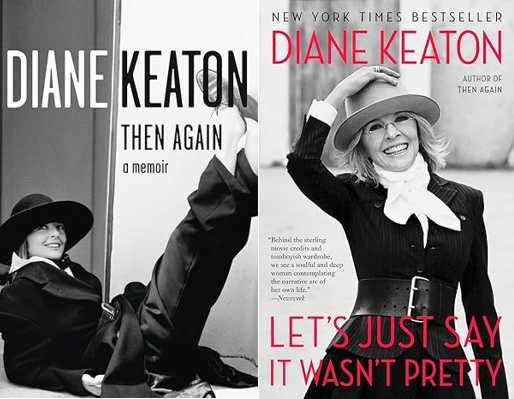
할리우드에서 모던한 스타일의 페미니스트로 이미지를 각인해온 배우 다이앤 키튼(Daine Keaton)이 10월 11일 캘리포니아에서 세상을 떠났다.
다이앤 키튼은 우디 알렌 감독의 콤비였으며, 100여편의 영화와 TV에 출연했다. 우디 알렌은 "주디 할러데이를 제외하면, 우리가 본 최고의 영화 코미디언"이라고 평했다. 키튼은 1978년 '애니 홀(Annie Hall)'로 아카데미 여우주연상을 수상했다. 오스카 트로피를 받을 때 키튼은 리넨 재킷, 스커트, 셔츠위에 두른 스카프, 건정색 끈 넥타이, 양말에 하이힐 차림이었다.
할리우드 리포터지는 '애니 홀'의 키튼에 대해 "우리 시대의 완벽한 여배우"라는 평을 했으며, 뉴욕타임스는 애니 홀이 야망과 불안감, 그리고 확고한 스타일을 가진 뉴욕의 독신 여성으로 애니는 쾌활한 정신적 돌파구, 남성복처럼 보이는 패션, 의심스러운 운전 실력, 그리고 지나치게 건전한 중서부 출신의 유년 시절이 은연중에 드러나는 캐릭터였다고 전했다.
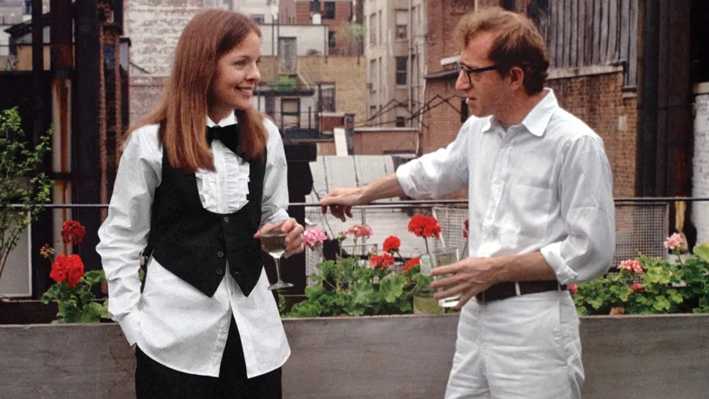
Annie Hall, 1977
본명은 다이앤 홀(Diane Hall), 1946년 LA에서 장녀로 태어나 커뮤니티칼리지를 중퇴하고 뉴욕으로 이주 네이버후드 플레이하우스에서 연기를 공부했다. 브로드웨이 히트 뮤지컬 '헤어(Hair)'에서 앙상블로 데뷔, 여주인공 쉴라 역으로 출연했다.
1969년 우디 알렌과 연극 '다시 연주해봐, 샘(Play It Again, Sam, 1969)'에 출연해 토니상 여우주연상 후보에 올랐다. TV에 몇차례 출연한 후 1972년 프란시스 포드 코폴라 감독의 '대부(The Godfather, 1972)'에서 알 파치노(마이클 코를레오네 역)의 부인 케이 아담스 역을 맡았다. 키튼과 파치노는 한때 연인 사이였다.
1978년 '미스터 굿바를 찾아서(Looking for Mr. Good Bar)'에서 술집을 배회하는 교사 역을 맡아 리처드 기어와 공연했다. 우디 알렌과는 '슬리퍼즈(Sleeper, 1973)'를 시작으로 '사랑과 죽음, Love and Death, 1975)' '인테리어스(Interiors, 1978)', '맨해튼(Manhattan, 1979)', '라디오 데이즈(Radio Days, 1987)', '맨해튼 머더 미스터리(Manhattan Murder Mystery, 1993)'에 출연했다.
1996년 골디 혼, 베티 미들러와 함께 복수하는 본처들의 이야기를 담은 '퍼스트 와이브스 클럽(First Wives Club, 1996)'으로 흥행에 성공했으며, 마지막 작품은 캐시 베이츠와 공연한 코미디 '섬머 캠프(Summer Camp, 2024)'였다.
키튼은 워렌 비티 감독의 '레즈(Reds, 1981)'과 메릴 스트립, 레오나르도 디카프리오와 공연한 '마빈의 방(Marvin's Room, 1993)', 그리고 잭 니콜슨과 공연한 코미디 '사랑할 때 버려야 할 아까운 것들(Something's Gotta Give, 2003)'으로 아카데미상 후보에 올랐다.
메거폰도 잡았다. 1987년 사후세계를 다룬 다큐멘터리 '헤븐(Heaven)', 앤디 맥도웰과 존 터투로 주연 'Unstrung Heroes, 1995)', 그리고 멕 라이언, 리사 쿠드로와 공연한 '행잉 업(Hanging Up, 2000)'을 연출했다.
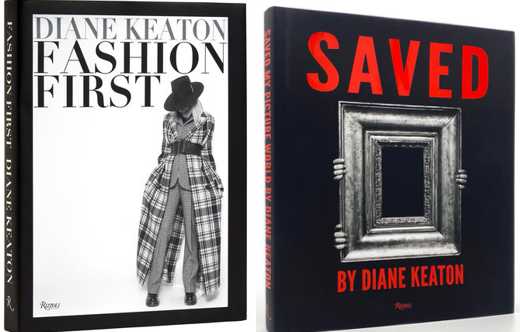
다이앤 키튼은 알 파치노, 워렌 비티, 우디 알렌과 사귀었지만, 평생 독신으로 1남 2녀를 입양해 키웠다. 말년에는 패션, 예술, 건축 등에 관한 책과 회고록 'Then Again' 등 12권의 책을 출간하며 작가로 활동했다.
2007년 링컨센터 필름소사이어티의 채플린상(평생공로상), 2017년 미영화협회(AFI)의 평생공로상을 수상했다.
다이앤 키튼의 사망 원인은 공개적으로 밝혀지지 않았다. 키튼은 21세에 피부암 진단을 받았고, 폭식증에 시달렸던 것으로 알려졌다. 장갑, 스카프와 모자의 시그내쳐 패션은 자외선 차단을 위한 것이었다.
 1천만 돌파 흥행작 '왕과 사는 남자(The King's Warden)' 3/13- ...
 링컨센터 필름 코멘트(Film Comment) 선정 2025 베스트 20 영화: ...
영화 'The Godfather'에서 배우 알 파치노의 부인 역할을 우아하고 기품있게해서 인상깊었습니다. 지적이며 교양있는 연기는 닮고 싶을정도로 탐났었지요. 미인보다는 이런 외모와 몸매가 우아해서 우아미라고 나름 생각하면서, 한때 그녀의 옷과 태도를 자주 들여다보곤 했습니다.
나이가 들면 가는 길이 죽는 길이고, 젊어서 가는 길은 순례길인 것같습니다. 하나는 못 돌아오고, 하나는 자신감을 가지고 돌아오는 게 철칙이라고 생각하니 슬퍼집니다. 다이앤 키튼도 나이들어 돌아오지 않는 그 길로 갔군요. 그러나 그녀의 멋진 의상과 우아함은 남아있어서 다행입니다.
-Elaine-