

NYFF63 (7) Blue Moon: The Lost Voice of Broadway’s Forgotten Lyricist ★★★★
NYFF63 (9/26–10/13)
Blue Moon ★★★★
The Stage of Winners, the Voice of the Defeated Man
Lorenz Hart, Broadway’s Forgotten Lyricist
*브로드웨이의 잊혀진 작사가의 하루 '블루 문(Blue Moon)' ★★★★ <Korean version>
Blue Moon by Richard Linklater #NYFF63
History’s stage is always filled with the names of dazzling victors. Those who helped shape an era but slipped into the margins of memory are too easily forgotten. When we speak of the Golden Age of Broadway musicals, we inevitably think of Rodgers and Hammerstein, the legendary duo behind Oklahoma!, Carousel, South Pacific, The King and I, and The Sound of Music. Together they racked up 34 Tony Awards, 15 Academy Awards, two Pulitzers, and two Grammys.
But before Hammerstein, Richard Rodgers had another partner: Lorenz Hart (1895–1943). Between 1919 and 1943, Hart wrote lyrics for more than 500 songs across 28 musicals with Rodgers. Their shows included A Connecticut Yankee, Babes in Arms, and The Boys from Syracuse. Yet in the shadow of Rodgers & Hammerstein’s triumphs, Hart was all but eclipsed. Still, songs like “Blue Moon,” “The Lady Is a Tramp,” “My Funny Valentine,” and “Manhattan” remain classics of the Great American Songbook, still performed in jazz clubs and concert halls today. Hart’s lyrics were not mere words set to music—they were small poems, full of longing and wit, where love, loneliness, desire, and cynicism intertwined. The creative triangle of Rodgers, Hammerstein, and Hart is striking in itself: all three were Jewish, all were from New York, and all were Columbia alumni.
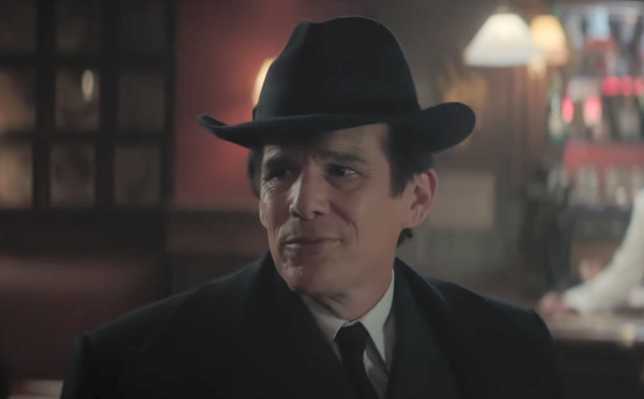
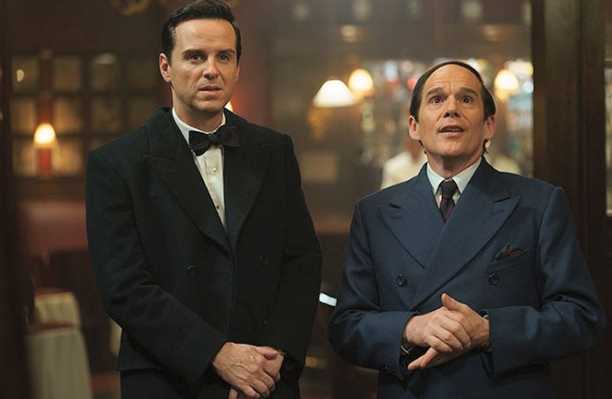
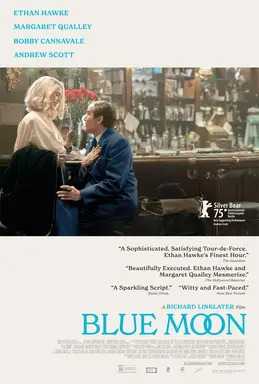
Richard Linklater, the director of the Before trilogy (Before Sunrise, Before Sunset, Before Midnight) and Boyhood (2014), now turns to Hart in his new film Blue Moon. Linklater has always been fascinated by time—capturing a single day in the Before series, or eleven years of growth in Boyhood. Here, too, he dwells on a temporal rift: the spring of 1943, when Oklahoma! opened and Hart was pushed off stage, and the autumn of that same year, when he died alone. Ethan Hawke inhabits the role of Hart, set against the backdrop of Sardi’s, Broadway’s iconic restaurant, in a bittersweet portrait of his final day.
Blue Moon by Richard Linklater #NYFF63
In November 1943, on a rainy Manhattan night, Lorenz Hart collapsed on a street corner. He died days later of pneumonia, at just 48. The film flashes back to March 31 of that year—the premiere of Oklahoma! With Oscar Hammerstein stepping in, Hart—already weakened by alcoholism and fragile mental health—was effectively dismissed. Like Man-su (Lee Byung-hun), the paper company worker cast aside after 25 years in Park Chan-wook’s No Other Choice (also at NYFF63), Hart suddenly faced unemployment after 24 years with Rodgers. To him, it was the anguish of a forsaken spouse: Hammerstein the mistress, Rodgers the husband stolen away.
After Oklahoma!’s triumphant premiere, Broadway celebrities, reporters, famed photographer Weegee, and even a teenage Stephen Sondheim crowded into Sardi’s. Hart, now an outsider, was excluded from the center of attention. Instead, he entertained a more modest audience: a bartender (Bobby Cannavale), a soldier-turned-pianist (Jonah Lees), a visiting writer (Patrick Kennedy), and a flower delivery boy. Hart spoke in torrents—sometimes witty and intellectual, sometimes crude and profane. To the writer, he recounted taking his pet rat “Stuart” to the park, a tale that would later inspire E. B. White’s beloved children’s book Stuart Little.
Blue Moon by Richard Linklater #NYFF63
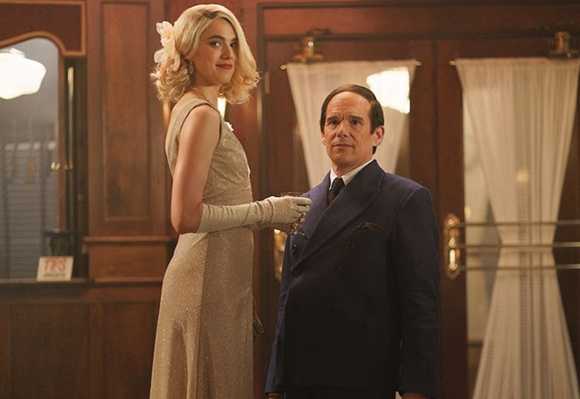
He also poured out admiration for his student Elizabeth (Margaret Qualley), a Yale undergraduate. Though known to be gay, Hart declared that “one must be omnisexual, neither homosexual nor heterosexual,” and fell hard for her—only to be wounded by her gentle rebuff: “I love you, just not in that way.” The screenplay, by Robert Kaplow, is based on a real letter Elizabeth Wailand once wrote to Hart.
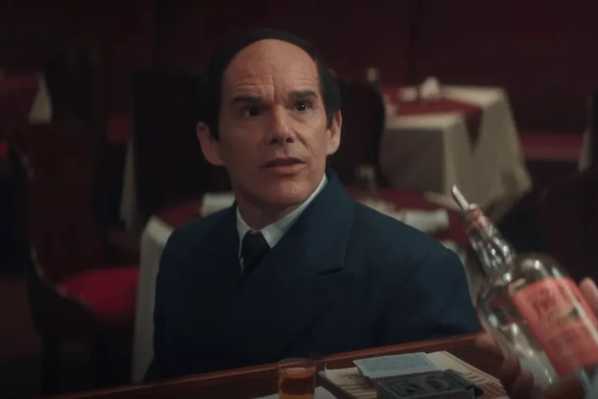
Ethan Hawke sheds his urbane star image, disappearing into Hart’s frail frame, lined face, and bald head. It is a self-destructive performance of astonishing depth, surely awards-worthy; at Berlin, however, it was Andrew Scott as Rodgers who took home the Silver Bear for Supporting Actor. Linklater stages Hart’s dialogues dynamically, moving him from the bar to a table, the coat check, the restroom, even the staircase, revealing different facets of his psyche. The camera tracks his spiral with energy but also compassion.
Blue Moon by Richard Linklater #NYFF63
Hart’s downfall was more than a personal tragedy. Cultural history is full of such ironies: Georges Bizet died at 36 after Carmen was savaged by critics; Hart, too, was cast aside by Broadway’s new order. History often waits until after the funeral to declare its "masters."
The title Blue Moon refers to the rare second full moon in a single month. Hart’s life was short, his final years painful, yet his words still shine. Linklater and Hawke, collaborators for over 30 years, restore Hart to the stage, reviving the story beyond the victors’ record with warmth and humanity.
Blue moon
You saw me standin' alone
Without a dream in my heart
Without a love of my own
Blue moon
You knew just what I was there for
You heard me sayin' a prayer for
Someone I really could care for
And then there suddenly appeared before me
The only one my arms will hold
I heard somebody whisper, "Please adore me"
And when I looked, the moon had turned to gold
-Lorenz Hart
NYFF63 Showtimes
Mon, Sep 29 5:30 PM Q&A
Tue, Sep 30 3:45 PM
Sun, Oct 5
https://www.filmlinc.org/nyff2025/films/blue-moon
*앙코르! 스마트폰 전세대 최후의 로맨스 '비포 선라이즈(Before Sunrise)'
*앙코르! 비엔나의 연인들 파리에서 랑데부 '비포 선셋(Before Sunset)'
*NYFF61: 리처드 링클레이터의 코미디 '히트맨(Hit Man)' ★★★★
 링컨센터 필름 코멘트(Film Comment) 선정 2025 베스트 20 영화: ...
 NYFF63 (7) 브로드웨이 잊혀진 작사가의 하루 '블루 문(Blue Moon...