

NYFF63 (6) Hong Sangsoo: What Does That Nature Say to You ★★★★
NYFF63 (9/26–10/13)
What Does That Nature Say to You
그 자연이 네게 뭐라고 하니 ★★★★
The Quiet Erosion of a Poet’s Soul
*시인의 영혼을 잠식하는 것들 '그 자연이 네게 뭐라고 하니' ★★★★ <Korean version>
What Does That Nature Say to You by Hong Sangsoo #NYFF63
Has any contemporary filmmaker devoted themselves to artists as consistently as Hong Sangsoo? Filmmakers, novelists, professors, poets, painters—again and again, he returns to creative figures. His 33rd feature, What Does That Nature Say to You, centers on a poet. Bestselling poetry collections are rare, and aside from a chosen few, most poets scrape by. Kent Jones’s Late Fame, also invited to this year’s New York Film Festival and starring Willem Dafoe, similarly follows a New Yorker who published a volume of poems in the 1970s, only to end up working at a post office until a young literary enthusiast rediscovers him.
Hong’s film traces a single day in the life of Donghwa (Ha Seongguk), a thirty-five-year-old poet. On the way to drop off his girlfriend Junhee (Kang Soyi) at her parents’ home in the Seoul suburbs, he unexpectedly spends the day with her family. Where Ben Stiller and Robert De Niro’s Meet the Parents (2000) mined the scenario for comedy, Hong’s version is far quieter and tinged with melancholy. Donghwa ekes out a living filming weddings on weekends, driving with pride his secondhand 1996 Kia Pride, cassette deck and all. An idealist, he comes face-to-face with the social realities he has long ignored in this “interview-like” encounter with his girlfriend’s family. The film unfolds in eight untitled chapters.
What Does That Nature Say to You by Hong Sangsoo #NYFF63
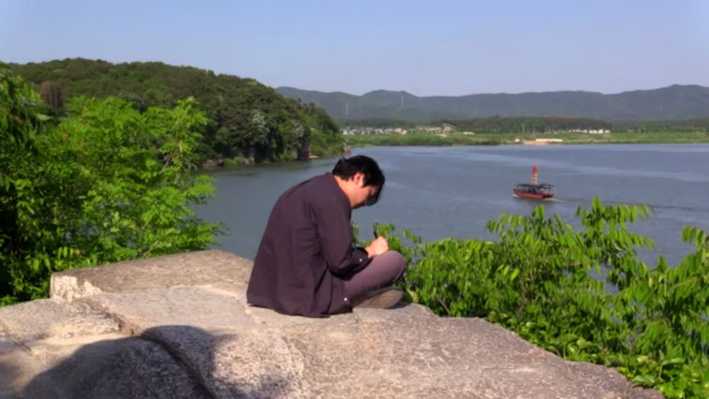
Donghwa, who insists he sees better without glasses, prefers the world slightly blurred. He is a nameless poet content with little, seeking beauty while convinced that death makes life lighter. He often frustrates his girlfriend with his habitual response—"I don’t know"—yet for him, to feel and to be grateful is enough. His father may be a successful lawyer, but faced with Junhee’s family, reality presses in.
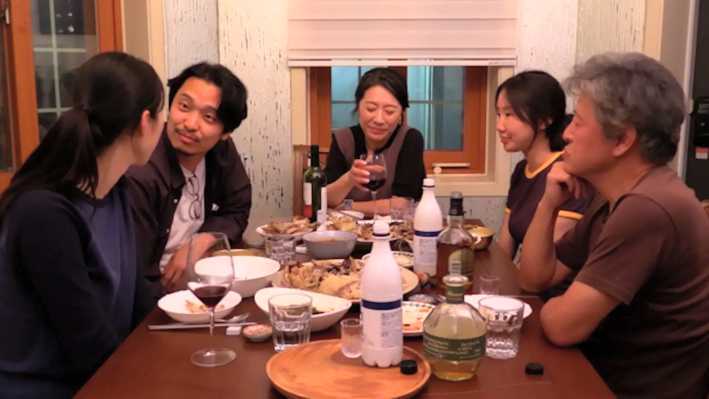
Meals progress from coffee to bibimbap and spicy pork, then to makgeolli and finally dakbaeksuk, a chicken stew made from one of the hens raised in the family’s yard. In Korean tradition, when a son-in-law visits his wife’s parents, the mother kills and cooks a hen as part of welcoming the "hundred-year guest." What might have been a deeply symbolic act of hospitality here acquires an ironic edge: rather than embracing Donghwa, the family uses the occasion to scrutinize and diminish him. The feast becomes another stage for judgment, where the poet’s ideals collapse under material measures of success.
Junhee’s family judges Donghwa by material standards. Her father (Kwon Haehyo) mocks his shabby car and 'hypocritical mustache,' while her mother (Cho Yunhee), herself a hobbyist poet, dismisses him as untalented. Her sister (Park Miso) wounds his pride, repeating, “You’ve got Father behind you,” as if to negate his independence. The father brands him a failed man unworthy of the family, and even the household dogs bark at him.
What Does That Nature Say to You by Hong Sangsoo #NYFF63
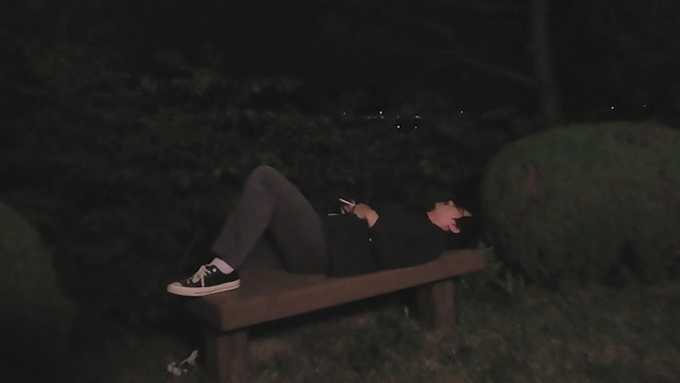
Drunk and seething, Donghwa lashes out, then climbs the hill behind the house to watch the moon—only to stumble and injure himself. At dawn he departs, only for his old car to break down on the road. Sitting in the stalled vehicle, he mutters to himself: "I guess it’s time to sell the car."
What sustains him is nature itself. He marvels at the scenery around Junhee’s father’s home, the chickens in the yard, the sunset and moonlight, and the gingko tree and stupa at Silleuksa Temple by the Namhan River. He seems to breathe nature like verse. The title What Does That Nature Say to You captures these moments as though he were conversing directly with the world. His character recalls Yun Dong-ju’s poetry Heaven and Wind and Stars and Poems:
"Suffering even in the rustle of a leaf,
With a heart that sings to the stars…
Tonight again, the stars brush against the wind."
Donghwa’s growing awareness of his condition also echoes Yun’s Self-Portrait:
"I turn a corner and find a lonely well in a field,
I gaze quietly into it…
And there is a man.
For some reason I despise that man,
And turn back."
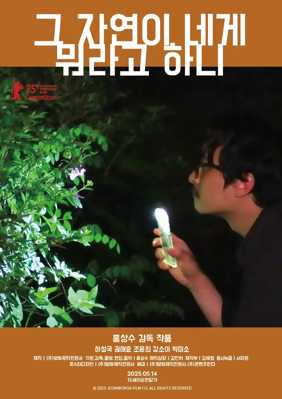
Once again, Hong operates as a 'one-man band,' handling production, direction, screenplay, cinematography, editing, and music himself. Actress Kim Minhee serves as production manager, Seo Ji-hoon as sound recorder. With just five actors, shot in a week, and made on a budget under $100,000, the film is a rigorously auteurist work. Runtime: 108 minutes.
NYFF63 Showtimes
Wed, Oct 1 8:45 PM
Wed, Oct 8 2:30 PM
Thu, Oct 9 6:30 PM
https://www.filmlinc.org/nyff2025/films/what-does-that-nature
*홍상수 영화는 왜 나를 슬프게 하나: 지금은맞고그때는틀리다
*'소설가의 영화(The Novelist's Film) ★★★★☆
*The Novelist's Film review <English version>
*NYFF61: 홍상수 감독의 변(Artist Statement) '물 안에서(In Water)' ★★★★☆
*NYFF61: Hong Sangsoo's Artist Statement 'In Water' ★★★★☆
*'필름코멘트' 선정 2022 베스트 영화 20: 홍상수(7, 9위), 박찬욱(12위)
 NYFF63 (7) 브로드웨이 잊혀진 작사가의 하루 '블루 문(Blue Moon...
 NYFF63 (6) 시인의 영혼을 잠식하는 것들 '그 자연이 네게 뭐라고...