

NYFF63 (5) Julia Roberts’ Hollow Campus Drama Fails to Impress 'After the Hunt'' ★★
NYFF63 (9/26–10/13)
A Psychological Thriller That Misses the Mark
After the Hunt ★★
*줄리아 로버츠의 공허한 캠퍼스 스릴러 '애프터 더 헌트 (After the Hunt) ★★ <Korean version>
After the Hunt by Luca Guadagnino #NYFF63
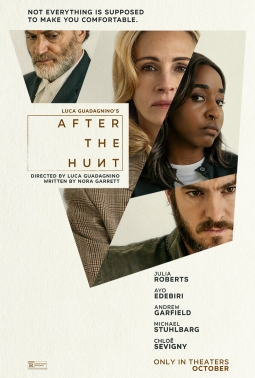
Amal (Julia Roberts), a popular philosophy professor at Yale, is thrown into turmoil when her star pupil Maggie (Ayo Edebiri) confides that she was sexually assaulted by fellow professor Hank (Andrew Garfield). With her tenure review looming, Amal finds herself confronted by her dark past and her own conflicted choices.
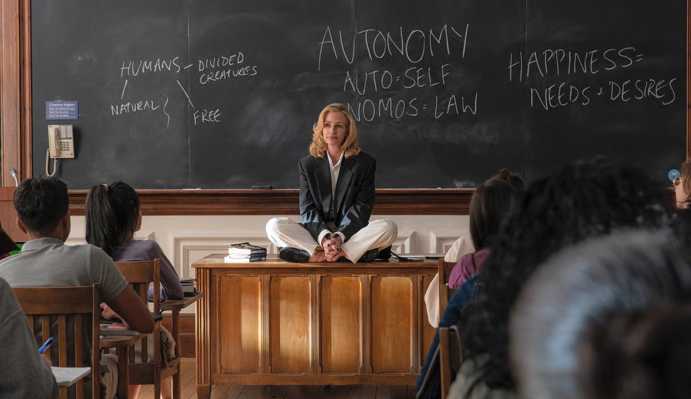
Premiering as the Opening Night selection of the 63rd New York Film Festival, Luca Guadagnino’s After the Hunt is a somewhat belated campus-set psychological thriller intertwining #MeToo and racial politics. Guadagnino, who won an Oscar for Best Adapted Screenplay with Call Me by Your Name (2017), surprisingly works here with a first-time feature script by actress-turned-writer Nora Garrett. The result is a drama about scandal and moral dilemmas at an American elite university. Yet Guadagnino’s perspective on #MeToo, racism, academic plagiarism—and even Julia Roberts herself—remains strikingly superficial.
After the Hunt by Luca Guadagnino #NYFF63
The casting is a major problem. Julia Roberts, who rose to stardom with the Cinderella story of Pretty Woman (1990) and later won an Oscar for Erin Brockovich (2000), has a persona worlds away from that of a Yale philosophy professor. Erin Brockovich, after all, was a twice-divorced single mother with only a high school diploma, who stumbled into a law office job and ultimately won a landmark case against a corporate giant. Roberts herself, born in Atlanta, came to New York after high school to study acting.
Julia Roberts can convincingly step into the role of a professor. Yet Garrett’s thinly sketched academic character fails to give Roberts the depth needed to navigate Amal’s past traumas, her affair, and the sexual assault issue. Imagining her as a philosophy professor—striding across campus in a white suit with a giant boat bag, as if on a runway—feels implausible. Even at a dinner party, where Hegel, Kant, and Nietzsche are name-dropped, the scene never achieves a truly intellectual air.
After the Hunt by Luca Guadagnino #NYFF63
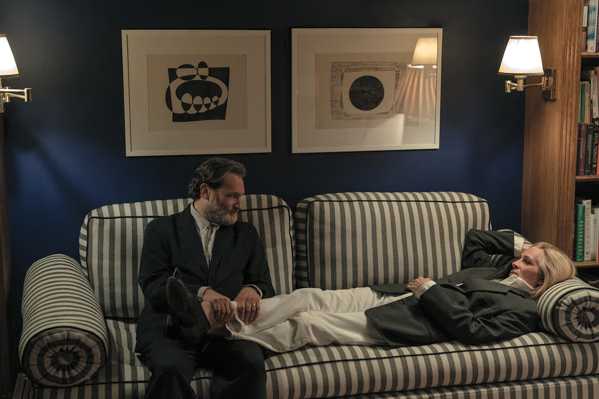
Costumes further undermine credibility. Amal’s white suits dominate her campus presence, while her pajama-style white blouse with trims at the bar, when meeting therapist Kim, is later mirrored in black by Maggie in the film’s final scenes. Whether intentional or not, this repetition aligns with Maggie’s return to a queer identity, suggesting subtle symbolic meaning. The effect is to make Amal’s academic world feel more like a staged performance than a lived reality, weakening both character believability and emotional resonance.
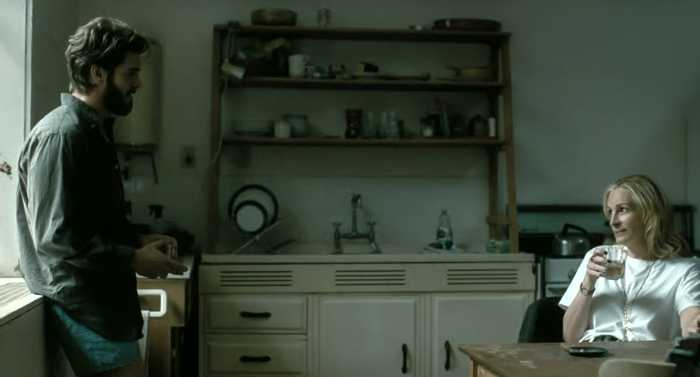
The film also fails to explain Amal’s inner life. Why is she popping pills, vomiting, and forging prescriptions? Why does a German newspaper article haunt her dreams? How exactly did she cross the line with Hank? Similarly, her psychiatrist husband Frederick (Michael Stuhlbarg) is painted as inexplicably upbeat, while Hank is uniformly aggressive and violent.
After the Hunt by Luca Guadagnino #NYFF63
Maggie, admitted to Yale through legacy privilege, conveniently stumbles on a German newspaper clipping in Amal’s bathroom, yet her own lies and sexual identity remain sketchy. Even Chloe Sevigny, as campus therapist Kim, is styled to look trustworthy but given nothing substantial to do. None of these characters—Amal, Frederick, Hank, Maggie—invite genuine sympathy. And the oversized fish painting in Amal’s living room, symbolizing her as a “fish out of water,” is painfully on the nose.
Nora Garrett’s screenplay falters in its inability to give these characters clarity or conviction. They remain uncertain sketches rather than compelling, flesh-and-blood figures. Repeated vomiting scenes add nothing. Amal’s hospital-bed confession feels shoehorned in for the sake of the plot. Even the ticking clock sound effect comes off as a forced injection of suspense. The music blaring in Frederick’s home does little to deepen Amal’s psychology.
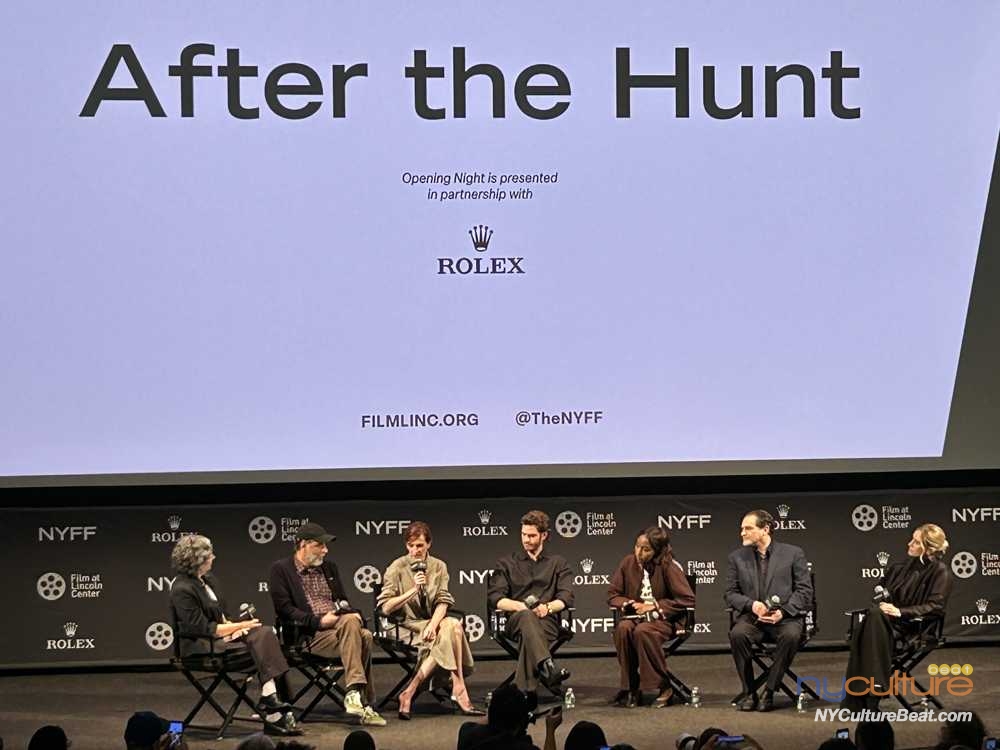
Press Conference #NYFF63
After the Hunt also dredges up faculty affairs, pedophilia, and a past suicide. But in trying to pack in everything—#MeToo, racism, plagiarism, legacy admissions, tenure review, and sexual identity—the film ends up grasping at nothing. Guadagnino becomes more of an onlooker than an investigator, and Garrett crams too much into a debut script that ultimately collapses under its own weight. As the opening film of the New York Film Festival, it falls short. 135 minutes.
NYFF63 Showtimes
Fri, 6:00 PM, 6:15 PM, 6:30 PM, 6:45 PM
9:15 PM, 9:30 PM, 9:45 PM,10:00 PM
https://www.filmlinc.org/nyff2025/films/after-the-hunt
 NYFF63 (5) 줄리아 로버츠의 공허한 캠퍼스 스릴러 '애프터 더 헌...