

뉴욕현대미술관(MoMA) 무성영화제 'Silent Movie Week 2026'(7/29-8/4)
찰리 채플린 버스터 키튼, 그리피스, 무르나우, 에른스트 루비치...
뉴욕현대미술관(Museum of Modern Art)가 7월 29일부터 8월 4일까지 제 4회 무성영화주간(Silent Movie Week)을 연다. D. W. 그리피스, 버스터 키튼, 찰스 채플린, 라울 월시, 에른스트 루비치, 존 포드, F. W. 무르나우 등 무성영화 거장들의 작품 7편이 상영되며, 6편은 라이브 음악 반주와 함께 감상할 수 있다. 개막작 D. W. 그리피스의 '웨이 다운 이스트(Way Down East)'는 음악학자 질리언 B. 앤더슨이 심도있는 연구를 바탕으로 복원한 1920년 당시의 오리지널 악보를 10인조 오케스트라가 연주한다. 존 포드의 '3 배드 맨(3 Bad Men)' 상영회에서는 티모시 브록이 작곡 및 지휘한 새로운 오케스트라 악보가 초연된다. 다른 작품들에는 마키아 마츠무라와 벤 모델의 피아노 반주로 상영된다.
https://www.moma.org/calendar/events/11562
Silent Movie Week 2026
Jul 29–Aug 4 @MoMA
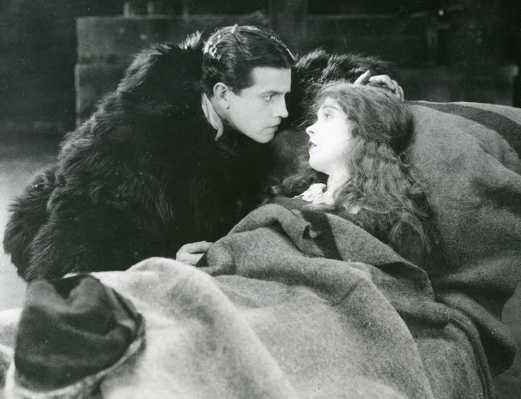
Way Down East. 1920. USA. Directed by D. W. Griffith. The Museum of Modern Art Film Stills Archive
MoMA’s fourth annual Silent Movie Week offers an uncommonly strong lineup of major films by major directors, including masterpieces by D. W. Griffith, Buster Keaton, Charles Chaplin, Raoul Walsh, Ernst Lubitsch, John Ford, and F. W. Murnau. For those unfamiliar with the sublime beauties of silent filmmaking, there could hardly be a better introduction. For those already familiar with the form, these newly restored editions offer a new level of experience.
Six of the seven programs will have live musical accompaniment. The series opens with Griffith’s Way Down East, accompanied by a 10-piece orchestra performing the original 1920 score in a deeply researched reconstruction by musicologist Gillian B. Anderson. The presentation of John Ford’s 3 Bad Men marks the premiere of a newly recorded orchestral score composed and conducted by Timothy Brock. Other features will be accompanied by Makia Matsumura and Ben Model, both among MoMA’s rotating cast of world-class silent film accompanists.
#D. W. 그리피스 감독 '동부 저 멀리' Way Down East. 1920.
Directed by D. W. Griffith
Wed, Jul 29, 7:00 p.m.
With a live orchestral performance of a MoMA-commissioned score, reconstructed and conducted by Gillian B. Anderson
Way Down East. 1920. USA. Directed by D. W. Griffith. Screenplay by Anthony Paul Kelly, Griffith, based on the play by Lottie Blair Parker. With Lillian Gish, Richard Barthelmess, Lowell Sherman, Burr McIntosh, Kate Bruce, Creighton Hale. World premiere of the new, digitized edition of MoMA’s definitive 1979 photochemical restoration. 145 min.
By 1920, D. W. Griffith’s pastoral vision was beginning to feel dated, and his decision to spend $175,000 on the rights to an 1890s stage melodrama seemed to confirm the worst suspicions about his taste. The material is frankly Victorian: a country girl (Lillian Gish) is deceived into a sham marriage by a society cad (Lowell Sherman), bears a child alone, loses it, and wanders into domestic service on a New England farm, where the squire’s son (Richard Barthelmess) falls in love with her without knowing her history. Griffith builds all of this slowly, intercutting the main story with rustic comedy that ranges from warm to broad, while Billy Bitzer’s camera registers the Connecticut landscape with a pastoral quietness that will be upended in the final reel.
That final reel is among the most extraordinary sequences in American silent cinema, as Gish is driven out into a blizzard and collapses on an ice floe drifting toward a waterfall. Griffith shot the rescue at three locations over weeks of winter weather, with Gish’s hand trailing in the freezing river take after take, and the physical risk is visible in the footage. Griffith’s highly sophisticated editing, with his nuanced variations in rhythm and perspective, was an immediate and lasting influence on Sergei Eisenstein and the Soviet montage directors.
This exceptional screening marks the premiere of MoMA’s new digitization of its own groundbreaking photochemical restoration of 1986. The original orchestral score, composed and compiled by William Frederick Peters and Louis Silvers under Griffith’s intimate supervision, has been re-created by musicologist Gillian Anderson under the sponsorship of the American Musicological Society, and will be performed by a 10-piece orchestra conducted by Anderson.
#버스터 키튼 감독 '항해사' The Navigator. 1924.
Directed by Buster Keaton, Donald Crisp
Thu, Jul 30, 7:00 p.m.
With organ accompaniment from Ben Model
The Navigator. 1924. USA. Directed by Buster Keaton, Donald Crisp. Screenplay by Clyde Bruckman, Joseph A. Mitchell, Jean C. Havez. With Buster Keaton, Kathryn McGuire, Frederick Vroom. Preserved and restored by The Museum of Modern Art and Lobster Films. 69 min.
Buster Keaton’s biggest commercial hit originated with a prop: the 5,000-ton decommissioned ocean liner Buford, spotted in a San Francisco shipyard by Keaton’s technical director Fred Gabourie and purchased for the production. The film was built around what the ship could do. A useless young millionaire (Keaton) and the equally sheltered girl who rejected his marriage proposal (Kathryn McGuire) find themselves the only passengers aboard the drifting vessel, and the comedy proceeds from their absolute inability to manage anything—cooking, sleeping, navigation—at a scale designed for a crew of hundreds. Keaton and his gag writers Clyde Bruckman, Joseph A. Mitchell, and Jean C. Havez developed the situation methodically: domestic incompetence gives way to mechanical improvisation, then to an extended underwater sequence shot off Catalina Island in a genuine deep-sea diving suit.
The ship itself becomes the film’s real subject, a closed system whose corridors, galleys, and decks Keaton maps with the spatial logic that distinguishes his best work. McGuire, a former Sennett bathing beauty who also appeared opposite Keaton in Sherlock Jr. the same year, is given more to do here than most Keaton leading ladies, and the film depends on their pairing as a functioning comic unit. Donald Crisp received a co-director credit, though Keaton later said he dismissed Crisp partway through the shoot when the dramatic specialist turned gagman overnight.
Restored by The Museum of Modern Art and Lobster Films from the only known nitrate print, from MoMA’s archive.
#라울 월쉬 감독의 '영광의 댓가' What Price Glory. 1926.
Directed by Raoul Walsh
Fri, Jul 31, 7:00 p.m.
With piano accompaniment from Makia Matsumura
What Price Glory. 1926. USA. Directed by Raoul Walsh. Screenplay by James T. O’Donohoe, based on the play by Maxwell Anderson and Laurence Stallings. With Victor McLaglen, Edmund Lowe, Dolores Del Río, William V. Mong, Phyllis Haver. Preserved and restored by The Museum of Modern Art and the Film Foundation. US restoration premiere. 116 min.
Released the year after King Vidor’s The Big Parade (1925), Raoul Walsh’s adaptation of Maxwell Anderson and Laurence Stallings’s hit play offers a pointedly different account of the war. Where Vidor courts elegy, Walsh stays ground level and unsentimental: the trenches are chaotic, the humor is coarse, and the only thing the blustering Captain Flagg and his sergeant, the slippery Quirt. are fighting over, most of the time, is a woman. Film historian Lea Jacobs has noted how the film systematically refuses the conventional satisfactions of the war picture—no sacrifice redeemed, no lesson drawn. The competition between Flagg (Victor McLaglen) and Quirt (Edmund Lowe) runs from the café where the innkeeper’s daughter, Charmaine (Dolores Del Río), plays them against each other, through the fighting, and back again, with the war itself treated less as moral crucible than as recurring inconvenience. The battle sequences have a density and confusion that were new in 1926; John Ford directed the second unit work and brought his own eye for soldierly chaos to the material.
Walsh fills the frame with constant peripheral action—soldiers arguing, moving, loitering, flirting in the middle distance and background, creating the sense of a larger world pressing in around the main story. McLaglen and Lowe clicked so well that Fox kept them paired through several sequels; Del Río holds her ground against both of them with a composure that gives Charmaine more agency than the plot might seem to require.
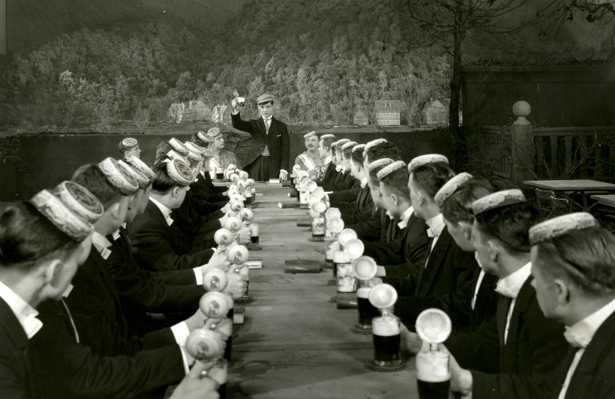
#에른스트 루비치 감독의 '올드 하이델부르크의 학생 왕자' The Student Prince in Old Heidelberg. 1927.
Directed by Ernst Lubitsch
Sat, Aug 1, 7:00 p.m.
With piano accompaniment from Makia Matsumura
The Student Prince in Old Heidelberg. 1927. USA. Directed by Ernst Lubitsch. Screenplay by Hanns Kräly, based on the play Alt-Heidelberg by Wilhelm Meyer-Förster. With Ramon Novarro, Norma Shearer, Jean Hersholt, Gustav von Seyffertitz, Philippe De Lacy. Preserved and restored by The Museum of Modern Art. World premiere of MoMA restoration. 105 min.
Ernst Lubitsch’s adaptation of a 1901 German stage play was MGM’s second-most expensive silent production, after Ben-Hur. A young prince (Ramon Novarro) is sent to Heidelberg for his education, falls in love with an innkeeper’s niece (Norma Shearer), and is called back to his kingdom to assume the duties his birth demands. The story is pure romantic formula; what Lubitsch does with it is graceful, wise, and heartbreaking.
The love scenes have an intimacy that comes from the accumulation of small, specific gestures rather than dramatic declaration—the quality later critics would call “the Lubitsch Touch” already fully formed here. Jean Hersholt gives the film’s most unguarded performance as the prince’s tutor, whose own attachment to Heidelberg runs deeper than he can articulate. Lubitsch had reservations about both his leads (he reportedly told Shearer she played the waitress “in too grand a manner”), but the friction between his instinct for understatement and the actors’ broader style produces its own
tension. The film lost $307,000 on first release. Its reputation has only grown since.
This new digitization from a nitrate print acquired from MGM in the 1930s represents the first time the full domestic release version has been restored.
#찰리 채플린의 '어깨 총' Shoulder Arms. 1918.
Written and directed by Charles Chaplin
Sun Aug 2, 4:00 p.m.
With piano accompaniment from Ben Model
Shoulder Arms. 1918. USA. Written and directed by Charles Chaplin. With Charles Chaplin, Edna Purviance, Sydney Chaplin, Henry Bergman, Albert Austin. Preserved and restored by The Museum of Modern Art. World premiere of original 1918 restored cut. DCP. 46 min.
Preceded by
A Dog’s Life. 1918. USA. Written and directed by Charles Chaplin. With Charles Chaplin, Edna Purviance, Sydney Chaplin, Henry Bergman, Albert Austin. 33 min. Preserved and restored by The Museum of Modern Art under the aegis of Association Chaplin and Roy Export S.A.S, with generous support provided by Barbara Wertz. World premiere of original 1918 restored cut. DCP.
The Bond. 1918. USA. Written and directed by Charles Chaplin. With Chaplin, Edna Purviance, Albert Austin. Silent. 11 min. DCP.
In June 1917, Charles Chaplin signed a contract with First National Exhibitors’ Circuit that guaranteed him something no comedian had previously held: ownership of his negatives and copyrights. But when Chaplin went to reissue his initial First National films for a 1959 compilation titled The Chaplin Revue, he found that the original negatives had been damaged beyond repair, and he asked his longtime cameraman Rollie Totheroh to reconstruct them using outtakes and alternate footage. Effectively, this meant that the actual films that audiences saw on the first release dropped out of sight, replaced by new versions that did not reflect Chaplin’s first choice of angles and takes.
Working closely with the Chaplin estate and drawing on footage generously provided by archives around the world, MoMA has reconstructed the original 1918 release versions of A Dog’s Life and Shoulder Arms (the latter was first shown as a work in progress in 2025 and has now been completed).
A Dog’s Life is a three-reel comedy that parallels the Tramp’s struggle for survival with that of a stray mutt named Scraps, and the structural conceit lets Chaplin push past the pure knockabout of his Keystone and Mutual shorts toward something more deliberate. The comedy is still rooted in physical precision—Chaplin’s timing in a sequence where he steals food from a lunch wagon is meticulous—but the film’s sympathies are organized around class conflict rather than anarchic chaos. The Tramp and the dog are in the same position, scrounging at the edges of a society that has no place for either of them.
Edna Purviance plays a dance-hall singer whose own precariousness mirrors theirs, and the scenes between her and Chaplin have a gentleness that anticipates the emotional register of The Kid three years later.
Released in October 1918, weeks before the Armistice, Shoulder Arms was the first comedy to treat the war as material for sustained burlesque, and Chaplin’s colleagues warned him the timing was suicidal. They were wrong. It became his biggest commercial success to date and was especially popular with returning soldiers. Chaplin plays a hapless doughboy who moves from boot camp through the trenches to a mission behind enemy lines, where he disguises himself as a tree, meets a French girl (Edna Purviance), and somehow captures the Kaiser.
Chaplin finds gags in flooded bunks, in mail calls, in the improvised routines of men stuck in a squalid holding pattern. The physical conditions are played for laughs but never quite emptied of their grimness. Sydney Chaplin makes several appearances, including a lively turn as a German officer, and the whole production shows the benefit of the expanded format Chaplin had adopted at First National, which gave his comedy room to develop situations instead of racing through them.
Also on the program is MoMA’s new digital restoration of The Bond, a seldom-seen propaganda short produced by Chaplin for the 1918 Liberty Loan drive. On a stylized set, Chaplin demonstrates the various sorts of bonds—friendship, marriage, Liberty—culminating in an encounter with the Kaiser. (Spoiler alert: a giant mallet is involved.) This restoration is based on a 35mm reissue print held by MoMA, with the titles revised to reflect the 1918 version distributed by First National.
Funding provided by the Lillian Gish Fund for Preservation.
#존 포드 감독의 '3인의 악당(3 Bad Men)'. 1926
Directed by John Ford
Mon, Aug 3, 7:00 p.m.
3 Bad Men. 1926. USA. Directed by John Ford. Screenplay by John Stone, suggested by the novel Over the Border by Herman Whitaker. With George O’Brien, Olive Borden, Lou Tellegen, Tom Santschi, J. Farrell MacDonald, Frank Campeau. Preserved and restored by The Museum of Modern Art. World premiere of a new recorded orchestral score, composed and conducted by Timothy Brock. 92 min.
John Ford’s first epic Western, 1924’s The Iron Horse, helped to establish Fox as a major studio and Ford as a major director. If anything, his 1926 return to the genre, 3 Bad Men, is richer and more personal; it would prove to be Ford’s farewell to the genre in which he had served his apprenticeship, until his return with Stagecoach in 1939. The classic Fordian theme—the sacrifice of the individual for the good of the group—is here played out by three eccentric outlaws (Tom Santschi, J. Farrell MacDonald, and Frank Campeau) who resolve to protect a young homesteader (Olive Borden) and her fiancé (George O’Brien) from the violence surrounding a great Western land rush. This new restoration represents a major upgrade of an American classic, with dramatically improved image quality and a re-creation of the original color tinting. This screening will mark the premiere of a newly recorded orchestral score, written and conducted by Timothy Brock.
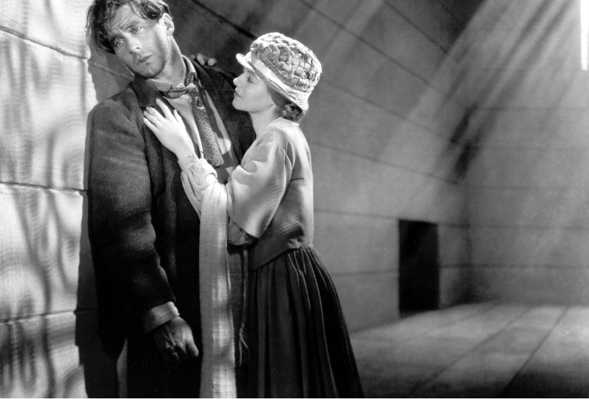
#F. W. 무르나우 감독의 '일출' Sunrise: A Song of Two Humans.
1927. Directed by F. W. Murnau
Tue, Aug 4, 7:00 p.m.
With piano accompaniment from Makia Matsumura
Sunrise: A Song of Two Humans. 1927. USA. Directed by F. W. Murnau. Screenplay by Carl Mayer, based on the story “The Trip to Tilsit” by Hermann Sudermann. With George O’Brien, Janet Gaynor, Margaret Livingston, Bodil Rosing, J. Farrell MacDonald. Restored by the San Francisco Film Preserve with archival footage from The Museum of Modern Art, the British Film Institute, and others. US premiere of a new restoration from the San Francisco Film Preserve and the Sunrise Foundation. 95 min.
F. W. Murnau’s first American film was made under conditions few directors have enjoyed: William Fox gave him a blank check and left him alone. The result is a fable stripped to archetypes (the credits list no character names, only The Man, The Wife, The Woman from the City) and staged with a stylistic assurance that still takes the breath away. A farmer, seduced by a vacationing city woman into plotting his wife’s murder, cannot go through with it; husband and wife flee to the city, reconcile, and return home through a storm that nearly finishes what the husband could not. Murnau and cinematographers Charles Rosher and Karl Struss built elaborate sets incorporating forced perspective and miniatures, then moved the camera through them with a fluidity that had no real precedent in American production. Murnau’s revolutionary technique had a profound effect on two of his directorial colleagues at Fox, John Ford and Frank Borzage.
This is the American premiere of a new, definitive digital restoration carried out by the San Francisco Film Preserve, incorporating elements from MoMA, the British Film Institute, and other archives.
https://www.moma.org/calendar/film/5914
*공포의 무성영화 '팬텀 오브 오페라(Phantom of Opera)' 오르간 상영회(2013)
*미 영화사상 제 18위 무성영화 '제너럴(The General, 1926)' 오르간 상영회(2014)

 2026 베니스영화제(9/2-12) 라인업: '가능한 사랑'(Possible Love...