

윌렘 드 쿠닝 드로잉 'Willem de Kooning Drawing' 시카고-암스테르담 순회전
'Willem de Kooning Drawing
The Art Institute of Chicago (June 14–September 20, 2026)
Willem de Kooning at work
Rijksmuseum, Amsterdam (October 9, 2026–January 17, 2027)
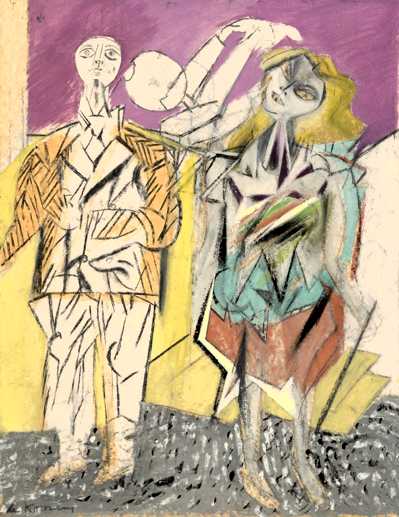
Willem de Kooning, Untitled [man and woman], about 1947–48, Private collection. Photo courtesy of TAJAN
미술 비평가 피터 셸달(Peter Schjeldahl)은 그를 가리켜 "사람이 달려 있는 손(a hand with a man attached)"이라고 묘사했다.
잭슨 폴락, 프란츠 클라인과 함께 미 전후 추상표현주의 대표 작가 윌렘 드 쿠닝(1904-1997)의 대규모 드로잉전 'Willem de Kooning Drawing'이 6월 14일부터 9월 20일까지 시카고아트인스티튜트에서 열린다. 이 전시엔 드로잉, 회화, 조각, 혼합매체 등 210점이 소개된다.
올 가을엔 드 쿠닝의 고국인 네덜란드의 국립미술관(Rijksmuseum, Amsterdam, 10/9-1/7, 2027)에서 120여점을 선보이는 순회전이 'Willem de Kooning at work'라는 타이틀로 열린다.
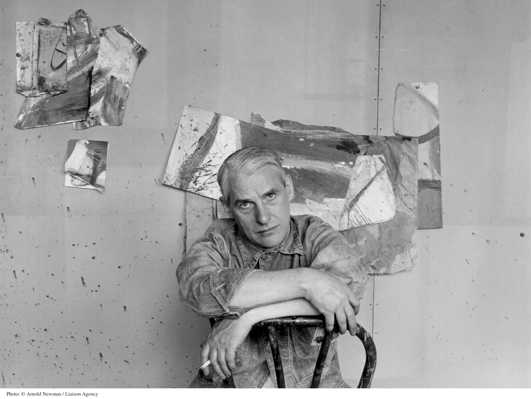
윌렘 드 쿠닝은 1904년 네덜란드 로테르담에서 태어나 1926년 배를 타고 밀항해 뉴저지로 이주했다. 이후 맨해튼에 정착해 상업화가 겸 페인트공으로 일하다가 1950년대부터 '여성(Women)' 시리즈을 시작하며, 추상표현주의 스타일을 구축했다. 1943년 13세 연하 화가 엘레인 드 쿠닝과 결혼했다. 1963년 롱아일랜드 이스트햄턴으로 이주했으며, 말년에 치매를 앓다가 1997년 92세로 눈을 감았다.
'Willem de Kooning Drawing
The Art Institute of Chicago (June 14–September 20, 2026)
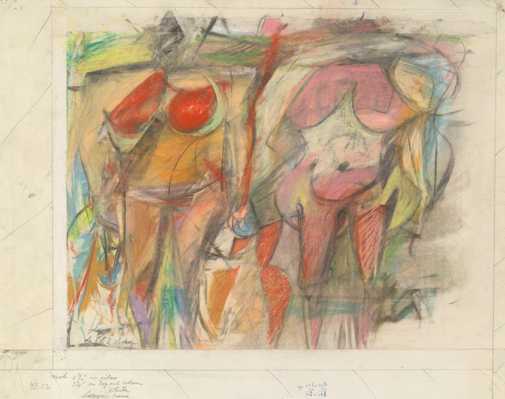
Willem de Kooning, Two Women’s Torsos, 1952, The Art Institute of Chicago
Willem de Kooning Drawing is the first exhibition to examine the expansive drawing practice of this renowned American artist who immigrated to New York from the Netherlands at the age of 22. While many Art Institute visitors may be familiar with de Kooning’s monumental painting Excavation (1950), a cornerstone of our collection, this exhibition marks the first solo presentation of the artist’s work at our museum since 1969.
This major gathering of works from across the globe reveals how the act of drawing was foundational to de Kooning’s entire artistic process and production—his paintings, sculptures, and printmaking, as well as his drawings—and showcases the totality of his graphic production, from his earliest existing works to his late calligraphic paintings.
Rigorously trained at the Academy of Visual Arts and Technical Sciences in Rotterdam, de Kooning achieved a remarkable command of traditional drawing techniques while still in his teens. In 1926, he stowed away on a freight ship bound for the United States to pursue his dream of becoming an illustrator. Eventually arriving in New York City, de Kooning found work as a house painter, freelance commercial artist, and window display designer. At the same time, he became immersed in the New York art world, befriending artists such as Stuart Davis, Arshile Gorky, and John Graham and ultimately becoming a key figure of the movement that would be known as “Abstract Expressionism” or the “New York School” with such contemporaries as Jackson Pollock, Lee Krasner, Barnett Newman, and Mark Rothko.
Ambiguity would become a distinguishing feature of de Kooning’s practice, as his work increasingly dissolved the boundaries between representation and abstraction, male and female figures, “high” and “low” art forms, and, in particular, the disciplines of drawing and painting. He stated, “I draw in paint, and usually I don’t feel so much difference between drawing and painting.” Compelled to continually innovate and surprise even himself, de Kooning began experimenting with unconventional drawing methods (such as working with his eyes closed), which opened up new directions for his art. He also often reused forms from his earlier artworks and adapted tools and techniques from his career as a commercial artist, resulting in a body of work that is both self-referential and inventive.
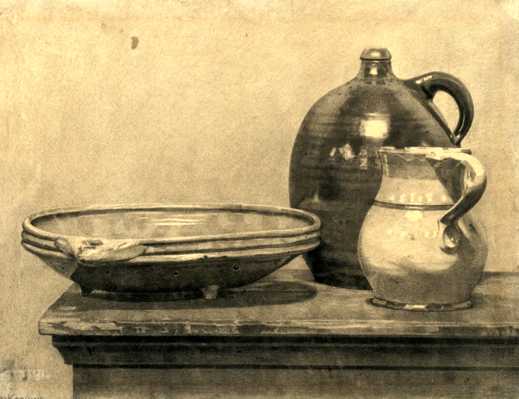
Willem de Kooning, Dish with Jugs, about 1919–21, The Metropolitan Museum of Art, New York
Willem de Kooning Drawing features more than 200 artworks from public and private collections around the world. The exhibition presents iconic works like the Art Institute’s Excavation and the Museum of Modern Art’s Woman I (1950–52), as well as significant and lesser-known drawings, paintings, sculptures, and prints, many of which have rarely—if ever—been seen by the public.
This landmark exhibition offers an unprecedented opportunity to experience the full scope of de Kooning’s drawing practice, shedding light not only on its evolution over seven decades but also on the ways it redefined the possibilities of modern and contemporary art.
Willem de Kooning Drawing is organized by the Art Institute of Chicago, in collaboration with the Rijksmuseum, Amsterdam, and in consultation with The Willem de Kooning Foundation. The exhibition’s curatorial team includes the Art Institute of Chicago’s Kevin Salatino, Chair and Anne Vogt Fuller and Marion Titus Searle Curator, Prints and Drawings; Mel Becker Solomon, associate research curator, Prints and Drawings; and Charlotte Healy, senior research associate, Prints and Drawings, with contributions from Margaret Holben Ellis, exhibition paper conservator.
 2026 뉴욕아트위크 New York Art Week(5/13-19) 어디로 갈까?
 표현주의 화가 카임 수틴 전기 'Chaim Soutine: Genius, Obsessio...